By Daniel Margrain
The media’s trumping (excuse the pun) of economic growth over environmental concerns exemplified by their lack of any critique of the latter following yesterday’s (November 23) Autumn Statement announcement by chancellor, Philip Hammond, is a familiar, if rather depressing, narrative. The news from the government’s Office for Budget Responsibility (OBR) that growth forecasts for 2017 as a percentage of GDP are projected to fall by 0.8 per cent, largely due to Brexit-related affects, was perhaps expected.
But what is rarely questioned by the media are the consequences this prioritizing of growth as a central plank of the governments economic strategy has for the medium to long term sustainability of the planets ecosystems upon which the well-being, and even survival, of humanity depends.
The Green Party MP, Caroline Lucas raised her concern in the House of Commons that neither Hammond in his Autumn Statement – nor any of his Tory predecessors – “have ever mentioned the words ‘climate change’ in the year that’s the hottest on record and where parts of the country are under flood water.”
To all rational observers this is a particularly alarming state of affairs given that the government’s own 2015 National Security Strategy states that human-induced climate change is one of three tier-one threats – alongside international terrorism and cyber crime – that the UK currently faces. By subordinating climate change to a neoliberal economic growth model within a finite planet, amounts to willful ignorance and stupidity of the most serious and blatant kind, namely, because the consequences are potentially catastrophic for all living things.
Shifting the paradigm
Of all the recent discussions around the production of fake news, the inability of the mainstream media to bring the issue of climate change to the forefront of public discourse is probably the greatest dereliction of duty that can be brought to bear on the credibility of professional journalism.
But arguably just as unforgivable, is the media’s inability to bring political power to account in respect to the latter’s fetishization of the current growth model and to shift the discourse from a paradigm where this model is currently regarded to be a panacea among large swaths of the public, to one where it is widely regarded as the death knoll for society and the planet.
The November 22 edition of the BBCs current affairs Newsnight programme featured an extended piece on the current chancellor. Some of Philip Hammond’s former school friends were interviewed, all of whom described him as a highly intelligent figure who, after having completed his class work before everybody else, would often put his feet up on his desk in lessons. Hammond was portrayed by his friends as being so clever that he regularly outsmarted his teachers.
Having made large sums of money as a music promoter soon after having left school, Hammond fulfilled his youthful boast that he would become a millionaire by the age of thirty. But although well-educated, wealthy and well connected, this former Oxford graduate like so many other chancellors before him who have gone on to be the pillar of the political establishment, continues to promulgate the deluded notion that sustained economic growth is emblematic of societal progress.
Hammond is part of a Tory establishment that continues to perpetuate the myth that the current economic growth model is the best way to curtail the threat posed from the likelihood of further economic crisis as opposed to recognizing it’s the major cause. Consequently, Hammond will continue to systematically push for policies that fly in the face of all available scientific evidence.
Politician’s like Hammond know what is to be done but for ideological and dogmatic reasons they do the opposite. Rather than the global financial crisis of 2008 acting as a wake up call, Hammond and Osborne before him, continue with the same poisonous model until the next crisis comes along, by which time they will continue with it until the one after that. And so it goes on. This is the economics of the madhouse.
Radical visions – development not growth
What is required is a radical alternative vision for society – a break from the concept by which everything has become a commodity to be bought and sold for profit. But who, other than a handful of creative thinkers in the academic sphere, are proposing alternative, imaginative visions? One of the most ambitious thesis I’ve come across is that postulated by Pat Devine, who articulates in some detail, the processes by which the development of a democratically planned socialist economy can come into being.
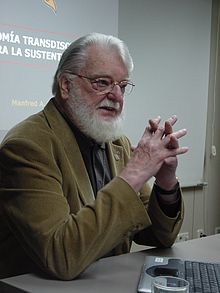
Devine’s thesis is closely aligned to that of the Chilean economist, Manfred Max-Neef whose visionary holistic and philosophical appraisal of the existing model ought to go a long way in persuading people of the legitimacy of the planned socialist model. While recognizing the importance, geographically, of bringing production closer to consumption, Max-Neef argues that the root of the existing problem stems from how establishment economists perceive their academic discipline as being above, and separate from, nature and the biosphere.
For Max-Neef, economists know nothing about ecosystems, thermodynamics or biodiversity. “I mean, they are totally ignorant in that respect”, he said… “And I don’t see what harm it would do, for an economist to know that if the beasts would disappear, he would disappear as well, because there wouldn’t be food anymore. But he doesn’t know that we depend absolutely from nature. But for these economists we have, nature is a subsystem of the economy.”
Max-Neef argues that for the paradigm to shift, it is necessary for economics to be taught in a different way based in five postulates and one fundamental value principle:
1) The economy is to serve the people and not the people to serve the economy.
2) Development is about people and not about objects.
3) Growth is not the same as development, and development does not necessarily require growth.
4) No economy is possible in the absence of ecosystem services.
5) The economy is a subsystem of a larger finite system, the biosphere, hence permanent growth is impossible.
The fundamental value to sustain a new economy should be that no economic interest, under no circumstance, can be above the reverence of life.
For far too long, humanity and the natural world has been subordinate to the imperatives associated with an economic growth paradigm that’s perceived by economists and politicians as being separate and distinct from the former. What Max-Neef is saying in the first point above is that the dialectical relationship between economy and people has to be restored in order for society and nature to function properly.
The distinction Max-Neef makes between growth and development in point three, is particularly significant. As the economist from Berkeley points out:
“Growth is a quantitative accumulation. Development is the liberation of creative possibilities. Every living system in nature grows up to a certain point and stops growing. You are not growing anymore, nor he nor me. But we continue developing ourselves… So development has no limits. Growth has limits. And that is a very big thing, you know, that economists and politicians don’t understand. They are obsessed with the fetish of economic growth.”
This fetishization of economic growth is arguably explained, in part, by the fact that the monetary offshoots that accrue as a consequence of this growth have, since the onset of ‘trickle-down’ neoliberalism, increasingly ‘gushed upwards’ towards the top of the socioeconomic pyramid.
This is revealed by statistics which indicate that economic output (GDP) in the UK, adjusted for inflation, has over doubled from £687bn in 1979 to £1,502bn in 2011. However, over the same period, income inequality, as measured by the Gini coefficient, increased from 0.25 to 0.34. In other words, since the era of neoliberalism, working people who have created the sustained increase in wealth in society, have seen their slice of the pie reduced. Max-Neef understands that the ruling class obsession with the fetish of economic growth is underscored by the fact that this is the class that disproportionately benefits the most from it.
The threshold hypothesis
One of the later works Max-Neef authored was the famous threshold hypothesis, which says that in every society there is a period in which economic growth, conventionally understood or not, brings about an improvement of the quality of life. But only up to a point – the threshold point – beyond which, if there is more growth, quality of life begins to decline.
According to Max-Neef, the U.S, which he terms an “undeveloping nation” is currently at this point. The UK is not far behind. This is reflected in the growing concentration of wealth towards the one per cent at the expense of the 99 per cent. The logic of diminishing returns applies to other parts of the system that eventually results in net costs over the long-term.
These costs are quantified not only in strict monetary terms, but involve human capital too – something which the economic-growth fetishists rarely factor in to their cost-benefit calculations. Diane Abbot’s posting on Twitter yesterday (November 23) of an OBR sourced graph (see below) highlighting the impact of immigration on UK debt, is a case in point.
The ORB (and Abbot) present only a partial truth. While Abbot is correct in stating that “immigration is a net economic benefit because it reduces government debt”, the analysis doesn’t take into account other factors such as the uneven distribution of wealth described which negate the benefits accrued, or indeed, other (social) indicators such as reduced quality of life resulting from, for example, a lack of school places or other pressures on public services that mass immigration potentially brings.
Walking barefoot
It’s the apparent inability of politicians to view the economic growth paradigm as destructive that opens up spaces for alternative narratives of the likes of Max-Neef to fill. After winning the Right Livelihood Award in 1983, two years after the publication of his book Outside Looking In: Experiences in Barefoot Economics, the Chilean economist’s metaphor was inspired as a result of the ten years he spent working in extreme poverty in the Sierras, jungles and urban areas of different parts of Latin America. It was during this period that the economist from Berkeley began to view his profession in a different light. What subsequently happened was to change his life for ever.
“I was one day in an Indian village in the Sierra in Peru”, recalls Max-Neef. “It was an ugly day. It had been raining all the time. And I was standing in the slum. And across me, another guy also standing in the mud — not in the slum, in the mud. And, well, we looked at each other, and this was a short guy, thin, hungry, jobless, five kids, a wife and a grandmother. And I was the fine economist from Berkeley, teaching in Berkeley, having taught in Berkeley and so on.
“And we were looking at each other, and then suddenly I realized that I had nothing coherent to say to that man in those circumstances, that my whole language as an economist, you know, was absolutely useless. Should I tell him that he should be happy because the GDP had grown five percent or something? Everything was absurd.”
Max-Neef continued:
“So I discovered that I had no language in that environment and that we had to invent a new language. And that’s the origin of the metaphor of barefoot economics, which concretely means that is the economics that an economist who dares to step into the mud must practice.”
“The point is, you know, that economists study and analyze poverty in their nice offices, have all the statistics, make all the models, and are convinced that they know everything that you can know about poverty. But they don’t understand poverty. And that’s the big problem. And that’s why poverty is still there. And that changed my life as an economist completely. I invented a language that is coherent with those situations and conditions.”
The ‘language’ Max-Neef refers to relates to the way that we as human beings in developed countries have lost the capacity to understand. Despite our ability to accumulate knowledge, this capacity, in the absence of empathy, love and understanding, is according to Max-Neef, insufficient:
“You can only attempt to understand that of which you become a part”, says Max-Neef. “If we fall in love, as the Latin song says, we are much more than two. When you belong, you understand. When you’re separated, you can accumulate knowledge. And that is — that’s been the function of science. Now, science is divided into parts, but understanding is holistic.”
For Max-Neef, in order for professional economists to understand poverty, it’s necessary they live among people who are poor. Only then can economists understand that in such an environment there exists a different set of values and principles that are alien to world of academia that cannot be learned or understood their.
“What I have learned from the poor is much more than I learned in the universities”, said Max-Neef. “But very few people have that experience, you see? They look at it from the outside, instead of living it from the inside.”
The economist from Berkeley, continued:
“And you learn extraordinary things. The first thing you learn, that people who want to work in order to overcome poverty and don’t know, is that in poverty there is an enormous creativity. You cannot be an idiot if you want to survive. Every minute, you have to be thinking, what next? What do I know? What trick can I do here? What’s this and that, that, that, that? And so, your creativity is constant.”
“In addition, I mean, that it’s combined, you know, with networks of cooperation, mutual aid, you know, and all sort of extraordinary things which you’ll no longer find in our dominant society, which is individualistic, greedy, egoistical, etc. It’s just the opposite of what you find there. And it’s sometimes so shocking that you may find people much happier in poverty than what you would find, you know, in your own environment, which also means, you know, that poverty is not just a question of money. It’s a much more complex thing.”
What underlines Max-Neef’s message, perhaps more than anything else, is that the developed world that sees itself as sophisticated, educated and cultured, while pushing away to the margins the poor of the developing world by building walls, do so while failing to acknowledge that the kind of ‘progress’ the economists and politicians sitting in their plush offices aspire to, is in truth measured by the speed at which they are destroying the conditions that sustain life.





 Daniel Margrain
 Diane Abbott MP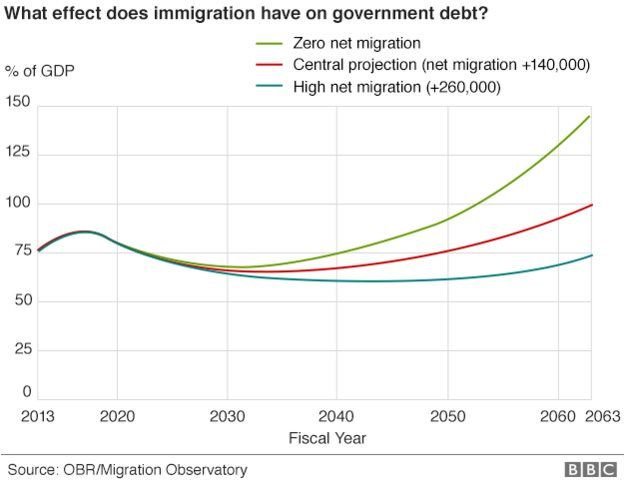


.jpg)
 Josh
Josh as a precondition for maintaining the countries continued membership within it.



 Road To Somewhere Else
The film works as a satire because the community in which Truman lives his fake existence is very much tied into a corporate dominated world in which the notion of illusion and reality are often blurred. ‘Product placement’ and testimonials for this emerging system of entertainment-marketing capitalism are being seamlessly woven into our lives.
Truman’s quest for freedom can be interpreted as the aspiration for authenticity and meaning within a world in which the increasing commodification of all things is a feature of modern life. Was Weir on to something? Is the world in which Truman inhabits more than just a piece of science fiction allegory?
Molded into a desired pattern
Every institution provides the people who are members of it with a social role – that’s as true to the role played by say, the church, as it is to the corporation whose goal it is to maximize profit and market share. Capitalism could not function if it were not for the fact that individuals are disassociated from both the products of their labour and from one another. Just like the God figure, Christof, public relations and advertising industries facilitate the process of disassociation by molding people from a very early age into a desired pattern.
To achieve this, corporations don’t necessarily advertise products, but advertise a way of life and a narrative of who we are as people. The aim is to persuade the masses that the corporation is virtuous, responsible for the good life and the belief that the future can only be better than the present; that modernity itself means human improvement. However, the contradictions inherent to capitalism are such that progress is measured by the speed at which we destroy the conditions that sustain life. The function of corporate branding is to persuade us that the ideology of progress will offset the decline in societal and environmental well-being.
Disney Utopianism
Many corporations have already recreated their branded visions as three dimensional representations of real life with this aim in mind. A company like Disney, for example, have taken this logic to the next level by building a “town” in the image of their brand – Celebration Florida – which it describes as a “unincorporated community of almost 8,000 people, situated on 11 square miles of carefully engineered Floridian swamp.” The brand image of Celebration Florida is a themed all-American family friendly privatized branded cocoon set within a bygone era – the real life Seahaven.
Given that relations mediated between human beings increasingly appear to be the function of the commercial world, could the Utopian Celebration Florida model become a commonplace vision elsewhere? Moreover, can civilization survive on this narrow definition of how humans interact with one another?
The real-life experiences many of us engage in on a day-to-day basis, embodied in atomized living and the increasing engagement with virtual reality and robotics, is arguably closer to the allegorical fantasy of the Truman Show than many people are perhaps prepared to admit. Just as Christof wove product placements into dialogue and scenes as part of Truman’s constructed reality, the same processes form part of the marketing tools available to professional marketeers who weave product-placements into our everyday real lives.
Product placement
Professional marketeer, Jonathan Ressler CEO of Big Fat Inc. concedes that “real life product placement is just that – placing stuff in movies but the movie is actually your life.” In other words, it’s already the case that people are being subliminally targeted with branding by undercover marketeers on a daily basis. Ressler elaborates on these themes in the documentary film, The Corporation. He claims that the public are subject to an average of eight or nine subliminal marketing messages a day and they therefore effectively act as brand bait and soundbites of knowledge for corporations.
According to Ressler, it’s fine if the masses want to be critical by cynically challenging the motive behind every human exchange, but adds that if the corporations “show you something that fits and something that works that makes your life better in some way, who cares?…Just say, thanks!” The implication seems to be that if an uncritical and undemanding public are happy with the commercial ‘comforts’ that the corporation is able to provide them and their families with, then logically there is no reason for people to want to absolve themselves of these comforts.
Reassurance
Familiarity and reassurance appears in some way to be hard-wired into the human psyche. This probably explains why, for example, many people who travel or settle in foreign lands tend to congregate and surround themselves with others of similar linguistic and cultural backgrounds.The corporate marketeers are thus able to exploit this situation for their own commercial ends.
Just as Christof sought to discourage Truman from leaving his inauthentic existence in Seahaven by warning him of the dangers that exist in the real world compared to the life of safety constructed for him, so it is that Celebration Florida spokesperson, Andrea Finger, is able to promote a highly successful Disney brand predicated on the notion that it “speaks of reassurance, tradition and quality.”
There’s an interesting Truman site by Ken Sanes who says the Truman Show tells us that “if we want to be free and have a chance at an authentic life, we will have to distance ourselves from the safety and comforts of our media-saturated culture and be willing to live in the world as it is”. This brings into sharp focus the contesting nature of authenticity; of identity and representation and what constitutes democratic urban space and its relation to forms of state power. I discuss these issues in more detail here and here.
Authentic spaces or corporate landscapes of power?
More broadly, the public’s perception of what constitutes an authentic space is often tied to what use the state puts them to. The line between private and public spaces in which large parts of towns and cities have been hollowed out, is becoming increasingly blurred. London’s Canary Wharf, Olympic Park and the Broadgate development in the City, for example, are public places now governed by the rules of the corporations who own them. Other privatized public zones in Britain include Birmingham’s Brindley place, a significant canal-side development, and Princesshay in Exeter, described as a “shopping destination featuring over 60 shops set in a series of interconnecting open streets and squares”.
Ultimately, corporations are shaping elements from the landscape of cities and towns and re-packaging them under the banner ‘urban renaissance’ predicated on place promotion and development with culture, heritage and conspicuous consumption in mind. The real life Disney Celebration Florida model that literally could have been borrowed from the fictional Truman Show, represents the apex of this concept. In her book Landscapes of Power, Sharon Zukin quotes a Disneyland planner:
“We carefully program out all the negative, unwanted elements and program in the positive elements…Disney succeeded on the basis of this totalitarian image-making, projecting the collective desires of the powerless into a corporate landscape of power.”
Is this kind of privatized and sanitized Disney- Truman Show-type environment the kind of model for society we ought to be encouraging planners to move towards?
COPYRIGHT
All original material created for this site is ©Daniel Margrain. Posts may be shared, provided full attribution is given to Daniel Margrain and Road To Somewhere Else along with a link back to this site. Using any of my writing for a commercial purpose is not permitted without my express permission. Excerpts and links, including paraphrasing, may be used, provided that full and clear credit is given to Daniel Margrain and Road To Somewhere Else with appropriate and specific direction to the original content. Unless otherwise credited, all content is the site author’s. The right of Daniel Margrain to be identified as the author of this work has been asserted by him in accordance with the Copyright, Designs and Patents Act 1988.
Make a small donation
If you’ve enjoyed reading this or another posting, please consider making a donation, no matter how small. I don’t make any money from my work, and I’m not funded. You can help continue my research and write independently.… Thanks!