By Daniel Margrain
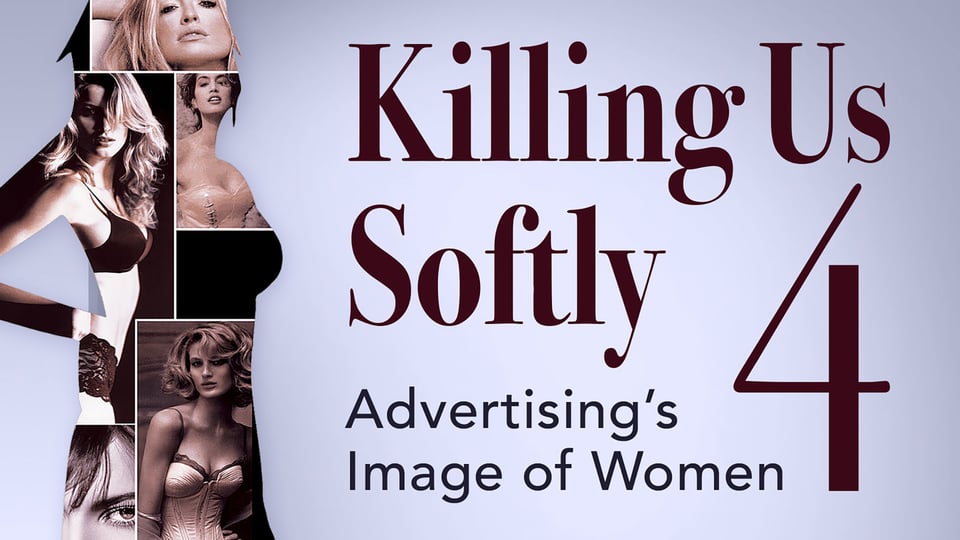
The 30 minute documentary film Killing Us Softly (1979) based on a lecture by Jean Kilbourne focuses on the effects of advertising on women’s self-image and the objectification of women’s bodies. Kilbourne argues that the superficial and unreal portrayal of women in advertising lowers their self-esteem and that sexualized images of them are being used to sell a multitude of goods.
Kilbourne goes on to posit that these images degrade women, encourage abuse, and reinforce a patriarchal and sexist society. She also makes the connection between advertising and pornography, stating that “the advertisers are America’s real pornographers”.
Over four decades since the release of ‘Killing Us Softly’, Kilbourne discussed some of the issues in her film to a new audience of young people. Significantly, she says that since the film’s initial release in 1979 “things have got worse, not better.”
It can barely get any worse than the case of 21 year old bulimia sufferer, Eloise Perry. On April 12, 2015, Ms Perry tragically died at the Royal Shrewsbury Hospital one week after having swallowed eight unlicensed fat-burning pills that she purchased from the internet.
The pills, which the Food Standards Agency describe as being illegal to sell for human consumption, contained DNP which is an industrial chemical historically used in the manufacture of explosives and fungicides. Website companies who sell this chemical depict DNP as a fat burning product and some even use the tag line “getting leaner through chemistry” as a marketing tool.
Social pressures
The social pressures for young women (and increasingly young men) to conform to certain expectations placed upon them by the media are immense. The upshot is that young people are involved in a constant psychological battle between myth and reality. In Britain, for example, the average size of a woman is 16 but the ‘aspirational’ size is zero – an unobtainable goal.
The contradiction between reality and aspiration and the weaponization of feminism is undermining many of the gains that women made in the debates of the 1960s and 1970s. What Ariel Levi terms “raunch culture” – the sexualisation of women as sex objects – is another symptom of the undermining of these gains.
The High Street Honey’s tour and the Dorchester Hotel harassment scandal, in which the condition of employment is that young women dress up as porn stars, puts pressure on them to conform to certain body-image stereotypes often determined by men.
The normalization of sexist imagery in pop videos and television commercials and the sexualization of young girls clothes, is another illustration of raunch culture outlined by Levi in which fantasies, desires and ambitions are transformed into commodities to make money.
The growth in cosmetic surgery is another factor that increases expectations on women’s appearances. Ninety-one per cent of cosmetic surgery is undertaken on women of which the most popular is breast enhancement. I was astounded to learn that in the U.S it’s widely considered normal practice for girls to be given a breast enlargement as a graduation present.
It’s a fact that a growing number of girls who suffer low self-esteem perpetuated by a media system that constantly portrays an ‘ideal’ body shape is a tendency that’s less common in the developing world.
Objectification
This would seem to suggest that mental illness, of which eating disorders are a reflection, is to a large extent symptomatic of the growth of the consumerist capitalist society in which human relations are objectified. In Marxist terms, objectification is the process by which human capacities are transferred to an object and embodied in it.
Young females who read fashion magazines tend to have more bulimic symptoms than those females who do not – further demonstrating the impact the media has on the likelihood of developing the disorder.
As J. Kevin Thompson and Eric Stice have shown, individuals first accept and ‘buy into’ the ideals set by fashion magazines, and then attempt to transform themselves in order to reflect the societal ideals of attractiveness.
The thin fashion model ideal is then reinforced by the wider media reflecting unrealistic female body shapes leading to high levels of discomfort among large swaths of the female population and the drive towards thinness that this implies.
Consequently, dissatisfaction, coupled with a drive for thinness, is thought to promote dieting and its negative affects, which could eventually lead to bulimic symptoms such as purging or binging. Binges lead to self-disgust which causes purging to prevent weight gain.
Thompson’s and Stice’s research highlights the extent to which the media affect what they term the “thin ideal internalization”. The researchers used randomized experiments (more specifically programmes) dedicated to teaching young women how to be more critical when it comes to media, in order to reduce thin ideal internalization. The results showed that by creating more awareness of the media’s control of the societal ideal of attractiveness, the thin ideal internalization significantly dropped.
In other words, less thin ideal images portrayed by the media resulted in less thin ideal internalization. Therefore, Thompson and Stice were able to conclude that there is a direct correlation between the media portrayal of women and how they feel about themselves.
Social media also plays a part. A 2014 two part study [1] looking at social media sites, such as Facebook and Twitter, researched influence and risk for eating disorders. In the first part of the study, 960 women completed self-report surveys regarding Facebook use and disordered eating. In the second part of the study, 84 women were randomly assigned to use Facebook or to use an alternate internet site for 20 minutes.
What the cross-sectional survey illustrates, is that more frequent Facebook use is associated with greater disordered eating. The survey indicates a close correlation between Facebook use and the maintenance of weight/shape concerns and state anxiety compared to an alternate internet activity [1]. Other research suggests an etiological link between eating disorders and the tendency towards self-harming [now referred to as Non Suicidal Self Injury (NSSI)] [2].
Over 1.6 million people in the UK are estimated to be directly affected by eating disorders. However, the Department of Health estimate that the figure is more likely to be 4 million due to the huge level of unmet need in the community [3].
Studies suggest that as many as 8 per cent of women have bulimia at some stage in their life. The condition can occur at any age, but mainly affects women aged between 16 and 40 (on average, it starts around the age of 18 or 19). Reports estimate that up to a quarter of Britons struggling with eating disorders may be male [4].
References
1.Mabe AG, Forney KJ, Keel PK. Int J Eat Disord. 2014 Jul;47(5):516-23 Do you “like” my photo?
2.Colleen M. Jacobson and Cynthia C. Luik, Epidemiology and Sociocultural Aspects of Non-suicidal Self-Injury and Eating Disorders 2014
3. Joint Commissioning Panel For Mental Health (www.jcpmh.info/wp-content/uploads/10keymsgs-eatingdisorders.pdf)
4. http://www.nhs.uk/Conditions/Bulimia/Pages/Introduction.aspx










 Road To Somewhere Else
The film works as a satire because the community in which Truman lives his fake existence is very much tied into a corporate dominated world in which the notion of illusion and reality are often blurred. ‘Product placement’ and testimonials for this emerging system of entertainment-marketing capitalism are being seamlessly woven into our lives.
Truman’s quest for freedom can be interpreted as the aspiration for authenticity and meaning within a world in which the increasing commodification of all things is a feature of modern life. Was Weir on to something? Is the world in which Truman inhabits more than just a piece of science fiction allegory?
Molded into a desired pattern
Every institution provides the people who are members of it with a social role – that’s as true to the role played by say, the church, as it is to the corporation whose goal it is to maximize profit and market share. Capitalism could not function if it were not for the fact that individuals are disassociated from both the products of their labour and from one another. Just like the God figure, Christof, public relations and advertising industries facilitate the process of disassociation by molding people from a very early age into a desired pattern.
To achieve this, corporations don’t necessarily advertise products, but advertise a way of life and a narrative of who we are as people. The aim is to persuade the masses that the corporation is virtuous, responsible for the good life and the belief that the future can only be better than the present; that modernity itself means human improvement. However, the contradictions inherent to capitalism are such that progress is measured by the speed at which we destroy the conditions that sustain life. The function of corporate branding is to persuade us that the ideology of progress will offset the decline in societal and environmental well-being.
Disney Utopianism
Many corporations have already recreated their branded visions as three dimensional representations of real life with this aim in mind. A company like Disney, for example, have taken this logic to the next level by building a “town” in the image of their brand – Celebration Florida – which it describes as a “unincorporated community of almost 8,000 people, situated on 11 square miles of carefully engineered Floridian swamp.” The brand image of Celebration Florida is a themed all-American family friendly privatized branded cocoon set within a bygone era – the real life Seahaven.
Given that relations mediated between human beings increasingly appear to be the function of the commercial world, could the Utopian Celebration Florida model become a commonplace vision elsewhere? Moreover, can civilization survive on this narrow definition of how humans interact with one another?
The real-life experiences many of us engage in on a day-to-day basis, embodied in atomized living and the increasing engagement with virtual reality and robotics, is arguably closer to the allegorical fantasy of the Truman Show than many people are perhaps prepared to admit. Just as Christof wove product placements into dialogue and scenes as part of Truman’s constructed reality, the same processes form part of the marketing tools available to professional marketeers who weave product-placements into our everyday real lives.
Product placement
Professional marketeer, Jonathan Ressler CEO of Big Fat Inc. concedes that “real life product placement is just that – placing stuff in movies but the movie is actually your life.” In other words, it’s already the case that people are being subliminally targeted with branding by undercover marketeers on a daily basis. Ressler elaborates on these themes in the documentary film, The Corporation. He claims that the public are subject to an average of eight or nine subliminal marketing messages a day and they therefore effectively act as brand bait and soundbites of knowledge for corporations.
According to Ressler, it’s fine if the masses want to be critical by cynically challenging the motive behind every human exchange, but adds that if the corporations “show you something that fits and something that works that makes your life better in some way, who cares?…Just say, thanks!” The implication seems to be that if an uncritical and undemanding public are happy with the commercial ‘comforts’ that the corporation is able to provide them and their families with, then logically there is no reason for people to want to absolve themselves of these comforts.
Reassurance
Familiarity and reassurance appears in some way to be hard-wired into the human psyche. This probably explains why, for example, many people who travel or settle in foreign lands tend to congregate and surround themselves with others of similar linguistic and cultural backgrounds.The corporate marketeers are thus able to exploit this situation for their own commercial ends.
Just as Christof sought to discourage Truman from leaving his inauthentic existence in Seahaven by warning him of the dangers that exist in the real world compared to the life of safety constructed for him, so it is that Celebration Florida spokesperson, Andrea Finger, is able to promote a highly successful Disney brand predicated on the notion that it “speaks of reassurance, tradition and quality.”
There’s an interesting Truman site by Ken Sanes who says the Truman Show tells us that “if we want to be free and have a chance at an authentic life, we will have to distance ourselves from the safety and comforts of our media-saturated culture and be willing to live in the world as it is”. This brings into sharp focus the contesting nature of authenticity; of identity and representation and what constitutes democratic urban space and its relation to forms of state power. I discuss these issues in more detail here and here.
Authentic spaces or corporate landscapes of power?
More broadly, the public’s perception of what constitutes an authentic space is often tied to what use the state puts them to. The line between private and public spaces in which large parts of towns and cities have been hollowed out, is becoming increasingly blurred. London’s Canary Wharf, Olympic Park and the Broadgate development in the City, for example, are public places now governed by the rules of the corporations who own them. Other privatized public zones in Britain include Birmingham’s Brindley place, a significant canal-side development, and Princesshay in Exeter, described as a “shopping destination featuring over 60 shops set in a series of interconnecting open streets and squares”.
Ultimately, corporations are shaping elements from the landscape of cities and towns and re-packaging them under the banner ‘urban renaissance’ predicated on place promotion and development with culture, heritage and conspicuous consumption in mind. The real life Disney Celebration Florida model that literally could have been borrowed from the fictional Truman Show, represents the apex of this concept. In her book Landscapes of Power, Sharon Zukin quotes a Disneyland planner:
“We carefully program out all the negative, unwanted elements and program in the positive elements…Disney succeeded on the basis of this totalitarian image-making, projecting the collective desires of the powerless into a corporate landscape of power.”
Is this kind of privatized and sanitized Disney- Truman Show-type environment the kind of model for society we ought to be encouraging planners to move towards?
COPYRIGHT
All original material created for this site is ©Daniel Margrain. Posts may be shared, provided full attribution is given to Daniel Margrain and Road To Somewhere Else along with a link back to this site. Using any of my writing for a commercial purpose is not permitted without my express permission. Excerpts and links, including paraphrasing, may be used, provided that full and clear credit is given to Daniel Margrain and Road To Somewhere Else with appropriate and specific direction to the original content. Unless otherwise credited, all content is the site author’s. The right of Daniel Margrain to be identified as the author of this work has been asserted by him in accordance with the Copyright, Designs and Patents Act 1988.
Make a small donation
If you’ve enjoyed reading this or another posting, please consider making a donation, no matter how small. I don’t make any money from my work, and I’m not funded. You can help continue my research and write independently.… Thanks!