Tag: neoliberalism

The rot at the heart of British society runs deeper than the travails of Philip Green

By Daniel Margrain

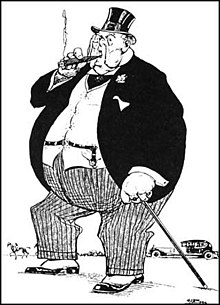
The news that serial tax dodger Philip Green bought his third luxury super-yacht for £100 million, a sum similar to the amount that was effectively sequestered from the BHS pension fund, and which was subsequently hid in tax havens wrecking the lives of thousands of his employees in the process, is symptomatic of the kind of rot that has spread throughout the high echelons of the ruling class. Like rising damp in an old building that spreads throughout the foundations before working its way through the brickwork until it eventually subsumes the entire edifice, Britain is currently suffering from another kind of infestation that of the ruling class “elite” whose unprecedented actions and decisions are undermining the rules and laws on which the proper functioning of a civilized society depend.

The biggest scandal isn’t about the corruption surrounding the Panama Papers, bankers and the revelations about Philip Green (as bad as they are), but about wealth inequality. Currently, the top 1 per cent own as much as 99 per cent of the rest of the world combined. What the Panama Papers revelations highlighted was just how unequal the world is. In his book, ‘The Hidden Wealth of Nations’, economist Gabriel Zucman estimates that worldwide, more than $7.5 trillion is stashed away in offshore accounts. As an indication of just how much that is, the sum amounts to some 8 per cent of the entire financial wealth of the world. About 80 per cent of that has not, and will not, be taxed at all, ever.

This level of tax avoidance increases the wealth gap between the rich and poor. Hiding vast sums of wealth from the prying eye of governments makes it easier for the super rich, represented by the 1 per cent, to remain rich and avoid tax policies which are meant to help the 99 per cent. Off-shore accounts also make it more difficult for everybody else to get rich because of the uneven playing field that results from these tax havens. The 99 per cent among the mainly middle income earners are paying higher taxes to make up for the taxes that the 1 per cent don’t pay.

Although on average slightly less than 8 per cent of all the financial wealth of the world is off-shore, Europe fares worse at 10 per cent. By contrast, off-shore financial wealth in Latin America stands at 20 per cent, in Africa the figure is 30 per cent and in Russia an incredible 50 per cent of all its financial wealth remains hidden off-shore. What all this indicates is the sheer scale of a problem that hits the developing world the hardest where the results for the very poorest who have no access to any form of social protection, can literally be death.

As far as Europe is concerned, the massive use of tax havens began in the 1920s in Switzerland. In Britain this trend became a feature of society around the mid-to-late 1970s. Numerous tax havens had began to spring up during this time which is when the great wealth disparity really started to make its mark. This was no accident. During this period, the function of the state began to change from that of ‘welfare provider’ to more ‘pro-business facilitator’. The ideology that came to embody this change was neoliberalism.

Instead of the direct provision of services administered democratically at the local level, the trend has increasingly been for the state to act as a purchaser of these services which have then been provided privately and indirectly. As each separate financial intermediary takes their slice of the financial pie, the temptation for corrupt practices becomes greater and the concentration of capital and deregulation of labour markets more acute.

With the balance of economic power tilted increasingly towards the rich who are able to buy the influence of politician’s, the impact on democracy has been devastating for millions of ordinary people. This hollowed out system of democracy is one in which the 99 per cent increasingly seem to find it difficult to find some personal and meaningful pattern in a social world dominated by huge and distant monoliths whose power over the livelihood of millions seems absolute.

This explains the growing popularity of ‘unorthodox’ politician’s like Jeremy Corbyn, Bernie Sander’s and even to an extent, Donald Trump, who offer the electorate an alternative to the ‘business as usual’ politics of the corporate controlled political machine. However, until a distinct break with the current system occurs, the masses are faced with the prospect of more of the same neoliberal ideology predicated on austerity.

Contrary to popular mythology, it wasn’t the Conservative government of Margaret Thatcher which came to power in 1979 that invented neoliberalism, rather that distinction is reserved for the preceding Labour administration under James Callaghan. It was the Labour government, not the Tories, who accepted the terms of the austerity package proposed by the IMF in 1976. The main condition of the IMF loan, insisted on by the US Treasury, was that the government deficit must be reduced by cutting demand.

Interest rates were raised and government spending reduced. Wage, job and welfare cuts were the hallmark of the ‘social contract’ between wage labour and capital agreed by the unions to bail out the government. As Colin Leys notes:

“From 1976 onwards, Labour accordingly became ‘monetarist’. Its leaders accepted that full employment could no longer be achieved by government spending but must be sought through private sector growth. For the necessary investment to take place, prices must reflect real values, and this in turn required ‘squeezing’ inflation out of the system and permitting the free movement of capital. In 1978 Treasury officials began preparing to abolish capital controls.”

Spearheaded by the deregulation of the movement of capital, the breaking of the unions and the centralization of state power that favoured the corporations in the running of state enterprises, rates of inequality that had been reduced from the previous highs of the depression years of the late 1920s began to grow again. During the 1920s wealth disparity was huge. Then, as people at the top paid more taxes, and people in the middle began to earn more, the gap became increasingly smaller.

As the consensus between capital and wage labour started to go in reverse from about 1980, inequality began to increase steadily to 1920s levels which is roughly the point they are today. By the mid 1980s tax havens started to emerge in places like the Caymen Islands, Singapore, Hong Kong, Panama, Bermuda the British Virgin Islands and increasingly, London. All of the wealth located in these havens isn’t actually invested their. This means that the vast majority of people who live in, say, London, don’t benefit from foreign money that’s invested in, for example, property due to the massive rise in property prices that result from these investments.

So why do the 99 per cent put up with all this?

Many people tend to get distracted, whether that’s through working all the hours under the sun merely to survive, or through sports or other forms of leisure activities. Many others are angry but feel disconnected from the political process. The politicians, by contrast, benefit from the current situation so they are not motivated to change it, largely because they are immune from any effective political pressure from below.

The consequences for civil society that emanate from the combination of public apathy and apoplexy are potentially extreme. The lack of proper investment in public services like the NHS, social care, libraries and schools will end up with them collapsing. This is a process that to a large extent is already happening. The fact that the super rich have their money stashed away off-shore, while many among the poor don’t earn enough to pay tax in the first place, has resulted in an insufficient tax yield.

The reason why many people can’t get a prompt appointment with their GP, paving stones in the streets are cracked, their libraries are staffed by volunteers and there are pot holes on the roads that never get attended to, is directly linked to these factors. So while public services are being slashed on the one hand, people are increasingly having to pay for the ones that remain with money, in many cases, they haven’t got. If they are fortunate enough to have a job, it’s likely that their disposable income in real terms wouldn’t of increased in the last four decades.

Particularly for the young, the prospects of finding secure, fulfilling and well paid work is as remote now than it has been for at least 70 years and the situation is likely to get even worse as robots begin to replace many traditional blue collar and even white collar jobs. Leaving aside the threats posed by climate change, the underlying root cause of the problems society faces both now and in the coming period, is the inability of governments’ to take a long term approach to tackling levels of inequality that are so extreme that violent disorder on the streets may be the only language the politician’s will take note of.
The hidden hands that feed racism

By Daniel Margrain

Those who have been following the flamboyant political showman, Donald Trump, whose heavy-handed approach to demonstrators at his rallies and outrageously racist remarks many are familiar with, might be surprised to learn that similar comments, albeit hidden ostensibly under the cover of liberal respectability, have gone largely unnoticed within media circles. Nine years before the widespread condemnation of Trump’s remarks, Douglas Murray, Associate Director of the Henry Jackson Society, echoed Trump when, in an admittedly less demagogic fashion, he argued for the banning of Muslim immigration into Europe.

Murray, who heads the avowedly neoconservative and CIA-funded organization that has links to the US and European far right, has also defended the use of torture by Western intelligence agencies. One might think that leading figures within the political and corporate media establishments – particularly on the liberal-left of the spectrum – would be keen to distance themselves from such a right-wing organization. On the contrary, both the hierarchy within the Parliamentary Labour Party (PLP) and political commentators not only cite the Henry Jackson Society when commenting on Islamic affairs, but actually embrace it as well.

The role call of pro-Syria bombing Blairites within the PLP who sit on the Political Council of the Henry Jackson Society include Margaret Beckett, Hazel Blears, Ben Bradshaw, Chris Bryant and Gisela Stuart, while the BBC regularly give air time to Murray on mainstream political discussion and debating programmes like Question Time, This Week, Today and Daily Politics. The organization also acts as a front for the security services via the Quilliam Foundation think tank whose role, in return for tax payers money, is to publicly denounce Muslim organisations and, with the collaboration of the neo-fascist, Stephen Yaxley-Lennon (AKA Tommy Robinson who heads Pegida UK and was formerly the head of the racist and fascist English Defence League), talk up the Jihadi threat. It’s extremely revealing that establishment figures within the hierarchy of the Labour Party who have in the recent past complained about the alleged infiltration of left wing elements within the party, are willing to align themselves with racists and fascists.

The racist outlook of Murray et al and the means to promote it within media circles are far from unique and rarely, if ever, challenged. Former UK diplomat, Craig Murray quoted the “darling of the Mail and the BBC”, Melanie Phillips’ incitement to religious hatred:

“Romney lost because, like Britain’s Conservative Party, the Republicans just don’t understand that America and the west are being consumed by a culture war. In their cowardice and moral confusion, they all attempt to appease the enemies within. And from without, the Islamic enemies of civilisation stand poised to occupy the void…With the re-election of Obama, America now threatens to lead the west into a terrifying darkness.”

To my knowledge, apart from Murray, not a single prominent commentator alluded to Phillips’ Islamophobia and racism.

Another example was the sympathetic treatment the BBC afforded to the ‘doyen of British fascism’, the BNPs Nick Griffin. In 2009, Griffin appeared on the BBC’s flagship political discussion programme, Question Time despite the fact that the Standards Board for England’s 2005 description of the BNP as Nazi was “within the normal and acceptable limits of political debate”. The European Parliament’s Committee on racism and xenophobia described the BNP as an “openly Nazi party”. When asked in 1993 if the party was racist, its then deputy leader Richard Edmonds, who has been convicted for racist violence, said“We are 100 percent racist, yes.”

Prior to his appearance on the programme, Griffin expressed delight with the decision of the BBC to have granted him a major political platform with which to air his party’s views. These views went unchallenged by the other guests on the show that included Labour’s Jack Straw, who had subsequently insisted that female Muslim constituents visiting his constituency office in Blackburn remove their veils and claimed that Pakistani men saw white girls as “easy meat”. At the time of Griffin’s appearance on Question Time, the BBC attracted an audience of almost 8 million viewers, three times its average. Following the publicity generated by Griffin’s appearance, the Daily Telegraph newspaper revealed the results of a UK Gov opinion poll which indicated that 22 percent of British people would “seriously consider” voting for the BNP and that 9,000 people applied to join them after the programme aired.

Many of the individuals who were directly responsible for overseeing Oxbridge-educated Griffin’s appearance – including BBC director-general, Mark Thompson – had themselves been educated at one of two of Britain’s elite educational establishments – Oxford and Cambridge. Griffin, who graduated in law, told the Guardian newspaper that he admired Thompson’s “personal courage” by inviting him. Nicholas Kroll, then director of the BBC Trust – an organization that supposedly represents the interests of the viewing public – was also educated at Oxford. At the time of writing, at least three of the 12 members of the government-appointed trustees, were educated at either Oxford or Cambridge, while the remainder have a background in either law, business or economics. Two years before the Question Time appearance, Griffin had generated a significant amount of publicity following the controversy surrounding Oxford universities decision to allow him a public platform to address students at the universities campus.

Despite the links the establishment has to fascism, the notion that fascist sympathies are rooted within the high echelons of the former has not been widely recognized within public discourse, even though last July, the British royal family were shown giving Nazi salutes as part of a home movie. The problem for the elites is not that these links exist, rather the concern is the possibility that the media will shine a light on these relationships.

As Craig Murray put it:

“It says a huge amount about the confidence of the royal family, that they feel able to respond to their Nazi home movie with nothing other than outrage that anybody should see it…. The royal family is of course only the tip of the iceberg of whitewashed fascist support.”

Fascist ideology is the bedrock on which our political and media culture is deeply embedded. The reality is right-wing establishment think-tanks like the Henry Jackson Society and MigrationWatch UK use racist based arguments around the issue of immigration as as their justification for arguing either for, on the one hand, British withdrawal from the EU or, on the other, for the implementation of greater neoliberal reforms as a precondition for maintaining the countries continued membership within it. This, in turn, provides the intellectual echo chamber for the racist UKIP and BNP as well as the ultra right-wing factions within both of the main political parties.

What this illustrates is the contradictory nature immigration plays as part of the function of the liberal democratic state within capitalism which transcends party political lines. Both the official ‘left’ and ‘right’ are prepared to use false and contradictory arguments around the issue of immigration in order to whip up divisions within society for naked opportunistic short-term electoral gain. Under the New Labour government of Tony Blair, for example, Gordon Brown opened up the UK labour market to potentially millions of workers from the Accession 8 (A8) countries that comprised the former Soviet Bloc as the basis for restoring Britain’s economic status against a backdrop of sustained industrial decline.

Brown did this as the means of addressing Britain’s demographic problems in terms of its ageing population as well as to fill existing skills gaps. However, by the time he had taken over the reigns of power from Blair, he began using the racist language of division by emphasizing the need to secure “British jobs for British workers”. This was after oil refinery workers in 2009 protested against their replacement by foreign workers that he – Brown – encouraged. Short-term electoral interests encourage politician’s to play the race card which does not necessarily correspond with those of their paymasters in the boardrooms of the corporations whose primary concern is to secure the most plentiful, skilled and cheap workers possible.

In pure economic terms, immigrants make a positive contribution, not least because the state has been spared the considerable expense of educating and training them. Political leaders know this and that is precisely why the shrill talk deployed at elections is invariably at odds with the policies they actually implement when in office. That, in turn, is why it is so easy for the bigots within racist parties like UKIP and the BNP to expose the hypocrisy of the mainstream parties while also providing organisations like the Henry Jackson Society and MigrationWatch UK the ammunition they need as their cover for pursuing a racist agenda of their own.

Too readily, those at the top are quick to exploit voters’ concerns about the supposed threat that immigration poses in terms of undermining ‘social cohesion’. But they do this so as to engender a sense of division to make it easier for them to rule over everybody. When tensions arise from time to time, it’s those at the bottom who are routinely condemned for their prejudice and bigotry in the media, whereas the more significant racism which emanates from the policies of those at the top who foment it, goes virtually unnoticed.

It’s not my intention to absolve working class racists of their actions, but rather to point out that the more significant forms of racism is formed in the corporate and media boardrooms, think-tanks and elite political sphere indicative of ruling class power. Although this racism is given political expression in the form of scare stories almost daily in the gutter press of the Sun, Daily Mail and Daily Express that perpetuate them, it’s not restricted to these tabloids. The Chair of MigrationWatch UK, Sir Andrew Green, for example, is regularly granted a media platform in order to push an anti-immigrant agenda, albeit a subtle one.

Similarly the likes of Douglas Murray and Toby Young who newspaper proprietors and TV executives consistently employ to espouse their right-wing views, do a great deal to distill the more overt expressions of racist scare stories so as to appeal to the realms of their middle and upper middle class viewers and readers. It’s deemed irrelevant by corporate executives that the ‘journalists’ they employ proffer spurious and deliberately misleading information, simply that they give their demographic what they think that want to hear and read to increase their customer base and so boost their profits in order to satisfy the demands placed on them by their advertisers.

And that, I submit, is hardly the foundation on which to build a civilized, multi-cultural and inclusive society. Donald Trump may be an oaf and a racist, but is he really much different to the elite that rule us?


New Hampshire rejects establishment politics

By Daniel Margrain

There appears to be a pattern emerging within conventional democratic politics that seems set to break the neoliberal stranglehold that has dominated the said politics over the last few decades that is nothing short of revolutionary. Symptomatic of this radical shift as far as Europe is concerned has been the electoral successes of left parties in countries like Spain, Greece and Britain. Illustrative of the break with the traditional centre-right polity in America has been the ascendancy of Bernie Sanders who surged to victory beating Hillary Clinton resoundingly in the Democratic New Hampshire primary.

Whereas Clinton’s voter demographic is largely restricted to those people who are over the age of 65 and who have a family income of more than $200,000, Sanders carries majorities with nearly all demographic groups that include both men and women and those with and without college degrees. The popularity of Sanders reflects an upsurge in the grass roots opposition to the pro-war neoliberal consensus within the Democratic Party and their framing of a triangulation ideology that began under Bill Clinton and continues with Obama.

A Parallel can be drawn here with the phenomenal rise in grass roots Labour Party membership in Britain that elected Sanders’ equivalent, Jeremy Corbyn as leader on the back of a wave of apoplexy and disenchantment with both the self-interested careerist Blairite rump within the Parliamentary Labour Party and the elite political class in general. What we are witnessing on both sides of the Atlantic is the political and media establishment’s attempt to hold on to the levers of corrupt political and corporate media power and the privileges that come with them.

To this end, the strategy of the latter is to restrict the flow of dissenting information that conflicts in a fundamental way with these powerful interests. Set against this mutually reinforcing system of power and privilege undermining democracy, is a tidal wave of public anger and bitterness. Significantly, during his victory speech, Sanders briefly alluded to the kind of collusion between the media and political establishments’ described and their corrupting influence:

“The people of New Hampshire have sent a profound message to the political establishment, to the economic establishment, and by the way, to the media establishment.”

To my knowledge not a single mainstream media outlet has reported this part of Sanders’ speech. If one happens to be in any doubt that the liberal-left media in Britain is anything other than in thrall to the “feminist-progressive” and warmonger Clinton, than one need to look no further than the opinion pages of the Guardian. How the paper is able to reconcile its support for the neoconservative pro-Israeli hardliner predicated on her “feminism” can only be rationalized from the perspective of it’s usurpation to power.

As Craig Murray put it:

“The stream of “feminist” articles about why it would advance the cause of women to have a deeply corrupt right winger in the White House is steadily growing into a torrent. It is a perfect example of what I wrote of a month ago, the cause of feminism being hijacked to neo-conservative ends.”

In America last Sunday, CNN gave the Republican candidate, Donald Trump about half an hour of air time where he was able to call for waterboarding. He went on to state that he was in favour of much worse forms of illegal torture. Despite this, Trump’s comments went unchallenged by the CNN journalists whose role is clearly to promote him.

But as repugnant as the above is, it’s not the obvious differences between the right-wing extremism of Trump and other Republican’s compared to the democratic socialism of Sander’s that is the core issue voters are faced with in deciding whether to vote Democrat or Republican. Rather it’s the kind of cynical attempts of Clinton to disingenuously hitch on to the coat-tails of Sander’s for electoral gain depending on which way the prevailing wind is blowing, that contributes to left-wing voter fatigue that ultimately can only benefit the right.

Emphasizing the ideological distinction between himself and Clinton, Sanders said:

“What the American people are saying—and, by the way, I hear this not just from progressives, but from conservatives and from moderates—is that we can no longer continue to have a campaign finance system in which Wall Street and the billionaire class are able to buy elections. Americans—Americans, no matter what their political view may be, understand that that is not what democracy is about. That is what oligarchy is about. And we will not allow that to continue. I do not have a superPAC, and I do not want a super PAC.”

Former Democratic nominee, Arnie Arnesen, gives expression to this sentiment:

“What Bernie Sanders showed—and, to some extent, even Donald Trump has shown—is that this is no longer a time for establishment politics, that there is a problem. There is a disconnect between what they do and what they think and what the American people are feeling. Bernie tapped into that, not just in New Hampshire, but around the country.”

Fundamental to the popularity of Sanders has been his attack on the system that gave rise to the Wall Street banking scandal of which nothing short of a political revolution can resolve. He said that the problems in the United States stem from the fact that the country where mainly 62 American billionaires have the wealth of half the entire population of the world, is one of the most unequal and that he intends to do something about it:

“When the top one-tenth of 1% now owns almost as much wealth as the bottom 90%, that’s not fair. It is not fair when the 20 wealthiest people in this country now own more wealth than the bottom half of the American people…. Together we are going to create an economy that works for all of us, not just the 1%. And, when millions of our people are working for starvation wages, yep, we’re going to raise the minimum wage to $15 bucks an hour. And, we are going to bring pay equity for women.

And, when we need the best educated workforce in the world, yes, we are going to make public colleges and universities tuition free. And, for the millions of Americans struggling with horrendous levels of student debt, we are going to substantially ease that burden….The greed, the recklessness, and the illegal behavior drove our economy to its knees. The American people bailed out Wall Street, now it’s Wall Street’s time to help the middle class.”

Other progressive policy messages Sanders outlined in his speech on issues such as healthcare, climate change, foreign policy and minority rights, are similarly resonating within the Democratic Party and arguably further afield. In a desperate attempt to add some kind of (misguided) substance to her campaign, Hillary Clinton’s team called on former Secretary of State, Madeleine Albright. The “feminist” who, under Clinton’s husband during the Iraq debacle, asserted that U.S. policy objectives were worth the sacrifice of half a million Arab children, shamelessly invoked identity politics as a tactic intended to vilify women who voted for her Democrat opponent. “Women’s equality is not done”she said “There’s a special place in hell for women who don’t help each other.”

Almost certainly, what a significant amount of New Hampshire Democrats considered before they cast their votes was to evaluate both candidates’ voting record. Clinton’s record has been dogged by accusations of triangulating flip-flopping. This has been put sharply into focus by her sudden shift to the left on issues such as the Keystone XL pipeline and the Trans-Pacific Partnership soon after Sanders entered the race.

Certainly, her voting record on key issues, unlike that of her rival, has been less than stellar. From supporting the 2001 Patriot Act through to the Iraq and Syria interventions and many other issues there is very little, if anything, to distinguish her record from her Republican rivals.

Will there be a Blairite coup to unseat citizen Corbyn?

By Daniel Margrain

Fantastic result. Now the hard work begins to purge the party hierarchy of the pro-war, pro-big business red Tory Blairites. The opinions of a reinvigorated party membership who propelled Corbyn into the spotlight will be respected so long as Corbyn remains leader. I heard Ken Livingston on LBC say that under Corbyn the party will unify and there will be little signs of any attempts to undermine him.

No sooner had Corbyn’s victory based on clear and unambiguous principles been announced, then a Shadow Frontbencher resigned in protest over those principles. This was shortly followed with threats to resign by other “modernising” Frontbencher’s who vowed to do so on the basis that Corbyn refuses to moderate his “extreme” policies.

Of course, not being a friend of Israel, supporting the nationalisation of the railways and utilities, opposing nuclear weapons and war, opposing the growing wealth gap and supporting the need for a massive affordable house building programme that benefits the mass of the population, are all extreme measures, but bailing out bankers that benefits nobody, is not.

How stupid can Corbyn supporters be?

According to the Daily Mail, among those refusing to serve in his team are current shadow chancellor Chris Leslie, shadow education secretary Tristram Hunt, shadow communities secretary Emma Reynolds and shadow defence secretary Vernon Coaker. Others include shadow transport secretary Michael Dugher, shadow chief secretary to the Treasury Shabana Mahmood, shadow international development secretary Mary Creagh and shadow Cabinet Office minister Lucy Powell.

I’m sure the Tories will welcome these unscrupulous careerists with open arms. It will be interesting to see how the triangulated Tory-lite views of the vast majority of designer suited robots in the hall where the result was announced who follow to the letter the scripts of their paymasters and who believe nothing whatsoever in the views espoused by their leader, can be reconciled with Corbyn’s own long-standing principled outlook.

It’s precisely these kinds of principles that has resulted in the regurgitation of the official/media meme which criticises Corbyn for voting against his party 500 times. This is represented as disloyalty. The notion that he might have voted against the Tories, while most of his Blairite colleagues, many of whom are war criminals, voted with them, is quietly forgotten.

Never before have I witnessed such a disconnect between the beliefs of the labour hierarchy on the one hand and those of its leader who carries with him the aspirations and hopes of the people who voted for him on the other. This is not the kind of euphemistic and disingenuous understanding of “aspiration” trotted out by Blairites in which neoliberal economic policy allows the super rich to get even richer, but one in which the basis of policy can give rise to the potential for everybody to get where they want without demonizing those who for whatever reason, don’t.

My fear is that the gap between the ideology represented by the elite within the hierarchy of the party and the multitude of its members is so vast that the void is irreconcilable unless the party is purged of this clique. I suspect that something will have to give as the party moves forward but we will see.

As I type this, Corbyn is protesting on a rally about the terrible treatment of refugees created by Cameron and Blair’s wars. Could, you dear reader, have ever imagined any of his predecessors post-Michael Foot doing that?

The idea that a highly principled leader of a party who espouses peace and reconciliation at every given opportunity, can reconcile two diametrically opposing forces seems to me to be a bridge too far. I hope I’m proven wrong.

The Rich Need To Be Forced To Pay Their Way For The Benefit Of All

Leading American venture capitalist Nick Hanauer has argued that the actions of capitalists’ need to be reined in through a system of planned and coordinated regulation in order for the capitalist system to be sustainable. This is what he said in a BBC TV interview in front of a live audience:

Capitalists have the idea that THEIR things will be bought by everybody else as a result of higher wages paid by OTHER capitalists. But this logic of paying higher wages to staff to help improve business activity more generally, doesn’t seem to apply equally to them since they will insist on paying THEIR OWN workers next to nothing thereby not absorbing the costs themselves resulting in them gaining a competitive advantage over their rivals. The simple truth is, if a higher minimum wage was introduced universally, not only would it be affordable, but something like 40% of American’s would be able to buy more products from everybody thus benefiting all capitalists across the board. Business is challenged today because fewer and fewer people are able to buy things [1].

The implication, in other words, is that the capitalist system needs to be regulated by governments’ in order to save it from the rapacious actions of competing capitalists driven by their insatiable need for profit maximization. This rationale was long ago grasped by Karl Marx who understood that the essence of the capitalist system is, in his phrase, “accumulation for accumulations sake.”

So why don’t capitalists insist on using free labour and make their workers work all the hours under the sun? After all, wouldn’t that lead to higher profits? And one might also ask why their representatives within the elite political establishment would bother to spend any money at all on welfare? The simple but correct answer is that where they have a choice, they don’t. Where labour supply is low, the state is in effect forced to intervene on behalf of capitalists by introducing welfare as the means of preserving and reproducing labour.

But where labour is plentiful, the state rarely feels compelled to introduce health and safety, minimum wage laws and welfare.The rationale for this is that if a worker dies of malnutrition or has an accident at work, he or she can be easily replaced by another worker. Under such circumstances, the state regards these kinds of misfortunes as a price worth paying. Consider this account of the conditions of child labour in the lace industry in Nottingham in 1861 by a local magistrate:

Children of nine or ten years are dragged from their squalid beds at two, three, four o’clock in the morning and compelled to work for a bare subsistence until ten, eleven or twelve at night, their limbs wearing away, their frames dwindling, their faces whitening, and their humanity absolutely sinking into a stone-like torpor, utterly horrible to contemplate [2].

Compare and contrast that to a recent study of the conditions of life for rural migrants in contemporary China:

The trafficked children] came from faraway Liangshan in Sichuan and most of them are not yet 16. The overseers sought and recruited them from families mired in poverty, promising them high wages; some were even abducted and sent off in batches to Dongguan and from there distributed by the truckload to factories across the Pearl River Delta. On unfamiliar soil these children are often scolded and beaten and have only one proper meal every few days. Some little girls are even raped. Day after day they undertake arduous labour. Some children think about escape, but the road is blocked. The overseers threaten them and warn them that if they try to run away, there will be a price to pay [3].

What the above illustrates, is that the plentiful supply of labour power was as pertinent during the early days of the industrial revolution in Britain as it is to present day China. In both cases the introduction of welfare as the means of preserving and reproducing labour was not a concern for capitalists or the state. Consequently, welfare provision is as scant in China today as it was in 19th century Britain.

Similarly, while the deaths of more than 1,100 garment workers in a factory building collapse in Dhaka,Bangladesh, in April 2013 [4], most of them women on subsistence wages, is an unspeakable tragedy for their families and friends, it is of much less significance, other than concerns about negative publicity, for companies such as Primark for whom they were producing cheap clothes, simply because there are plenty more desperate workers who will take their place [5].

Where, however, the supply of labour is less plentiful or where labour becomes more skilled and consequently more expensive, losing workers through injury or disablement, or through working them to death doesn’t really make economic sense. But that doesn’t mean that capitalists in Britain or America wouldn’t insist that their workers work all the hours under the sun in the short term for peanuts if they thought they could get away with it.

One of the contradictions inherent to capitalism is that the system as a whole needs to spend money to make profits, yet every individual capitalist wants to spend as little as possible. The lengths to which giant companies like Amazon, Google and Starbucks will go in order to avoid paying tax shows how that dilemma is played out.

In the longer term, having workers working 14 or 16 hours a day for peanuts is very wasteful. It’s like over-exploiting the soil. However, given that individual capitalists themselves won’t do anything about it for fear of losing their competitive advantage over their rivals, the state as the representative of the capitalist class as a whole is forced to step in.

This brings me back to the wisdom implicit in the Nick Hanauer quote at the beginning of this article. Hanaeur’s argument about the necessity of the United States government to substantially increase the legal minimum wage across the board in order to save capitalism from itself, is in principle, no different from the minority of capitalists in 19th century Britain who argued in favour of the introduction of the Factory Acts of the 1830s and 1840s which set down a maximum length for the working day.

An advanced low wage and minimal welfare provision capitalist state like Britain is the modern equivalent of its counterpart during the industrial revolution prior to the introduction of the Factory Acts. What is required is a radical re-think with regards to our current direction of travel.away from the failed neoliberal economic model of austerity which economist Paul Krugman describes as:

A con that does nothing but harm to the wealth of this nation. It has been discredited everywhere else: only in Britain do we cling to the myth.[6].

It’s in Britain where the redistribution of wealth from the bottom to the top continues at apace, much of it as a result of huge subsidies paid to the richest landowners [7]. As inequality continues to rise so does the potential for public disorder. At present, the richest tenth pay 35% of their income in tax, while the poorest tenth pay 43% [8]. Is it too much to ask that those with the deepest pockets pay their way, thus creating the potential for the kind of equitable society in which everybody wins?

This is not pie in the sky stuff but a pragmatic solution to the problems we face. Individuals as politically and ideologically as far apart like Jeremy Corbyn, Caroline Lucas, Nick Hanauer, Joseph Stiglitz, and other top economists and capitalists, understand what’s required to get us out of the mess we’re in. It’s a pity that people like Duncan Smith, Cameron and Osborne prefer to put ideology before pragmatism.

Why is Tory economic dogma seen as mainstream, but Corbynism extreme?

Sixty-six years after the foundation of the welfare state, under the current Conservative government, every aspect of it is under attack. The 2012 Health and Social Care Act, for example, will remove the duty on the Secretary of State for Health to provide a comprehensive health service, while the requirement in the act that up to 49 percent of services can be tendered out to “any qualified provider” will rapidly lead to the privatisation of the NHS in England and Wales. Already between a quarter and a half of all community services are now run by Virgin Care [1].

In social care, a combination of cuts of around 30 percent to local authority budgets since 2010, increasingly restrictive eligibility criteria for services, and inadequate personal budgets will leave millions without the support they need and increasingly dependent on the family, and in particular women family members [2].

And in place of what was once called social security, unprecedented cuts across all areas of benefits, especially disability benefits, the introduction of sanctions regimes which have contributed to 500,000 people being forced to use food banks, and a bedroom tax affecting around 600,000 people will increase the number of children living in poverty by 200,000 [3].

All of this has been underpinned by a brutal ideological offensive against people on benefits which explains the reason for the growing rates of sickness benefit claims are for those who suffer from depression and anxiety [4], as well as the increase in the rate of suicide among those on benefits [5].

The ideological attack on the poor is predicated on the governments’ insistence that those able to defend themselves least, pay the costs for a global economic crisis which began in 2008 but was not of their making [6].

Over the last forty years, successive Labour and Tory governments’ have been committed to rolling back the post-war welfare settlement under the guise of debt reduction premised on neoliberalism which involves a change to the function of the state as less ‘welfare provider’ to more ‘pro-business facilitator’.

Many people believe that the neoliberal assault that embody these changes began with the 1979 Thatcher governments’ limited (by today’s standards) publicly-owned asset stripping. But this is a myth. It was actually under the Callaghan administration that preceded Thatcher that the initial structural changes happened  As Colin Leys (p.41) notes:

From 1976 onwards Labour…. became “monetarist”. It’s leaders accepted that full employment could no longer be achieved by government spending but must be sought through private sector growth. For the necessary private investment to take place, prices must reflect real values, and this in turn required “squeezing” inflation out of the system and permitting the free movement of capital. In 1978 Treasury officials began preparing to abolish capital controls

But it is the assault by the trio of Cameron, Duncan Smith and Osborne on, not just the welfare state, but the entire ethos of the public sector in general, that has taken things to a new level. This is demonstrated, in part, by Osborne’s intention to sell off £31bn of public assets in 2015-16. It is clear that the Tories are using austerity and the neoliberal ideology that underpins it, as an excuse to expand the pro-business facilitator model to areas within the public sector that Thatcher could only in her wildest of dreams imagined.

That said, this approach has limits in terms of maximizing utility to capitalists within a modern state. It is precisely this kind of rationale that explains why the former governor of the Bank of England announced that the current situation is “the worst crisis at least since the 1930s” [7].   

As this writer has pointed out previously, even venture capitalists realize that proper welfare provision for those not working as well as a substantial increase in the the minimum wage for those in work, is necessary to prevent the capitalist system that they benefit from collapsing in on itself [8].

In 1943, the Tory MP Quintin Hogg warned that “If you don’t give the people social reform, they will give you social revolution” [9]. This is as relevant today as it was then.

It’s therefore in nobody’s interest that wages are kept depressed and the unemployed and sick are continually made to suffer. The fact they continue to suffer unnecessarily is the reason why a political space has opened up for the likes of Jeremy Corbyn to move into.

Although much of the mainstream media are characterizing Corbyn’s policies as unworkable, misguided and extreme – and seemingly doing everything in their power to undermine and discredit him -, these are nevertheless policies that are, in truth, mainstream and pragmatic. This explains why an increasing number of economists have publicly come out in support of the kinds of economic policies Corbyn articulates [10].

These policies are economically credible, popular with the public and, for most of the world, regarded as mainstream:

In 2009, most of the world was following mainstream economics of the kind that Corbyn is proposing today in undertaking a fiscal stimulus to combat the impact of the financial crisis. But in the UK a certain politician decided to ignore ‘economic credibility’, and instead proposed doing the opposite: what has subsequently become known as austerity [11].

The imposition of 40 years of neoliberal economic dogma pursued by successive Labour and Tory governments’ has failed the people of Britain who rightly, in my view, see Corbyn as the catalyst for change. As time goes on there will be increasing pressure not just from below, but from the top, for the Tories to change course.

As the open letter to the Guardian by over 40 leading economists illustrates, this is already starting to happen. If the government refuse to acknowledge that austerity and neoliberalism have failed, and thus continue to stick rigidly to their failed ideology of cuts and austerity, the British people will eventually elect a figure like Corbyn into power on a mandate to do something about it. That time is coming closer with every passing day.