Breaking the Depleted Uranium Ceiling

It is an astonishing fact that, despite near universal recognition now that the war in Iraq was a disaster, no major British social institution is headed by a single one of the majority of the population who were opposed to the war.

Every Cabinet Minister actively supported the war. Of the fifteen Tory MPs who rebelled and voted against the war, not one is a minister. Civil servants officially have no politics but privately their opinions are known. There is not one single Permanent Under Secretary of a UK government department who was known to be against the war and most were enthusiasts. Simon Fraser, PUS at the FCO, was an active Blairite enthusiast for the war. Though no Blairite, the Head of MI6 Alex Younger was also an enthusiast.

The BBC was of course gutted following its revealing of the truth about Iraqi WMD, and the subsequent murder of David Kelly. Following the ousting of Greg Dyke, both Governors and Directors-Generals have been known supporters of the war. Of the 107 bureaucrats in the BBC who earn over 100,000 pounds pa, insiders estimate that only five were opponents of the war. Craig Oliver – who has now left the BBC for Cameron’s media operation – and James Purnell are absolutely typical of the BBC Iraqocracy.

Every current editor of a UK national newspaper supported the Iraq war. At the time of the war there was one editor opposed – Piers Morgan – who subsequently became a derided and marginalised figure. Not only are the editors firmly from the neo-con alliance, but the high profile commentators who cheered on the war – David Aaronovich, Nick Cohen, Melanie Phillips, John Rentoul, Rod Liddle etc. – have all seen their careers flourish. None has suffered from their appalling lack of judgement. There is no similar raft of commentators who were against the war who enjoy such constant media promotion and massive salaries. Many, like Peter Oborne, have suffered unexpected career glitches. There is no head of a major TV channel in the UK who was against the war in Iraq.

The theme runs through all the public professions. Of the hundreds of academics who took firm positions against the Iraq War, I cannot find a single example who went on to become a University Vice-Chancellor or Principal. By contrast actual war criminals Richard Dearlove and Valerie Amos were parachuted into academic leadership posts. The Chiefs of Staff of the armed forces were all true believers, compared to the massive scepticism that existed among senior officers.

The Iraq test even extends into the heads of institutions apparently quite unrelated, such as City of London banks and insurance companies. There are a tiny number of heads of FTSE 100 companies who were against the war.

It is not that there is an Iraq test. It is that Iraq is the touchstone for adherence to the neo-liberal consensus. All these professionally successful people share a number of attitudes, of which support for the Iraq War is a good indicator. There is a very strong correlation between support for the Iraq War and fierce Zionism. But there is also a strong correlation between support for the Iraq War and support for austerity economics. The strongest correlation of all lies in support for the Iraq War and for “business-friendly” tolerance of corporatism, TTIP, multinational tax avoidance, low taxation and marketization of public services including in education and health.

To return to where I started, the quite extraordinary thing is that there is a near-universal recognition in wider society that the Iraq War was both completely unjustified and a dreadful strategic blunder. Yet its support is a major pre-condition for membership of the governing elite.

The answer of course lies in its value as an indicator for a broad range of neo-liberal consensus attitudes. That is why, both the SNP and Jeremy Corbyn provide such a threat to the Establishment, through denying those attitudes. The fascinating thing is that the SNP and the Labour Party could be the only public institutions in the UK of any note with an anti-Iraq War leadership. The significance is that, in slightly different ways, both the prominence of the SNP and of Jeremy Corbyn are the result of a public revolt which the Establishment has been trying, absolutely desperately, to cut off.

Ed Miliband did not actually vote against the Iraq War, contrary to popular myth. Having both the Labour and SNP parties led by people who reject the raft of values symbolised by the Iraq test, who have broken through the depleted uranium ceiling, is a massive, massive threat to the meritlessocracy. Institutional control appeared to be complete and impermeable. Suddenly they face the danger of the opinions of ordinary people carrying weight. Expect the media control mechanisms to whir into still greater overdrive.

The above article was written by the former UK Ambassador to Uzbekistan, Craig Murray, originally posted on his blog on August 1, 2015.

Tweet this post

Do We Need the U.N To Protect Us From Our Own Government?

Protesters
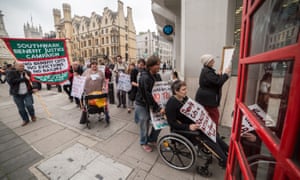
Protesters demonstrate against benefit cuts in London in 2014. Photograph: Guy Corbishley/Demotix/Corbis

The shocking news that in two years up to February last year some 2,380 disabled claimants died within two weeks of being assessed as fit for work as part of the governments Work Capability Assessment Programme (WCAP), is finally beginning to make the mainstream. I am a regular listener to LBC Radio and the issue is now a regular feature of many phone in shows. How long it will take before it makes peak time BBC television news bulletins is another matter, but at least the topic is making some inroads which has to be encouraging.

Such is the sheer brutality and callousness of Iain Duncan Smith, that the U.N now proposes to act in circumstances where the government resists. At the very least, the potential setting up of a U.N inquiry into Tory welfare reforms on the back of the deaths in the manner of, for example, Goldstone, could theoretically, in the longer term, result in the man responsible for causing untold misery and suffering being brought to justice.

But even if the U.N ultimately proves to be toothless as it was in terms of the misnamed Israel-Gaza conflict, the negative publicity they will generate for the government will be invaluable. Secondly, and even more importantly, the WCAP must be stopped in its tracks irrespective of the U.Ns findings. But short of electing an effective opposition into power worthy of the name, how can this be achieved in the short term?

Currently, as Michael Meacher acknowledged, parliament has no power to instigate an immediate emergency debate, Neither has it the power to force an inquiry into the workings of WCAP. So leaving aside the proposed U.N intervention, the options appear to be extremely limited. Questions have been raised in the House regarding the deaths but these were sidestepped. In any case, it’s telling that the questions were only asked in the first place because of a Freedom of Information (FOI) request.

The figures only came to light (conveniently) during the recent bank holiday, clearly in the expectation that they would be forgotten about. But it took nearly four months for them to be released and only then after pressure was applied as a result of a ruling by the Information Commissioner. The DWP had appealed against the Information Commissioner’s ruling and only gave up when campaigning blogger Mike Sivier submitted an application for the appeal to be struck out as an abuse of process. As Mike says, the DWP’s response to his FoI request shows three things very clearly

Firstly, that the DWP is very bad at responding to FoI requests – in terms of both timing and content. The response is deliberately written to make it as opaque as possible, and does not include all the information I requested, and this reflects poorly on both the department and its ministers. Therefore I shall be writing to the First-tier Tribunal (information rights), asking that a hearing scheduled for November 10 should still take place because the DWP has not answered my request.

Secondly, that despite the poor quality of the report, it is clear that the work capability assessment is not fit for purpose and the misallocation of people with long term illnesses – either into the work-related activity group or into the jobs market, classified ‘fit for work’ – has certainly led to needless deaths. Iain Duncan Smith said as much last week but it should not save him. Evidence that this was the case has been available since December 2011, when the number of deaths of people on ESA tripled – yes, tripled – in comparison with the average for the previous 11 months. The DWP and its ministers have been hiding this information from us for nearly four years. In the eyes of the law, that is criminal negligence – corporate manslaughter.

Thirdly, that the principles on which Employment and Support Allowance was designed are causing deaths. When Mrs Mike’s Contributory ESA ran out (she used to be in the work-related activity group), her benefit was cut off with no notification or advice about what to do next. How many others have received the same treatment? Many, it seems, according to the DWP’s statistics which show that the number of ‘unknown’ cases (into which these people are thrown as their NI credits are still paid) has dropped while the proportion of deaths in that group has increased hugely, year on year.

The fact that the issues relating to the WCAP are only now beginning to enter the wider public consciousness and, moreover, almost certainly reveal the tip of a much larger ice berg will, in years to come, be regarded as one of the greatest domestic political scandals of recent times.

The fact that the deaths have been brought into the open should be sufficient justification for the scrapping of the WCAP with immediate effect with a view to bringing a prosecution forward for all those responsible for hiding the facts from us for so long. I wonder if Blair and Duncan Smith like the same prison food?

Useless Mouths

Years before moving towards explicit racial genocide, the Nazis developed the notion of ‘useless mouths’ or ‘life unworthy of life’ to justify its ‘involuntary euthanasia’ program. Theorists argued that certain categories of people were nothing but a burden on society and therefore had no ‘right’ to life.   These ideas were a variant of nineteenth century ‘Social Darwinism’ and eugenicist theories, which adapted Darwin’s notion of the survival of the fittest to describe relationships within society or between nations and races as a perpetual evolutionary struggle in which the supposedly weaker or defective elements were weeded out by the strongest and the ‘fittest’ by natural selection.

Of course there was nothing ‘natural’ about these ideas, or the malignant ways that the Nazis made use of them.   In Nazi ideology, the state killing of the disabled, the sick and the mentally-ill was the beginning of a conveyor belt that led to the wholesale extermination of the Jews and ‘inferior races’ Slavic races during World War II.

Nazism may have been a unique political evil, but the influence of Social Darwinism should remind us that not all of its ideas were entirely original, and that Nazi Germany was not the only country to categorize certain peoples according to strictly utilitarian notions of their perceived usefulness to society.

Consider our own government.  This week it was revealed that nearly 4,000 people died within weeks of being declared fit for work by the DWP.  This ought to be a cause of massive, sustained outrage and disgust, and should certainly be enough to bring down the minister responsible.   Instead Iain Duncan Smith – the sneering face of Tory cruelty –announced new plans to force disabled people into work. Why?  Because Duncan Smith wants ‘to ensure everyone has the opportunity to transform their lives by getting into work’ – even if that transformation only applies to the few days or weeks before they die.

The fact that these deaths have caused very little outcry is a disturbing indication of how low UK society and its political class have sunk these last years.   Quietly, effortlessly, and with very little opposition, Britain has become a society in which certain categories of people are regarded in practice if not in principle, as ‘useless mouths’ whose value to society is measured solely in terms of their perceived negative impact on ‘the taxpayer’.

The government, with the feeble cooperation of a supine opposition, with the help of its tabloid allies and the shameful depravity of TV companies engaging in poverty porn, has been able to characterize people receiving state benefitsas ‘scroungers’  and parasites, rather than people who need the same help from the state that current taxpayers may one day need themselves.

This ideological assault has been so successful that even providing state assistance to the sick and the disabled is regarded as an unnecessary and unfair burden on the taxpayer, and the ability to work is treated as the sole benchmark of social usefulness. Once you begin to accept these parameters, it becomes very easy to force sick people to work, even though their deaths make it clear that they were are so ill that they should not be working at all.

Now some of you ought there might still be naive or sentimental enough to fell a little revulsion at the notion that sick and terminally-ill people should be put through the stress of having to look for work, or losing their state support in the last weeks of their lives.  But you are not getting the point: in the view of this government only people who work have any social value and the state should not be obliged to support the ‘useless mouths’ who don’t work.  Come on now, it’s not rocket science.

I’m not suggesting that we are ruled by Nazis.  Our government doesn’t deliberately kill the people it regards as useless.   Most of the time it merely torments them, and creates a situation in which death becomes more likely.   But its fanatical obsession with measuring usefulness solely in terms of the perceived benefits to ‘the taxpayer’ has created a society in which suffering and death can be regarded with complete indifference and produce nothing more than a collective shrug of the shoulders and a weary shake of the head.

The same ideology also applies to the scroungers who call themselves refugees or asylum seekers, who the government regards as nothing more than ‘health tourists’ and another unjustified burden on ‘the taxpayer’.   That’s why we have just passed a law which will reduce ‘failed’ asylum seekers and their children to destitution and hunger even if they can’t return to their countries of origin.   It’s why the Home Office has declared Eritrea a safe country on the basis of a discredited report by the Danish government.  It’s why we have allowed less than 200 Syrian refugees into the country.

If you enforce restrictions like these, there is always the possibility that people will die trying to evade them.  Our government knew that last year, when it argued against search and rescue operations in the Mediterranean on the grounds that such operations would increase the ‘pull factors’ that brought migrants here.   The unspoken corollary of this argument is an acceptance of death and suffering as a necessary consequence of border enforcement and immigration restrictions.

If you believe, as the government has again and again invited the public to believe, that the men, women and children who are coming to Europe have no other objective or motivation except to take advantage of our ‘generous’ benefits system – another burden on the taxpayer – then it becomes possible to accept any level of death, pain and injury with a sense of tragic equanimity, as though such deaths were the result of a natural disaster or force majeur.

Of course, the government doesn’t want migrants to die.   But like the European Union and so many European governments, it has helped create a situation in which death is likely and almost certain to occur.  In order to justify this,  it has relentlessly dehumanized and caricatured stateless people to the point when they are regarded as ‘surplus people’ whose lives have less value or significance than ours and who somehow threaten us.

This summer we have seen enough unnecessary death to make us sick.  In the last two months eighteen people have died in Calais trying to ‘break into Britain’.   Only this week nearly 200 people drowned in the Mediterranean, some 50 of whom may have suffocated to death in the hold of the boat they were travelling on, and another  71 men, women and children have suffocated to death in the back of a lorry.

In the face of these horrors, the German government has called on European countries to accept quotas of refugees in response to the gravest refugee crisis since World War II.   The British government has not budged, and there is very little possibility that it will budge without serious domestic pressure.

That requires a transformation in the way that migration is perceived.  But for such a transformation to occur we need to reject the neo-liberal variant of Social Darwinism practiced by this government that is turning Britain into something cruel and monstrous, and remember that our society will be defined by the way we treat those who need our help, whether they come from inside our borders or beyond them.

The above article was originally posted on Matt Carr’s Infernal Machine

What’s So Great About ‘Piper At The Gates Of Dawn’?

PinkFloyd-album-piperatthegatesofdawn 300.jpg

Released in the summer of 1967, Pink Floyd’s Piper At The Gates Of Dawn invented a new language that was probably the first of its kind to represent a distinctive and radical break, musically, from the past for the post war generation of young Brits. Prior to hitting the recording studio, the group were already making a name for themselves as one of the leading lights in the London counter-cultural and underground scene of the time. Their gigs at the Marquee, Roundhouse and UFO is the stuff of legend.

The band were the first in Britain to merge electronic effects, elongated jams and light shows into their performances which reflected the personality of band member Syd Barrett. In fact the influence of Barrett on the bands highly original and distinctive work illustrative of Piper and their follow up, A Saucerful of Secrets, cannot be overstated. Pink Floyd were the flag wavers for a new and distinctive unifying variation of the San Francisco psychedelic acid rock scene.

The original group proper that emerged from the ashes of the Barrret and Gilmour folk duo of 1964, comprised Syd Barrett on vocals and guitar, Roger Waters on Bass and vocals, Richard Wright on organ, piano and vocals and Nick Mason on drums. All four were accomplished virtuoso musicians in their own right.

The album opens with.Astronomy Domine whose intermittent radio signal and hissing and throbbing guitar sounds must of sounded as extraordinary to young people when they first heard it as the Sex Pistols’ God Save The Queen did to the British punk generation. This track took psychedelia to a new level where anything and everything seemed possible. With their long and vast notes, Wright and Mason, invented a new style of accompaniment in which eccentric lyricism and space-rock instrumentals coexist.

The guitar sound on Lucifer Sam creates an atmosphere of panic and alienation and the feeling is replicated in the ballad Matilda Mother. The collage of sound effects that permeates Flaming is executed in the style of vaudeville, while Pow R.Toc H is an instrumental with a tribal beat underscored by classical piano that morphs into a sound that’s simultaneously celestial and manic.

Take Up Thy Stethoscope And Walk is a magnificent orgy of guitars and organ interspersed with Bass notes and frantic drums.

The centrepiece of the album is the long instrumental track Interstellar Overdrive which is basically a stream of consciousness tour de force – a masterpiece inside a masterpiece. The track is a beguiling suite that works as a piece of subliminal Freudian psychoanalysis that merges a multitude of literary sources and surreal subliminal messages. The framework for the group’s tonal music crashed into the deafening primordial chaos of free improvisation and bags of instrumental tricks. The performance is both intense and cosmic, celestial and dissonant.

The track seques neatly into The Gnome, one of the group’s most catchy refrains, reminiscent of a classical fairytale. The most serious aspect of Barrett’s psychedelia was documented in Chapter 24, which adapted raga-rock to cosmic and suspenseful organ arrangements.

The Scarecrow, first appeared as the B-side of their second single See Emily Play two months before. The song contains nascent existentialist themes, as Barrett compares his own existence to that of the scarecrow, who, while “sadder” is also “resigned to his fate”.The song contains a baroque, psychedelic folk instrumental section consisting of 12-string acoustic guitar and cello.

Bike ,which closes the album is a surreal sketch, consisting of random noise (sirens, cuckoo clocks, bells, bass drums, rusty chains, and animal sounds) perhaps suggesting the insanity of Barrett.

Pink Floyd’s first two albums epitomised the British psychedelic scene of the late 1960s. ‘Piper’ merges the three strands of US psychedelia – the eccentric melody of Jefferson Airplane, the improvised jam of the Velvet Underground and the abstract freak-out of Red Crayola.

The end result was a new distinctive, highly inventive and groundbreaking form of psychedelic rock music that merged the Dadaism of Syd Barrett with brilliant guitar riffs, wonderfully imaginative arrangements and memorable songs. The influence of Piper on subsequent generations of musicians is palpable.

Katrina, Ethnic Cleansing And The Rise Of Disaster Capitalism

Katrina, the costliest natural disaster in American history, hit the Gulf Coast just as America prepared to mark the fourth anniversary of the 9/11 attacks. This is deeply symbolic since what the aftermath of the disaster highlighted was the extent to which the one dovetailed neatly into the other. The American government’s quest to bring American-style freedom and democracy to other nations exposed their inadequacy in resolving fundamental domestic disparities and inequities closer to home.

Katrina did not create these disparities and inequities, it simply added an important reminder that they are deeply embedded and constitutive of American political, economic, and social life. One of the major legacies of Katrina is that the disaster laid bare the inequalities, not just within New Orleans, but America itself.

It is perhaps naive to think that the catastrophe will provide a longer-term wake-up call to the political establishment in America to set about actively building a more fair and meaningful democracy in the country. Subsequent inaction would indeed appear to indicate that there is some justification for this naivety.

There is little indication a decade down the line that any attention has been paid to the role of American political institutions in addressing contemporary racial, economic, regional, and gendered inequities.The tenth anniversary visit of George Bush to New Orleans recently was emblematic of his administration’s incompetence rather than any cause for gratitude from the people affected by the tragedy.

The visit of Obama was no less irrelevant. In emphasising his apparent commitment to the recovery process, the president said“Part of our goal has always been to make sure not just that we recovered from the storm but also to make sure we dealt with some of the structural inequities that existed long before the storm happened.

It’s strange then that when Harry Shearer took out a full page ad in the local newspaper suggesting that Obama as the commander and chief of the US Army Corp of Engineers acknowledge this agencies’ responsibility for the deaths of 1,800 people, he was met with silence from the president. As usual, Obama offered nothing other than empty rhetorical platitudes as a substitute for tackling real problems.

Shearer, who made a documentary film about Katrina that focused on why the disaster happened, argued on Channel 4 News that Katrina was a man made catastrophe. Quoting one of the co-authors of a Berkeley report, he said that this was the greatest man made engineering catastrophe since Chernobyl.

Are these failed systems still in place a decade later? And if so, what is to prevent a similar catastrophe happening again?

Shearer says that the new improved system that cost the US taxpayer £14 billion has been built to a substantially lower standard than the system that failed. Last week, one of the members of the Levee Authority told Shearer that his advice to the citizens of New Orleans regarding whether they should feel more safe or not, was to maintain a constant skepticism.

None of this would be a surprise to author and activist Naomi Klein who, in her book The Shock Doctrine: The Rise of Disaster Capitalism, views the social breakdown of societies and communities as being a feature of neoliberal economic policies of governments’. This breakdown is not the result of incompetence or mismanagement, therefore, but is integral to the free-market project, which can only advance against a background of disasters.

Disaster is part of the normal functioning of the type of capitalism we have today: “An economic system that requires constant growth, while bucking almost all serious attempts at environmental regulation, generates a steady stream of disasters all on its own, whether military, ecological or financial.”

Media reports in the immediate aftermath of Katrina – for example, hereherehereherehere and here – would tend to support Klein’s thesis. Unnatural disasters such as wars as well as natural ones like tsunamis and Hurricanes, allow governments and multinationals to take advantage of citizen shock and swiftly impose corporate-friendly policies.The result: a wealthier elite and more-beleaguered middle and lower classes. Sri Lankan fishing villages become luxury resorts and public schools along the Gulf Coast become corporate-run “charter” schools.

Three weeks after Katrina, the state sacked all the unionized teachers, disbanded the school board and turned the schools over to a state receiver in Baton Rouge resulting in the loss of community accountability. Margaret Spelling, the secretary of education, dumped $24 million into New Orleans, but it wasn’t allowed to go into public schools. It went to the charter schools thereby resulting in the shifting of power away from people towards the creation of a three-tier privatized system.

The destruction of New Orleans resulting from Katrina, also paves the way for its potential gentrification and social and ethnic cleansing where the city’s working class Black population – the people who are the very soul of the city, and who created its culture and made it famous – are seen as the major obstacle to the city’s economic recovery. A minority of them are necessary to be service workers in casinos and hotels. But the bigger idea has been to shrink the Black population and push the poor out of the city.

This kind of ruthless attitude toward the poor is symptomatic of the statement made by Republican congressman Richard Baker when he was overheard telling lobbyists “We finally cleaned up public housing in New Orleans. We couldn’t do it, but God did.” It’s difficult to believe that the comment could be construed as anything other than informing some of the planning for a disaster in New Orleans. Flood becomes part of an ethnic cleansing process. City politics has been aiming at that for the last 20 or 25 years.

Is The UK Government Deliberately Putting The Lives Of Eritrean’s At Risk?

2014AFR_Ertirea_Immigration

Life in one of the biggest migrant settlement camps in Western Europe in the Calais jungle exemplifies our dysfunctional world, A miniature city of makeshift tents dot the landscape. Men and women of various nationalities undertake their basic day to day activities the best they can while they dream of a better life on the other side of the razor wire fences.

In many ways, the scenes at the settlements conform to many of the dystopian fantasies that permeate the popular culture of many of those, who by nothing more than a simple twist of existential fate, happened to have been born into relative privilege.

These are citizens who, through either business or leisure activities, are able to move freely from the one line of demarcation to the other. Occasionally this might involve confronting the “other” due to the fact that many of their migrant counterparts will be moving in the opposite direction.

As Matt Carr, who travelled from the UK to France recently, eloquently put it:

“There we can find a city that has become a perfect mirror of our dysfunctional world, a place where men and women fuelled by the promise of sanctuary or the hope of a different life collide with the UK’s pitiless and implacable borders, and intersect with the dreams of the citizens of one of the richest countries on earth, heading for their holidays or returning from them.”

The sad reality for the refuges who stay in the camp more than a few days is that they are likely to remain their for the foreseeable future.The Guardian did a very good photo essay of life in the camps which can be seen here. These are the “forgotten” migrants, the poorest of the poor who are near the bottom of the migration food chain because they don’t have neither the sufficient funds to pay the gangs nor the contacts.

The media narrative tends to focus on the migrants who are able to pay the gangs between £1,000 and £4,000 to be put on to lorries bound for the UK hundreds of miles before they reach Calais. If justice prevailed, many of the “forgotten” at the bottom would be at the top, but it doesn’t so they aren’t. The migrants from the horn of Africa country, Eritrea, have a particularly strong case for the top status.

These are people that are fleeing political repression in their home country. A recent UN report outlined systematic human rights violations in Eritrea including torture, imprisonment and forced labour. Many Eritreans come to the UK seeking asylum but there has been a drastic decline in those given refugee status because of a recent change in government guidelines.

Government statistics show that between January and March 2015, 743 Eritrean applications for asylum were made of which 543 were granted. That’s an approval rate of 73%. However, since government guidelines changed in March, the approval rate had dropped to just 34%.

Eritrean’s are the only group, apart from Syrian’s, eligible for re-location from the EU’s bordering states’ because, according to The European Commission, they are deemed “persons in a clear need of international protection.”

So why does the British government appear to be paving the way to send them back to an almost certain death?

It would seem that the government has revised its guidelines on Eritrea based on a report commissioned by the Danish government which suggests that the Eritrean government is reforming. But in June the UN accused Eritrea of crimes against humanity.

According to Dr Lisa Doyle of the Refugee Council,:

“The government are currently basing their decisions on a report that is fundamentally flawed and widely criticised. These are life and death decisions and we need to be giving people the protection that they need”.

The nation who was partly responsible for establishing the boundaries of the present-day Eritrea nation state during the Scramble for Africa in 1869 as part of its imperial ambitions, is the same nation who today is denying fundamental human rights to the people it formerly subjugated.

It’s clear that the government is using the plight of the Eritrean people as a political football in an attempt to hit their immigration target, thereby pandering to a right wing electorate fearful of growing rates of net migration which are currently at record levels. The fact that the British government is playing politics with people’s lives in this way is abhorent but not surprising.

Channel 4s Jonathan Rugman Sets The Tone For More War

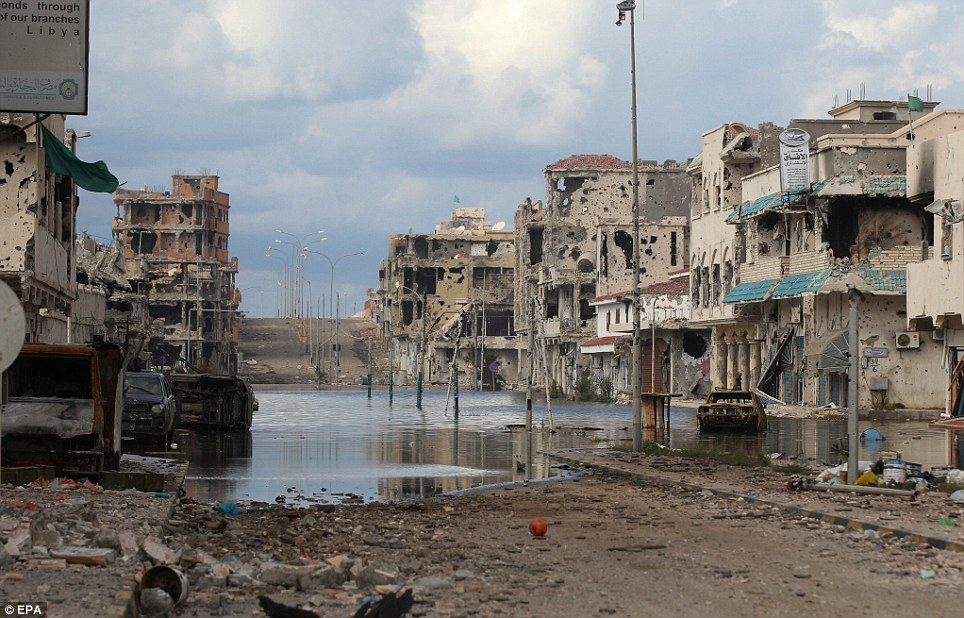
Sirte-destroyed-1

It would appear that the failed Western interventions predicated on packs of lies that have resulted in widespread chaos and hundreds of thousands of deaths in Iraq, Afghanistan and Libya with many more displaced and turning up on the shores of Europe, is not enough for harbingers of democracy and freedom and their media echo chambers’.

Since Nato’s illegal “humanitarian intervention” which resulted in the overthrow of Muammar Gaddaffi, thousands of prisoners have been held without trial in government jails, and torture and brutality have become rife. In fact, torture, bombings and assassinations are now par for the course in Libya, as described here.

Similarly, In Iraq, where prior to the allied invasion and occupation, Al Qaeda had no presence, the country is currently awash with the medieval savages known as ISIS and where sectarian violence is commonplace. In a single day in 2013, thirteen bombs were detonated in Baghdad killing at least 47 people. This is the context in which thousands of academics have been forced to leave the country.

Despite all of this carnage and human misery, the Pew Research Journalism Project finds that ‘the No. 1 message’ on CNN, MSNBC and Fox News, and Al Jazeera, was “that the U S government should get involved in the conflict” in Syria. No surprise, then, that much of UK journalism had decided that the current Official Enemy was responsible for the chemical attacks in the Damascus suburb of Ghouta almost two years to the day.

This was long before the UN published the evidence in its report on “the alleged use of chemical weapons in the Ghouta area” on September 16 of that year. The UN did not blame the Syrian president, Assad, for the attack, but in truth expressed “grave doubts”, despite pre-emptied media claims to the contrary.

Just one day after the attacks, for example, a Guardian leader claimed there was not “much doubt” who was to blame, as it simultaneously assailed its readers with commentary on the West’s “responsibility to protect”. The media’s response to the May 2012 massacre in Houla, similarly blamed it on Assad.

By not sticking to the script, Reuters was one of the few outlets who actually relayed the truth. On September 7, 2013 it reported:

“No direct link to President Bashar al-Assad or his inner circle has been publicly demonstrated, and some U.S. sources say intelligence experts are not sure whether the Syrian leader knew of the attack before it was launched or was only informed about it afterward.

“While U.S. officials say Assad is responsible for the chemical weapons strike even if he did not directly order it, they have not been able to fully describe a chain of command for the August 21 attack in the Ghouta area east of the Syrian capital.”

The lack of evidence of Assad’s culpability didn’t prevent US president Obama from regurgitating the media line by unequivocally pinning the blame on Assad for the chemical attack. Following Obama’s earlier warnings that any use of chemical weapons would cross a “red line”, he then declared on September 10, 2013:

“Assad’s government gassed to death over a thousand people …We know the Assad regime was responsible … And that is why, after careful deliberation, I determined that it is in the national security interests of the United States to respond to the Assad regime’s use of chemical weapons through a targeted military strike.”

Pulitzer Prize-winning journalist, Seymour Hersh saw through the lies and accused Obama of deceiving the world in making a cynical case for war. In response to pressure from an informed public who also saw through the deceptions, British MPs voted in parliament against war and Obama subsequently backed down.

Award-winning investigative journalist Gareth Porter shows that:

[T]he Syria chemical warfare intelligence summary released by the Barack Obama administration August 30 did not represent an intelligence community assessment, [but appears to be] more politicised than the flawed 2002 Iraq WMD estimate that the George W Bush administration cited as part of the justification for the invasion of Iraq.

Two years down the line and the unsubstantiated media claims keep coming. A Channel 4 News report (August 26) by foreign affairs correspondent, Jonathan Rugman, showed what appeared to be the aftermath of what he described as “air attacks by the Assad government….that have killed scores of people” allegedly committed on August 23, once again, in Ghouta. Amid scenes of widespread destruction and panic, civilians were filmed carrying blood soaked dead or injured bodies from the rubble.

It’s my view that the public are once again being softened up for yet more military intervention in another sovereign nation, this time, Syria which UN Secretary General Ban Ki-Moon pointed out, would clearly be illegal. What people appear to be questioning in ever increasing numbers, since the Iraq debacle, is the nature of war and the role the imperialist powers like Britain and America play in these wars.

These debates have taken on a new sense of rigorous critique since Iraq resulting, for example, in the rejection by the British parliament of Obama’s red line. In America, congressional voting has unleashed a swarm of debates such as why should the US be the world’s policeman and what exactly are “US interests” in another country’s sectarian civil war?

People are increasingly beginning to understand that foreign military interventions in places like Syria and Iraq exacerbate ethnic and tribal sectarian based conflicts and that the only feasible option in resolving what has in effect become an international conflict, is discussion and diplomacy. People are less likely to believe their governments’ and their media echo chambers’ when they make unsubstantiated claims about reasons for a war.

Duncan Smith, Duplicity And The Deficit

Regular bloggers who have followed the career of the government minister for work and pensions, Iain Duncan Smith, will be familiar with his propensity for sophistry, obfuscation and obtrusiveness. If by chance you are not familiar with the man, you might be forgiven, having seen the recent interview he gave with Dermot Murnaghan regarding the ‘fake letters’ row, that his portrayal by critical bloggers and others has been unfair.

I was astonished just how much of an easy ride he was given by the Sky News anchor. Thankfully, a small minority within the mainstream media are actually prepared to undertake the job that they are paid to do by bringing power to account, as opposed to acquiescing to it. One journalist worthy of the name is LBC Radio’s James O’Brien.

Up until a few days ago, I wasn’t aware of the 2013 interview Duncan Smith gave with O’Brien following the court of appeal Poundland scandal. In the interview Duncan Smith is exposed for the compulsive liar he is.

What follows is an edited transcript of the interview which is illuminating, not least because it would tend to support the assertion by blogger Mike Sivier that Duncan Smith is incompetent in his role as work and pensions secretary. After reading the 2013 interview transcript below you might actually be inclined to question his sanity:

JOB: ” Current figures suggest that 2.5 million people in the UK are claiming Job Seekers Allowance (JSA) while job vacancies stand at around half a million.Today eight available jobs at Costa Coffee in Nottingham attracted 1,700 applications. There appears to be something of a disconnect between these two states’ of affairs.”

IDS: “The figures show that 83% of those seeking full time work are in full time work. 17% of those who are looking for full time work can’t find it and are taking part time work.”

JOB: “No Mr Duncan Smith. There could be 2.5 million people looking for full time work. You are confining yourself to people who have found it.”

IDS: “No, I’m talking about those looking for work. The reality is, those who seek full time work are finding full time work.”

JOB: “But 2.5 million people haven’t found work.”

IDS: “But those are the people who are seeking work. That’s what I’m saying.”

JOB: “The people who are finding jobs are finding full time work, but there are still millions of people who are not finding jobs….The woman who was stacking shelves [at Poundland] wanted to be paid for it.”

IDS: “But she was paid for it. The tax payer was paying her for Gods sake.”

JOB: “Let me read you the official Department for Work and Pensions (DWP) response to an official petition to abolish workfare. ‘We do not have work for your benefit or workfare schemes in this country’. This is a further response to a freedom of information (FOI) request from your department. ‘Benefit is not paid to the claimant as remuneration for the activity’. So explain to me how she [the Poundland shelf stacker] can ‘earn’ her Job Seeker’s Allowance (JSA) in a country where benefit is not paid as remuneration’?”

IDS: “Because the work experience programme is one you volunteer to do. We do not have a workfare programme…We changed the rules so that young people can do work experience for up to two months and still receive their JSA benefit.”

JOB: “But the court of appeal has ruled that they are forced into these programmes.”

IDS: “What the court of appeal found is that it’s not against their human rights to do it.”

JOB: “I haven’t mentioned human rights.”

IDS: “This is a voluntary scheme. Most people want it, enjoy it, and get something out of it.”

JOB: “I need to clarify this point. You used the word ‘earn’ to describe the payment of JSA to somebody working for a highly profitable company like Poundland. That’s your phrase. But then we learned from your department that benefit is not paid to the claimant as remuneration. Those two positions are completely irreconcilable”.

IDS: “No they are not. Listen, they volunteered to do this. We’ve allowed them to continue to receive JSA at the same time they are doing their work experience.”

JOB: “What she was saying is she wasn’t paid.”

IDS: “But she was. The taxpayer paid her JSA. We have allowed people to do work experience and not lose their JSA.”

JOB: “So it’s remuneration for working?”

IDS: “In the past she would have lost her JSA.”

JOB: “So the benefit is payment for the work.?”

IDS: “I don’t understand what you are concerned about.”

JOB: “She is getting paid for doing the work at Poundland with her JSA. It is a pay packet.”

IDS: “It is work experience. She has volunteered to go on the work experience programme.”

JOB: “Because she had been lied to about what it would involve, as the court of appeal found last week.”

IDS: “They did not find that she was lied to.”

JOB: “They said they needed to clarify what the regulations were.”

IDS: “The regulations were around the withdrawal of benefit if she failed to comply with what she agreed to do.”

JOB: “Which only works if the benefit is a reward for doing the work experience.”

IDS: “You clearly haven’t read what the judgement said.”

JOB: “I’ve read every word of it.”

IDS: “With respect, you need to understand it.”

JOB: “With respect to you, I do. Insulting me, doesn’t advance the argument in any way.”

IDS: “This debate is going nowhere….Are you saying these kids shouldn’t be doing work experience.”?

JOB: “I’m saying, if they are working, they should be paid for it. It’s quite straightforward. You are, why shouldn’t they”?

IDS: “They are on JSA. The taxpayer is paying them.”

JOB: “So What’s the minimum wage legislation for”?

IDS: “This is work experience for up to two months….”

JOB: “The bottom line is, you are using benefits to pay an incredibly cheap workforce to subsidize incredibly profitable companies at the tax payers expense, and passing it off as some kind of assault on a feckless generation.”

IDS: “I don’t agree with that.”

JOB: “Of course you don’t. 17,000 people in Nottingham applied for eight jobs.”

IDS: “Look, there are more people in work today than at anytime since records began.”

JOB: “What a strange observation. There are many more people alive today. What would you say to the 1,692 people who failed.”

IDS: “The reality is that in that area there are 15,000 vacancies and the claimant count their is still falling.”

JOB: “Is that really what you would say to them”?

IDS: “I would say that you have to keep looking for jobs. We are moving in the right direction and that’s a positive.”

JOB: “Sorry, you’ve lost me. To the 1,692 people who have failed to get a job in a coffee shop, you say it’s a positive”?

IDS: “I didn’t say that.”

JOB: “Yes you did.”

IDS: “The positive figures today are a good indication that the private sector is creating jobs, there are more people in work, more vacancies and the claimant count is falling. These are positives…There are half a million vacancies on a daily basis in the UK.”

JOB: “For two and a half million job seekers. The astonishing thing is you think that a benefit is a payment for work done.”

IDS: “I think that the work experience programme is a great success and I’m very proud of it.”

JOB: “Apart from the little wobble in the court of appeal last week.”

IDS: “We’ve changed the regulations going forward.”

JOB: “So the thing you are proud of has now been changed”?

IDS: “No, the programmes are the same.”

JOB: “But the regulations have changed”?

IDS: “The court of appeal has said that the regulations need tightening up and we’ve tightened them up.”

JOB: “Iain Duncan Smith, many thanks for your time.”

Perhaps Duncan Smith believes that subsidizing multinational companies to take on cheap labour will help reduce the deficit the Tories are constantly pontificating needs reducing.

The Rich Need To Be Forced To Pay Their Way For The Benefit Of All

Leading American venture capitalist Nick Hanauer has argued that the actions of capitalists’ need to be reined in through a system of planned and coordinated regulation in order for the capitalist system to be sustainable. This is what he said in a BBC TV interview in front of a live audience:

Capitalists have the idea that THEIR things will be bought by everybody else as a result of higher wages paid by OTHER capitalists. But this logic of paying higher wages to staff to help improve business activity more generally, doesn’t seem to apply equally to them since they will insist on paying THEIR OWN workers next to nothing thereby not absorbing the costs themselves resulting in them gaining a competitive advantage over their rivals. The simple truth is, if a higher minimum wage was introduced universally, not only would it be affordable, but something like 40% of American’s would be able to buy more products from everybody thus benefiting all capitalists across the board. Business is challenged today because fewer and fewer people are able to buy things [1].

The implication, in other words, is that the capitalist system needs to be regulated by governments’ in order to save it from the rapacious actions of competing capitalists driven by their insatiable need for profit maximization. This rationale was long ago grasped by Karl Marx who understood that the essence of the capitalist system is, in his phrase, “accumulation for accumulations sake.”

So why don’t capitalists insist on using free labour and make their workers work all the hours under the sun? After all, wouldn’t that lead to higher profits? And one might also ask why their representatives within the elite political establishment would bother to spend any money at all on welfare? The simple but correct answer is that where they have a choice, they don’t. Where labour supply is low, the state is in effect forced to intervene on behalf of capitalists by introducing welfare as the means of preserving and reproducing labour.

But where labour is plentiful, the state rarely feels compelled to introduce health and safety, minimum wage laws and welfare.The rationale for this is that if a worker dies of malnutrition or has an accident at work, he or she can be easily replaced by another worker. Under such circumstances, the state regards these kinds of misfortunes as a price worth paying. Consider this account of the conditions of child labour in the lace industry in Nottingham in 1861 by a local magistrate:

Children of nine or ten years are dragged from their squalid beds at two, three, four o’clock in the morning and compelled to work for a bare subsistence until ten, eleven or twelve at night, their limbs wearing away, their frames dwindling, their faces whitening, and their humanity absolutely sinking into a stone-like torpor, utterly horrible to contemplate [2].

Compare and contrast that to a recent study of the conditions of life for rural migrants in contemporary China:

The trafficked children] came from faraway Liangshan in Sichuan and most of them are not yet 16. The overseers sought and recruited them from families mired in poverty, promising them high wages; some were even abducted and sent off in batches to Dongguan and from there distributed by the truckload to factories across the Pearl River Delta. On unfamiliar soil these children are often scolded and beaten and have only one proper meal every few days. Some little girls are even raped. Day after day they undertake arduous labour. Some children think about escape, but the road is blocked. The overseers threaten them and warn them that if they try to run away, there will be a price to pay [3].

What the above illustrates, is that the plentiful supply of labour power was as pertinent during the early days of the industrial revolution in Britain as it is to present day China. In both cases the introduction of welfare as the means of preserving and reproducing labour was not a concern for capitalists or the state. Consequently, welfare provision is as scant in China today as it was in 19th century Britain.

Similarly, while the deaths of more than 1,100 garment workers in a factory building collapse in Dhaka,Bangladesh, in April 2013 [4], most of them women on subsistence wages, is an unspeakable tragedy for their families and friends, it is of much less significance, other than concerns about negative publicity, for companies such as Primark for whom they were producing cheap clothes, simply because there are plenty more desperate workers who will take their place [5].

Where, however, the supply of labour is less plentiful or where labour becomes more skilled and consequently more expensive, losing workers through injury or disablement, or through working them to death doesn’t really make economic sense. But that doesn’t mean that capitalists in Britain or America wouldn’t insist that their workers work all the hours under the sun in the short term for peanuts if they thought they could get away with it.

One of the contradictions inherent to capitalism is that the system as a whole needs to spend money to make profits, yet every individual capitalist wants to spend as little as possible. The lengths to which giant companies like Amazon, Google and Starbucks will go in order to avoid paying tax shows how that dilemma is played out.

In the longer term, having workers working 14 or 16 hours a day for peanuts is very wasteful. It’s like over-exploiting the soil. However, given that individual capitalists themselves won’t do anything about it for fear of losing their competitive advantage over their rivals, the state as the representative of the capitalist class as a whole is forced to step in.

This brings me back to the wisdom implicit in the Nick Hanauer quote at the beginning of this article. Hanaeur’s argument about the necessity of the United States government to substantially increase the legal minimum wage across the board in order to save capitalism from itself, is in principle, no different from the minority of capitalists in 19th century Britain who argued in favour of the introduction of the Factory Acts of the 1830s and 1840s which set down a maximum length for the working day.

An advanced low wage and minimal welfare provision capitalist state like Britain is the modern equivalent of its counterpart during the industrial revolution prior to the introduction of the Factory Acts. What is required is a radical re-think with regards to our current direction of travel.away from the failed neoliberal economic model of austerity which economist Paul Krugman describes as:

A con that does nothing but harm to the wealth of this nation. It has been discredited everywhere else: only in Britain do we cling to the myth.[6].

It’s in Britain where the redistribution of wealth from the bottom to the top continues at apace, much of it as a result of huge subsidies paid to the richest landowners [7]. As inequality continues to rise so does the potential for public disorder. At present, the richest tenth pay 35% of their income in tax, while the poorest tenth pay 43% [8]. Is it too much to ask that those with the deepest pockets pay their way, thus creating the potential for the kind of equitable society in which everybody wins?

This is not pie in the sky stuff but a pragmatic solution to the problems we face. Individuals as politically and ideologically as far apart like Jeremy Corbyn, Caroline Lucas, Nick Hanauer, Joseph Stiglitz, and other top economists and capitalists, understand what’s required to get us out of the mess we’re in. It’s a pity that people like Duncan Smith, Cameron and Osborne prefer to put ideology before pragmatism.

10 reasons NOT to vote for Jeremy Corbyn to be leader of the Labour party

Jeremy Corbyn

Jeremy Corbyn (Pic: Garry Knight)

Newspaper columnist Cyril Waugh-Monger has warned repeatedly about the ‘dangers’ of Jeremy Corbyn becoming Labour leader.

THE BIG political story in the UK this summer is undoubtedly ‘Corbynmania’. How a 66-year-old antiwar activist and socialist has gone from being the rank 200-1 outsider in the Labour leadership contest election to be the red-hot favorite.

Jeremy Corbyn, a modest, unassuming man who wears an open necked shirt and slacks instead of the usual politician’s suit and tie, has really proved a big hit with the public, who have grown tired of slick politicians who are always ‘on message’, and who don’t seem at all sincere in what they’re saying. Large crowds have turned out to hear Corbyn speak: last week he had to give his speech from the top of a fire engine as an election rally spilled out into the street.

Not everyone though has welcomed Corbyn’s advance. One man who has made repeated warnings about the ‘dangers’ of Jeremy Corbyn is Cyril Waugh-Monger, a ‘Very Important’ newspaper columnist for the NeoCon Daily, a patron of the Senator Joe McCarthy Appreciation Society and the author of ‘Why the Iraq War was a Brilliant Idea’, as well as ‘The Humanitarian Case for Bombing Syria’.

Below are Mr Waugh-Monger’s ten commandments to Labour members to not, under any circumstances, vote for Jeremy Corbyn. Remember, we need to take what he has to say very seriously – as, after all, he did reveal to us that Iraq possessed WMDs [Weapons of Mass Destruction] in 2003.

1. Jeremy Corbyn wants to ‘stop the war’.

Jeremy Corbyn opposed the bombing of Yugoslavia. He opposed the invasion of Afghanistan. He was against the invasion of Iraq. He was against bombing Libya and also voted against military action in Syria.

I ask you – is this the sort of man who is fit to be in charge of one of Britain’s leading parties?

If Corbyn – heaven forbid – had been British Prime Minister in 2003 he would not have committed British troops to the invasion of Iraq. Just imagine what would have happened if we hadn’t invaded Iraq! Well, I’ll tell you what would have happened – the Middle East would now be a haven for terrorist groups which would be targeting British tourists on beaches when they go on their summer holidays. The whole Middle East would now be in turmoil. We’d be facing a refugee crisis with people fleeing all the countries that we hadn’t destabilized.

2. Jeremy Corbyn is a dangerous leftist.

Just look at the sort of policies this man supports. He wants to re-nationalize the railways which have the highest fares in Europe.

He wants to scrap university tuition fees which consign students to a lifetime of debt. He would like to make housing affordable for ordinary people.

He wants an economy to suit the needs of the majority and not the 1%.

He wants to keep the Sunday trading laws as they are and not introduce 24/7 shopping. He is opposed to illegal wars which kill hundreds of thousands of people and he does not want to bring back fox-hunting. Quite clearly the man is some kind of left-wing nutcase.

3. Jeremy Corbyn has been critical of the US and Israel.

Outrageously, Corbyn has criticized US foreign policy and Israel’s treatment of the Palestinians. He seems to think that the US and Israel have to abide by international law – and should be held accountable for their actions. The man is quite obviously a communist and as such should be barred not only from standing for Labour leader, but banned from the Labour Party too.

Jeremy Corbyn: Why He’s Got Britain’s Anti-Democratic Democrats Worried

4. Jeremy Corbyn has extremist links.

Not only is Corbyn a dangerous radical himself, he also associates with dangerous extremists. He once spoke at a meeting where one of the other speakers had once shared a platform with a speaker who had once shared a platform with a speaker who had once shared a platform with a speaker who had once praised Joseph Stalin – proving undeniably that Corbyn is a Stalinist.

Also on Twitter, Corbyn once retweeted a person who had once retweeted another person who had once retweeted another person who had retweeted a tweet from someone who I don’t approve of – proving once again Corby’s extremism.

5. Jeremy Corbyn is unelectable.

Jeremy Corbyn wants to do things which the majority of the British public wants, such as re-nationalize the railways and keep Britain out of Middle East wars. This makes him unelectable because politicians are only electable if they want to do things the public doesn’t want.

At the last election, Labour lost heavily to the anti-austerity SNP in Scotland and also lost lots of votes to the anti-austerity Greens. So it’s obvious that to get these votes back, Labour needs a leader who supports austerity, and not someone who opposes it, like Corbyn.

I’m a very wealthy right-wing, pro-austerity warmonger, but believe me, I only want the best for Labour – which is to be a right-wing pro-austerity, pro-war party – barely distinguishable from the Tories.

Having two main parties who have identical views on the main issues is what democracy is all about. If Corbyn wins then Labour would be very different from the Conservatives, which would obviously be very bad for democracy as it would give the electorate a real choice.

6. Jeremy Corbyn wants to take us back to the 1970s.

In the 1970s the gap between the rich and poor was at its lowest in the UK’s history. Living standards for ordinary people were rising all the time and large sections of the economy were in public ownership. The banks did not run the country and the taxation system was steeply progressive.

Corbyn wants to take us back to these times! Think how disastrous that would be for rich people like me who would have to pay much higher rates of tax which would be redistributed to horrible working class-type people and people on middle incomes. The 1% would really suffer and the most talented people – like myself – and my neocon friends, would leave the country. That’s what lies in store for us if Corbyn succeeds!

7. Jeremy Corbyn would leave Britain defenseless and open to invasion.

Corbyn has promised to scrap Trident.

If Trident was scrapped there’s no doubt that the Russians, Iranians, Syrians and Hezbollah would launch a full scale invasion of Britain within 45 minutes.

Britain would be carved up between the ‘Axis of Evil’, with the Russians taking England, the Iranians Scotland and the Syrians, Wales (and Hezbollah in charge of Northern Ireland).

Just imagine, Aberystywyth under the control of the evil dictator Bashar al-Assad. Russian troops patroling the streets of Godalming. Iran’s Revolutionary Guard marching in Sauchiehall Street. A nightmare scenario indeed, but all this would be the reality if Corbyn gets his way. The very future of our country is at stake.

8. Jeremy Corbyn once welcomed an article by John Pilger.

In 2004, Jeremy Corbyn was one of 25 MPs who signed an Early Day Motion which welcomed a Pilger article on Kosovo.

How outrageous! To think, a man is standing for the leadership of one of Britain’s major parties who once welcomed an article by John Pilger!

No one who has ever cited John Pilger with approval – let alone signed a motion supporting him – should be allowed to stand for high public office in Britain. The freedom to hold and express views and opinions in a democracy should only apply to opinions and views that myself and fellow elite neocons approve of! And we most certainly do not approve of John Pilger!

9. Jeremy Corbyn opposes austerity.

Austerity is working brilliantly at the moment.

It’s provided a great excuse for the government to flog off remaining state assets at below their true market value to ‘the right people’ in the City. The welfare payments of lower-class people who have far too many children are being cut. Libraries and local authority services are being closed. Yet, guess what? The bearded one opposes all of this. He says that “austerity is a political choice, not an economic necessity.”

He wants to protect public services and libraries from cuts – and instead wants to crackdown on tax evasion and increase taxes on the very wealthy! I ask you – is this the sort of man we want leading Labour – or worse still, the country?

And finally, but most importantly, the tenth commandment:

10. Jeremy Corbyn is very popular.

…And if he succeeds – which seems very likely – it’s game over for me and my little clique of elite warmongers. We won’t get our wars and we’ll have to pay more taxes and it’ll be all perfectly horrible! So, don’t vote for Jeremy Corbyn, because although he’ll be very good news for you – his success will be terrible for us!

Source: Sott.net