Category: economics

Britain’s high-debt, low-productivity economy spells long-term disaster

By Daniel Margrain

The collapse of the Berlin Wall which was the trigger that brought the totalitarian dictatorships of the former Soviet Union and those of its satellite states to their knees, came to symbolize for many the triumph of capitalist free market democracy over tyranny and oppression. An adviser to the US State Department, Francis Fukuyama, received international acclaim in 1989 when he reiterated this message by declaring, no less, that the collapse of communism was ‘the end of history‘. Great social conflicts and great ideological struggles were said to have been a thing of the past. Numerous newspaper editors and television presenters agreed.

A little over a decade after Fukuyama made his famous declaration, Islamist terrorists attacked the Twin Towers in New York. The attack was, in part, the result of Wahhabism’s ideological opposition to Western imperialist hegemony. Numerous imperial wars have been launched against Muslim countries since. Thus, Fukuyama’s thesis was trounced on a single day back in September 11, 2001. Anthony Giddens, the former director of the London School of Economics and court sociologist to Britain’s then New Labour Prime Minister, Tony Blair, repeated a similar message to that outlined by Fukuyama in his 1998 book, The Third Way.

Giddens  said“We live in a world where there are no alternatives to capitalism.” He was accepting and repeating a widespread but unsustainable assumption. The earliest merchant-form of capitalism began to emerge in the 17th century and industrial forms of capitalist production developed from the late 18th century. The organizing of the whole production of a country by capitalist means is barely three centuries old. It only began to become a dominant feature in terms of the universal dependence on markets some 60 or 70 years ago. Yet modern humans evolved about 200,000 years ago. In other words, what Giddens argued is that a capitalist economic system which represents a tiny fraction of our species’ life-span is set to last for the remainder of it.

Leaving aside the possibility of global catastrophe resulting from climate change or nuclear war, the notion that capitalism will continue to exist indefinitely into the future, is highly improbable. As the saying goes, ‘forever is a long time in history’. In just under two decades following the publication of The Third Way, capitalism has transformed into a finance-based neoliberal variant predicated on a form of systemic corruption underpinned by booms that zap productivity. The reason why financial booms impact on productivity in this way is in part the result of too much capital being mis-allocated to low productivity sectors which crowds out real economic growth.

Company buybacks illustrate this practice. Take Viacom as an example. The company issued debts of £10 billion and then bought back the shares which had subsequently reduced in value by 55 per cent. Similarly, Amazon issued £5 billion of debt prior to announcing they would also engage in this highly unethical practice. Issuing debt in order to buy-back stock implies an inability to grow companies organically. Rather, increasingly, the approach seems to be to boost the stock price artificially by a process of financial engineering. The problem is that levels of industrial production, the latest figures of which indicate a 0.3 per cent fall from the previous month, are not sufficient to support these kinds of debts.

Another illustration of the mis-allocation of capital to a low productivity sector, is in the realm of housing. Essentially, the UK economy is based on speculative-based property booms that are sustained through zero interest rates. This means that banks have access to almost unlimited credit which enables them to finance enterprises risk-free, underwritten by the tax-payer. The Conservative government under PM David Cameron is not investing in the productive parts of the economy but in financial ‘bubbles’ of which housing plays a significant part.

UK Chancellor, Gideon Osborne’s ‘help to buy scheme’ in which the UK tax-payer provides 40 per cent of the deposit for first-time house buyers, is clearly a policy aimed at the potential Tory voter in London. Many of the properties purchased will be used for the rental market as speculative investments thus boosting the housing bubble. Meanwhile, people who are part of the productive economy and make London tick, are steadily being priced-out and socially cleansed from the city. This is contributing to the decline in UK industrial output which has seen its biggest fall since August 2013. More importantly, this has impacted negatively on the UK’s trade deficit figures which are one of the highest, as a percentage of GDP, of any country within the OECD.

To emphasize this point, the UK’s trade gap with the European Union increased to a record high of £8.6 billion. The government’s suppose aim of re-balancing the economy by allegedly supporting its productive parts, is contradicted by its creation of risk-free speculative property bubbles of the kind described. The concept of free-market capitalism is supposed to be predicated on incentives, not state sanctioned socialism for the wealthy as the means to prop-up unsustainable economic bubbles. Yet the corporate controlled media, with their lurid headlines, continuously promote the latter.

The government’s subsidizing of house purchases is unhealthy for the medium to long-term economic well-being of the country as a whole. The subsidized property speculation bubble outlined is part of a centrally-planned Tory policy, no different in principle, to the socialist planned economies of the former Soviet Union and its satellite states that ‘the end of history’ allegedly supplanted. Low productive sectors within the UK have a knock-on effect in terms of the broader economy which is destined to decline as a result. This is because more needs to be produced for the pound sterling in order to counteract the affects of subsidized speculation which adds no value to the economy.

This principle also applies under conditions in which global investors pour money into government bonds which currently result in negative yields to the tune of some $6 trillion and growing. The infusion of greater amounts of subsidized money into the London economy runs counter to the government’s stated argument that they intend to diversify the wider economy by spreading investment throughout the UK as a whole. As a consequence of the Tory policy of socialism for property speculators, house prices in London are the most over-valued of any major city in the world.

Nevertheless, as long as potential property buyers and those already on the ladder in London have a perception that their homes are worth more than is actually the case, they will more likely be inclined to vote for the kinds of politicians who will perpetuate the bubble by continuing to offer some first-time buyers an injection of a huge cash-free gift as part of their deposit. If this was indeed the Tory plan prior to the London Mayoral election in order to assist the Tory candidate, Zac Goldsmith, then the strategy failed miserably. Whether Labour’s newly elected Mayor, Sadiq Khan, will attempt to scupper any moves by Jeremy Corbyn to put a break on the Tory’s high debt-low productivity economy policy, in order to further his broader opportunistic political ambitions, remains to be seen.
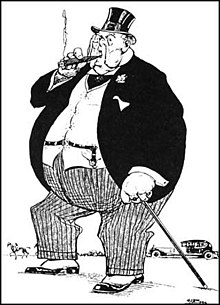
The rot at the heart of British society runs deeper than the travails of Philip Green

By Daniel Margrain

The news that serial tax dodger Philip Green bought his third luxury super-yacht for £100 million, a sum similar to the amount that was effectively sequestered from the BHS pension fund, and which was subsequently hid in tax havens wrecking the lives of thousands of his employees in the process, is symptomatic of the kind of rot that has spread throughout the high echelons of the ruling class. Like rising damp in an old building that spreads throughout the foundations before working its way through the brickwork until it eventually subsumes the entire edifice, Britain is currently suffering from another kind of infestation that of the ruling class “elite” whose unprecedented actions and decisions are undermining the rules and laws on which the proper functioning of a civilized society depend.

The biggest scandal isn’t about the corruption surrounding the Panama Papers, bankers and the revelations about Philip Green (as bad as they are), but about wealth inequality. Currently, the top 1 per cent own as much as 99 per cent of the rest of the world combined. What the Panama Papers revelations highlighted was just how unequal the world is. In his book, ‘The Hidden Wealth of Nations’, economist Gabriel Zucman estimates that worldwide, more than $7.5 trillion is stashed away in offshore accounts. As an indication of just how much that is, the sum amounts to some 8 per cent of the entire financial wealth of the world. About 80 per cent of that has not, and will not, be taxed at all, ever.

This level of tax avoidance increases the wealth gap between the rich and poor. Hiding vast sums of wealth from the prying eye of governments makes it easier for the super rich, represented by the 1 per cent, to remain rich and avoid tax policies which are meant to help the 99 per cent. Off-shore accounts also make it more difficult for everybody else to get rich because of the uneven playing field that results from these tax havens. The 99 per cent among the mainly middle income earners are paying higher taxes to make up for the taxes that the 1 per cent don’t pay.

Although on average slightly less than 8 per cent of all the financial wealth of the world is off-shore, Europe fares worse at 10 per cent. By contrast, off-shore financial wealth in Latin America stands at 20 per cent, in Africa the figure is 30 per cent and in Russia an incredible 50 per cent of all its financial wealth remains hidden off-shore. What all this indicates is the sheer scale of a problem that hits the developing world the hardest where the results for the very poorest who have no access to any form of social protection, can literally be death.

As far as Europe is concerned, the massive use of tax havens began in the 1920s in Switzerland. In Britain this trend became a feature of society around the mid-to-late 1970s. Numerous tax havens had began to spring up during this time which is when the great wealth disparity really started to make its mark. This was no accident. During this period, the function of the state began to change from that of ‘welfare provider’ to more ‘pro-business facilitator’. The ideology that came to embody this change was neoliberalism.

Instead of the direct provision of services administered democratically at the local level, the trend has increasingly been for the state to act as a purchaser of these services which have then been provided privately and indirectly. As each separate financial intermediary takes their slice of the financial pie, the temptation for corrupt practices becomes greater and the concentration of capital and deregulation of labour markets more acute.

With the balance of economic power tilted increasingly towards the rich who are able to buy the influence of politician’s, the impact on democracy has been devastating for millions of ordinary people. This hollowed out system of democracy is one in which the 99 per cent increasingly seem to find it difficult to find some personal and meaningful pattern in a social world dominated by huge and distant monoliths whose power over the livelihood of millions seems absolute.

This explains the growing popularity of ‘unorthodox’ politician’s like Jeremy Corbyn, Bernie Sander’s and even to an extent, Donald Trump, who offer the electorate an alternative to the ‘business as usual’ politics of the corporate controlled political machine. However, until a distinct break with the current system occurs, the masses are faced with the prospect of more of the same neoliberal ideology predicated on austerity.

Contrary to popular mythology, it wasn’t the Conservative government of Margaret Thatcher which came to power in 1979 that invented neoliberalism, rather that distinction is reserved for the preceding Labour administration under James Callaghan. It was the Labour government, not the Tories, who accepted the terms of the austerity package proposed by the IMF in 1976. The main condition of the IMF loan, insisted on by the US Treasury, was that the government deficit must be reduced by cutting demand.

Interest rates were raised and government spending reduced. Wage, job and welfare cuts were the hallmark of the ‘social contract’ between wage labour and capital agreed by the unions to bail out the government. As Colin Leys notes:

“From 1976 onwards, Labour accordingly became ‘monetarist’. Its leaders accepted that full employment could no longer be achieved by government spending but must be sought through private sector growth. For the necessary investment to take place, prices must reflect real values, and this in turn required ‘squeezing’ inflation out of the system and permitting the free movement of capital. In 1978 Treasury officials began preparing to abolish capital controls.”

Spearheaded by the deregulation of the movement of capital, the breaking of the unions and the centralization of state power that favoured the corporations in the running of state enterprises, rates of inequality that had been reduced from the previous highs of the depression years of the late 1920s began to grow again. During the 1920s wealth disparity was huge. Then, as people at the top paid more taxes, and people in the middle began to earn more, the gap became increasingly smaller.

As the consensus between capital and wage labour started to go in reverse from about 1980, inequality began to increase steadily to 1920s levels which is roughly the point they are today. By the mid 1980s tax havens started to emerge in places like the Caymen Islands, Singapore, Hong Kong, Panama, Bermuda the British Virgin Islands and increasingly, London. All of the wealth located in these havens isn’t actually invested their. This means that the vast majority of people who live in, say, London, don’t benefit from foreign money that’s invested in, for example, property due to the massive rise in property prices that result from these investments.

So why do the 99 per cent put up with all this?

Many people tend to get distracted, whether that’s through working all the hours under the sun merely to survive, or through sports or other forms of leisure activities. Many others are angry but feel disconnected from the political process. The politicians, by contrast, benefit from the current situation so they are not motivated to change it, largely because they are immune from any effective political pressure from below.

The consequences for civil society that emanate from the combination of public apathy and apoplexy are potentially extreme. The lack of proper investment in public services like the NHS, social care, libraries and schools will end up with them collapsing. This is a process that to a large extent is already happening. The fact that the super rich have their money stashed away off-shore, while many among the poor don’t earn enough to pay tax in the first place, has resulted in an insufficient tax yield.

The reason why many people can’t get a prompt appointment with their GP, paving stones in the streets are cracked, their libraries are staffed by volunteers and there are pot holes on the roads that never get attended to, is directly linked to these factors. So while public services are being slashed on the one hand, people are increasingly having to pay for the ones that remain with money, in many cases, they haven’t got. If they are fortunate enough to have a job, it’s likely that their disposable income in real terms wouldn’t of increased in the last four decades.

Particularly for the young, the prospects of finding secure, fulfilling and well paid work is as remote now than it has been for at least 70 years and the situation is likely to get even worse as robots begin to replace many traditional blue collar and even white collar jobs. Leaving aside the threats posed by climate change, the underlying root cause of the problems society faces both now and in the coming period, is the inability of governments’ to take a long term approach to tackling levels of inequality that are so extreme that violent disorder on the streets may be the only language the politician’s will take note of.

‘No man is an Island’

By Daniel Margrain

This year the Dutch government intend to introduce a universal basic income (UBI) paid to the residents of Utrecht and 19 other Dutch municipalities. Each person will receive the equivalent of about £150 a week whether working or not. The unemployed won’t be penalized for finding work because they will receive their employment income in addition to the universal income payment.

The hope is that this will prevent the government having to spend extra money on the vast array of related services connected to the bureaucratic elements of the state that are dependent on the unemployed for their existence. This covers everything from unemployed benefit snoopers to the administering of homeless shelters. Then there are the knock-on affects that stem from inequality such as health, poverty and crime. Writing in the Guardian, John O’Farrell astutely points out:

“Since the decline of the unions, workers have been increasingly powerless to refuse longer hours and less money with only the food bank to fall back on if they walk away from an exploitative job. With a guaranteed state income to keep the wolf from the door, employees would be given the bargaining power to demand civilized working conditions and reasonable rates of pay….Our labyrinthine system of benefits and tax credits would disappear and all the stigma of signing on with its degrading culture of blame and humiliation for those at the bottom of the pile.”

The system in the UK is predicated on blaming those at the bottom of the pile and casting humiliation on them, thus enabling the majority in the middle, to feel better about themselves. O’Farrell  concludes:

“For all the apparent expense of the UBI, we would save the small fortune that the state currently spends mopping up the mess of social problems caused overwhelmingly by chronic poverty. Of course, there are complex reasons for increasing homelessness, for bulging prisons, for growing mental health problems – but desperate financial pressure is a major factor in all of them. Every decade sees us spending increasing billions trying to tighten the lid of the boiling cauldron. It might be so much cheaper just to turn down the temperature a bit.”

The long-term socioeconomic and health benefits related to the kind of progressive and enlightened policy adopted by the Dutch is palpable, not only to the poorest in society but it also has some benefits to those at the top. As Richard Wilkinson put it: There seems to be some truth in John Donne’s “No man is an island.”

Rather than the punitive strategy of coercion adopted by the British and other governments by which the ‘stick’ is preferred to the ‘carrot’, the introduction of the UBI – predicated on economic pragmatism rather than state vindictiveness – will almost certainly result in the nurturing of talents and creativity that otherwise wouldn’t necessarily be encouraged.

It’s almost certainly no coincidence that what was arguably the peak of working class creativity in the arts occurred during the 1960s when, underpinned by a universal system of welfare provision, the class in question was at its most confident – a confidence that has been in decline from the mid 1970s onward marked by the ending of the post-war settlement between capital and labour.

Over the last 40 years, ordinary people have found it increasingly difficult to focus on doing things they really like because they tend to spend most of the productive part of their lives working at something they hate often for no other a reason than to maintain the necessities of life – namely securing a roof over their head and ensuring they have access to enough food.

Since the Callaghan government, punishment has been the overriding factor that has guided the social policy of successive UK administrations’ – both Conservative and Labour. The purpose has been to foster a lack of any sense of entitlement. This has involved the gradual removal of a social security safety net that a universal system implies, so as to maintain the level of social stratification to meet the demands set by unfettered capital.

The Dutch model, intended as a corrective to the lack of universal provision, is in principle similar to that adopted by the Green Party as outlined in their last General Election Manifesto. The rationale underpinning the introduction of such a model is that it would not only end the kinds of state bureaucracy and inefficiencies described, but would also be cheaper to administer and hence save the tax payer money. Third, it would boost local economies because poor people would have greater income at their disposal with which to spend on goods and services.

But arguably the greatest benefit is that such a policy would lead to a reduction in inequality whose affects, as Richard Wilkinson has shown, are divisive, harmful and socially corrosive. Research indicates that the world’s richest 1 percent of people this coming year are expected to own the same amount of wealth as the rest.

The more equitable and egalitarian the society, the greater the control people have over their lives. Two years ago, Oxfam research demonstrated how extreme wealth confers political power that can be used to influence rules and systems in favour of an elite at the expense of everyone else.

In addition, more equal and fair societies’ provide the conditions by which a system of equality of opportunity can be put into place. Workers, as participants in a scheme of cooperation that contribute toward national income, would then have a claim to a fair share of what they have helped to produce.

Richard Wilkinson shows that a correlation exists between income inequality within countries (not between them) and social gradients in terms of a multitude of indicators. These include health, life expectancy, literacy/numeracy, infant mortality rates, homicide rates, proportion of the population in prison, teenage birthrates, levels of trust, obesity, mental illness – which in standard diagnostic classification includes drug and alcohol addiction – and social mobility.

What the data shows is that in the more equal countries – Japan, Finland, Norway, Sweden – the top 20 percent are about three and a half to four times as rich as the bottom 20 percent. But on the more unequal end – U.K., Portugal, USA, Singapore – the differences are twice as big. On that measure, the UK is twice as unequal as some of the other successful market democracies.

According to research measured by the Gini coefficient, which is widely regarded as the best measurement of income inequality, Holland is the fourth most equal society within the EU while the UK is ranked way down at twenty-one. What impacts on society does this level of inequality point to?

Wilkinson collected internationally comparable data on problems with social gradients – the kind of problems that are more common at the bottom of the social ladder of the kind outlined above – and weighted them equally by putting them all in one index. The data showed an extraordinarily close correlation between inequality and the kinds of social problems described. The same correlation equally applies to children who also perform worse in the more unequal societies.

What the data in its totality indicates is that the average well-being of our societies is not dependent any longer on national income and economic growth. Wilkinson elaborates further:

“That’s very important in poorer countries, but not in the rich developed world. But the differences between us and where we are in relation to each other now matter very much. I’m going to show you some of the separate bits of our index. Here, for instance, is trust. It’s simply the proportion of the population who agree most people can be trusted. It comes from the World Values Survey. You see, at the more unequal end, it’s about 15 percent of the population who feel they can trust others. But in the more equal societies, it rises to 60 or 65 percent. And if you look at measures of involvement in community life or social capital, very similar relationships closely related to inequality.”

In terms of mental illness:

WHO put together figures using the same diagnostic interviews on random samples of the population to allow us to compare rates of mental illness in each society. This is the percent of the population with any mental illness in the preceding year. And it goes from about eight percent up to three times that — whole societies with three times the level of mental illness of others. And again, closely related to inequality.”

The overriding factor that emerges from Wilkinson’s research into inequality are it’s psycho-social effects and how this relates to the kinds of values inherent to a capitalist system in which society is driven by consumerism and competition that leads to status insecurity. The potential for the onset of chronic stress and depression from social sources in turn:

“affect the immune system, the cardiovascular system. Or for instance, the reason why violence becomes more common in more unequal societies is because people are sensitive to being looked down on….I should say that to deal with this we’ve got to…constrain income, the bonus culture incomes at the top. I think we must make our bosses accountable to their employees in any way we can. I think the take-home message though is that we can improve the real quality of human life by reducing the differences in incomes between us.”

With regards to social mobility, Wilkinson states bluntly that if Americans want to live the American dream, they should go to Denmark.”

Housing crisis created from money produced from thin air

By Daniel Margrain

Switzerland is set to hold a referendum to decide whether to ban commercial banks from creating money. This follows a move by over 110,000 people in that country who signed a petition calling for the central bank to be given the sole power to create money within the financial system. The campaign is designed to limit financial speculation by requiring banks to hold 100 per cent reserves against their deposits.

Banks will no longer be able to create money for themselves (euphemistically termed fractional reserve banking), rather they will only be allowed to lend money that they have accumulated from savers or other banks. Currently banks are able to lend money that they don’t actually have and then command interest on the non-existent money.

This is akin to x offering to loan y a sum of say, £100,000 that the former hasn’t got. The way around this conundrum is for x to then lodge the sum with another financial institution who happens to be in on the scam. Y then pays x interest on the money that x has never been in the position to lend in the first place. Switzerland is now considering whether or not to do something about this fractional reserve banking racket. If successful, the bill will give the Swiss National Bank a monopoly on physical and electronic money creation.

The idea of limiting all money creation to central banks was first touted in the 1930s and supported by renowned US economist Irving Fisher as a way of preventing asset bubbles and curbing reckless spending. It’s the former that most accurately characterizes the current financial system. The rising cost of housing is an example of a major asset bubble underpinned by a Tory government housing policy that is geared towards satisfying the asset diversification needs of the super rich rather than to meet the human need for homes for ordinary people to live in.

So the motivating factor determining the government’s housing policy is not to end the housing crisis but to bolster the investment opportunities of the rich which will make it worse. This is what David Cameron’s announcement yesterday (January 10) regarding the governments’ intention to demolish council homes and replace them with private housing is all about.

This is also the precursor to the newly proposed Housing and Planning Bill (voted on today, January 12) which will force families living in social housing and earning £30,000-£40,000 in London to pay rents nearly as high as those in the private sector. It will also compel local authorities to sell ‘high value’ housing, either by transferring public housing into private hands or giving the land it sits on to property developers.

The 126 MPs who declared that they receive rental income from property, represent over 19 per cent of the house, the vast majority of whom are Conservatives. The voting through of the bill, which almost certainly represents a major conflict of interest, will lead to soaring rents meaning that ordinary people will find it increasingly difficult to afford to live in the capital. As the statement on a flyer that promoted a protest against the bill argued:

It [the bill] takes public funding away from affordable homes for rent and does nothing to improve security or control rents for private renters.

This is turning back the clock, taking away security and pushing up rents. It would force the selloff of council homes on the open market, to pay for housing association ‘right to buy 2’. Councils and housing associations will not be able to build replacement homes for rent.”

The exponential growth in the construction of new tower blocks throughout London and other major cities are not intended for local residents to live in, thereby helping to ameliorate the worst excesses of the housing crisis, rather they are being built for foreign investment funds and billionaires to buy on mass as financial safe havens.

Greenwich Mean Time (GMT), a relatively favourable temperate climate, convenient geographical location, the establishment of law and order, good schools and infrastructure, minimal history of revolution and good transport hubs and networks, means that London is a particularly attractive place for the rich to increase their property investment portfolios.

However, these investments in houses and apartments are essentially made of cards built on sand predicated on a financial illusion of which the Swiss example described is symptomatic. The context of the illusion that the Swiss people are soon to vote on is historically tied the the Swiss National Bank (SNB). Since 1891 when the SNB was established, the bank has had exclusive powers to mint coins and issue Swiss bank notes. But over 90 per cent of money in circulation in Switzerland now exists in the form of electronic cash which is created out of nothing by private banks. In other words, nearly all of the money in Switzerland, and arguably the world, does not in reality exist as a tangible entity.

In modern market economies central banks control the creation of bank notes and coins but not the creation of all money which occurs when a commercial bank offers a line of credit. Iceland, whose bloated banking system collapsed in 2008, has also touted the abolition of private money creation and an end to a practice in which a central bank accepts deposits, makes loans and investments and holds reserves that are a fraction of its deposit liabilities. Fractional banking means the production of money from thin air.

The entire financial system and the laws on which it is governed that many believe to be an exact science is, in reality, based on a gigantic illusion. The fact that Britain’s banks are paying far less in corporation tax than before the crisis, despite their profits improving and global tax payments staying constant, is illustrative of a flawed unscientific system that society has nevertheless hitched itself on to. Rather than the Cameron government investing in a productive based economy in which tangible things are made, bought and sold, it has focused disproportionately on financialization – an abstraction predicated on smoke and mirrors.

The money illusion stems from the Bill of Exchange Act of 1882. Effectively, money is created the moment a loan document from a bank or any other financial institution is signed. Having created a financial instrument as a result of any signature, the bank or financial institution then lends the money created in the form of a bill of exchange which in effect becomes a promissory note. The customer then gives the power of attorney within the signed document to the bank to then lend the said customer the money that has just been created as a result of the signature.

By removing the requirement of the government to insist upon the amount of gold being equal to the amount of currency in circulation (gold exchange), they created a debt based economy (Fiat currency). So by not basing money on anything material whatsoever, central banks are able to create limitless amounts of it effectively by pressing numbers on the keyboard of a computer. The origins of the promissory note stem from the promise to pay a physical sum of silver (subsequently gold) in exchange for the promissory equivalent (sterling was originally based on sterling silver).

The purpose was to prevent individuals from having to carry large sums of silver around with them. A silversmith would simply weigh the silver and give the owner a promissory note which could then be cashed in at a later date to be spent on goods and services. Up until the 1930s, governments’ were required to have in their possession an amount of silver or gold equal in value to the amount of promissory notes issued. This requirement was removed in the 1930s which then gave banks the right to create money out of nothing. This is a legacy that continues today. Will Switzerland be the catalyst for a paradigm shift in this state of affairs?

The Rich Need To Be Forced To Pay Their Way For The Benefit Of All

Leading American venture capitalist Nick Hanauer has argued that the actions of capitalists’ need to be reined in through a system of planned and coordinated regulation in order for the capitalist system to be sustainable. This is what he said in a BBC TV interview in front of a live audience:

Capitalists have the idea that THEIR things will be bought by everybody else as a result of higher wages paid by OTHER capitalists. But this logic of paying higher wages to staff to help improve business activity more generally, doesn’t seem to apply equally to them since they will insist on paying THEIR OWN workers next to nothing thereby not absorbing the costs themselves resulting in them gaining a competitive advantage over their rivals. The simple truth is, if a higher minimum wage was introduced universally, not only would it be affordable, but something like 40% of American’s would be able to buy more products from everybody thus benefiting all capitalists across the board. Business is challenged today because fewer and fewer people are able to buy things [1].

The implication, in other words, is that the capitalist system needs to be regulated by governments’ in order to save it from the rapacious actions of competing capitalists driven by their insatiable need for profit maximization. This rationale was long ago grasped by Karl Marx who understood that the essence of the capitalist system is, in his phrase, “accumulation for accumulations sake.”

So why don’t capitalists insist on using free labour and make their workers work all the hours under the sun? After all, wouldn’t that lead to higher profits? And one might also ask why their representatives within the elite political establishment would bother to spend any money at all on welfare? The simple but correct answer is that where they have a choice, they don’t. Where labour supply is low, the state is in effect forced to intervene on behalf of capitalists by introducing welfare as the means of preserving and reproducing labour.

But where labour is plentiful, the state rarely feels compelled to introduce health and safety, minimum wage laws and welfare.The rationale for this is that if a worker dies of malnutrition or has an accident at work, he or she can be easily replaced by another worker. Under such circumstances, the state regards these kinds of misfortunes as a price worth paying. Consider this account of the conditions of child labour in the lace industry in Nottingham in 1861 by a local magistrate:

Children of nine or ten years are dragged from their squalid beds at two, three, four o’clock in the morning and compelled to work for a bare subsistence until ten, eleven or twelve at night, their limbs wearing away, their frames dwindling, their faces whitening, and their humanity absolutely sinking into a stone-like torpor, utterly horrible to contemplate [2].

Compare and contrast that to a recent study of the conditions of life for rural migrants in contemporary China:

The trafficked children] came from faraway Liangshan in Sichuan and most of them are not yet 16. The overseers sought and recruited them from families mired in poverty, promising them high wages; some were even abducted and sent off in batches to Dongguan and from there distributed by the truckload to factories across the Pearl River Delta. On unfamiliar soil these children are often scolded and beaten and have only one proper meal every few days. Some little girls are even raped. Day after day they undertake arduous labour. Some children think about escape, but the road is blocked. The overseers threaten them and warn them that if they try to run away, there will be a price to pay [3].

What the above illustrates, is that the plentiful supply of labour power was as pertinent during the early days of the industrial revolution in Britain as it is to present day China. In both cases the introduction of welfare as the means of preserving and reproducing labour was not a concern for capitalists or the state. Consequently, welfare provision is as scant in China today as it was in 19th century Britain.

Similarly, while the deaths of more than 1,100 garment workers in a factory building collapse in Dhaka,Bangladesh, in April 2013 [4], most of them women on subsistence wages, is an unspeakable tragedy for their families and friends, it is of much less significance, other than concerns about negative publicity, for companies such as Primark for whom they were producing cheap clothes, simply because there are plenty more desperate workers who will take their place [5].

Where, however, the supply of labour is less plentiful or where labour becomes more skilled and consequently more expensive, losing workers through injury or disablement, or through working them to death doesn’t really make economic sense. But that doesn’t mean that capitalists in Britain or America wouldn’t insist that their workers work all the hours under the sun in the short term for peanuts if they thought they could get away with it.

One of the contradictions inherent to capitalism is that the system as a whole needs to spend money to make profits, yet every individual capitalist wants to spend as little as possible. The lengths to which giant companies like Amazon, Google and Starbucks will go in order to avoid paying tax shows how that dilemma is played out.

In the longer term, having workers working 14 or 16 hours a day for peanuts is very wasteful. It’s like over-exploiting the soil. However, given that individual capitalists themselves won’t do anything about it for fear of losing their competitive advantage over their rivals, the state as the representative of the capitalist class as a whole is forced to step in.

This brings me back to the wisdom implicit in the Nick Hanauer quote at the beginning of this article. Hanaeur’s argument about the necessity of the United States government to substantially increase the legal minimum wage across the board in order to save capitalism from itself, is in principle, no different from the minority of capitalists in 19th century Britain who argued in favour of the introduction of the Factory Acts of the 1830s and 1840s which set down a maximum length for the working day.

An advanced low wage and minimal welfare provision capitalist state like Britain is the modern equivalent of its counterpart during the industrial revolution prior to the introduction of the Factory Acts. What is required is a radical re-think with regards to our current direction of travel.away from the failed neoliberal economic model of austerity which economist Paul Krugman describes as:

A con that does nothing but harm to the wealth of this nation. It has been discredited everywhere else: only in Britain do we cling to the myth.[6].

It’s in Britain where the redistribution of wealth from the bottom to the top continues at apace, much of it as a result of huge subsidies paid to the richest landowners [7]. As inequality continues to rise so does the potential for public disorder. At present, the richest tenth pay 35% of their income in tax, while the poorest tenth pay 43% [8]. Is it too much to ask that those with the deepest pockets pay their way, thus creating the potential for the kind of equitable society in which everybody wins?

This is not pie in the sky stuff but a pragmatic solution to the problems we face. Individuals as politically and ideologically as far apart like Jeremy Corbyn, Caroline Lucas, Nick Hanauer, Joseph Stiglitz, and other top economists and capitalists, understand what’s required to get us out of the mess we’re in. It’s a pity that people like Duncan Smith, Cameron and Osborne prefer to put ideology before pragmatism.

The Rich Get The Carrot And The Poor Get The Stick

The juxtaposition and double standards in our society between those at the top and those at the bottom is stark. The gap between the rich and poor continues to increase to the extent that the top earners in the footsie 100 companies’ earn a massive 183 times more than the average earner [1].

The argument of some of those who attempt to justify this massive discrepancy is that the top of society have to be incentivized in order to increase their performance. That’ll be news to the bosses of the publicly subsidized privatized railways and loss making banks whose performances in many instances are found wanting.

Nevertheless, those at the top are invariably given inducements to work better. But that rule of thumb never seems to apply to those at the bottom. Why don’t we try, as Jeremy Corbyn has proposed, “a bit of quantitative easing” for the poorest instead of the richest [2] so that the former will be incentivized to kick start the economy?

But to do so would be an admission of defeat and would therefore undermine the ideological consensus that exists between the New Labour hierarchy and the Tory establishment. If there are good and well paid jobs for people to go into, it would mean that the Tories proposed introduction of their inappropriately named “boot camps”, would not be necessary.

Chris Grayling, the Tory welfare spokesman, has stated that these “boot camps” are in reality compulsory community service programmes for young welfare claimants aged between 18 and 21 aimed at improving work discipline and giving them basic skills to get a job [3].

The term “boot camp” is intended as a soundbite whose aim is to give reassurance to the Tories’ natural constituency of middle England Daily Mail reading voters that they intend to come down hard on “benefit scroungers”.

Why does the establishment always appear to give the impression of using the “stick” approach when it comes to inducing a prescribed behaviour among the poorest in society, whilst the rich are incentivized with the carrot?

If you were to look beyond the headline, the boot camp proposals are, to a limited extent, likely to be beneficial to young people who have difficulty with numeracy, literacy and basic communication skills. But that’s as far it goes. The boot camp idea, in other words, is necessary but not sufficient.

What the concept does not address is the fundamental issue relating to the lack of government investment in proper training and apprenticeship programmes that lead to the opportunity for stable, skilled and well paid jobs, thus giving hope to our young people instead of alienating them.

The Tory language is invariably about “toughness” and “coming down hard” on young people as opposed to the language and policies of hope. Not so for the richest in society who are always offered the “carrot”..

Public Coffers Hammered

 Impressed: An image provided by West Ham which shows how the stadium could also be used as a concert venue after the Games

The new English Premier League football season begins today. As as life-long West Ham United supporter my expectations for a successful season are typically low. If the Hammers finish in a top eight position and have a good cup run I’ll be happy. With our move away from our spiritual home at the Boleyn into the Olympic Stadium at Stratford, east London next season, it’s imperative that we maintain our premier league status.

With a new manager and former player (who appears to be finally attuned to the  entertainment ethos of the club that the fans demand) in place, all is relatively good on the playing side of things. As far as the fans are concerned, off the park shenanigans are good too given that those who run the club plan to substantially reduce season ticket prices in an an attempt to fill the stadiums 54,000 capacity – a model that other clubs are encouraged to adopt (1).

But here’s the problem. West Ham United are paying just £15million towards the £272million cost of converting the Olympic Stadium despite the fact that, should the club still be a Premier League next year, it will – under the terms of a new TV deal – be entitled to a payout of at least £99million (2).

Small business people, many whom whom run their businesses on extremely tight margins, might be wondering how the elite within football, like multi-millionaire lady Brady, who brokered the deal are apparently immune to the kind of market forces that the former are compelled to adhere to?

As far as the super-rich with contacts to the top echelons of political power – whether they be premier league chairmen or City bankers – are concerned, it would appear that the kind of business risks the rest of us are prone to, is not applicable to them. The Premier League football racket is akin to the banking racket.