Tag: social darwinism

Covid and the Re-emergence of Eugenics

By Daniel Margrain

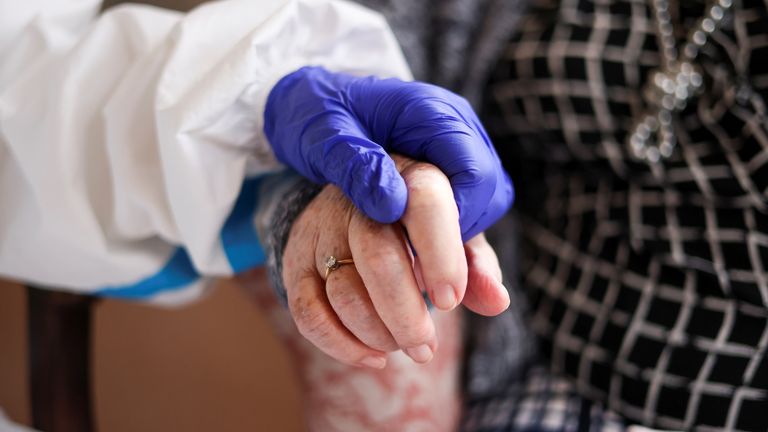
Nicky Clough visits her mother Pam Harrison in her bedroom at Alexander House Care Home for the first time since the coronavirus disease (COVID-19) lockdown restrictions begin to ease, in London, Britain March 8, 2021. REUTERS/Hannah Mckay

Years before moving towards explicit racial genocide, the Nazis developed the notion of ‘useless mouths’ or ‘life unworthy of life’ to justify the state’s killing of ‘low hanging fruit’ as part of its programme of ‘involuntary euthanasia’. Theorists argued that certain categories of people were nothing but a burden on society and therefore had no ‘right’ to life.

These ideas were a variant of nineteenth century ‘Social Darwinism’ and eugenicist theories, which adapted Darwin’s notion of the survival of the fittest to describe relationships within society or between nations and races as a perpetual evolutionary struggle in which the supposedly weaker or defective elements were weeded out by the strongest and the ‘fittest’ by natural selection.

Of course there was nothing ‘natural’ about these ideas, or the malignant ways that the Nazis made use of them. In Nazi ideology, the state killing of the disabled, the sick and the mentally-ill was the beginning of a conveyor belt that led to the wholesale extermination of the Jews and ‘inferior races’ during World War II.

Canada

In a shocking recent development, the Canadian government under Justin Trudeau, have explicitly resurrected the involuntary euthanasia idea within the body-politic. The country’s parliament.recently enshrined Medically Assisted Dying (MAID) into Canadian law.

In November last year, Canadian clothes retailer, ‘Simons’, even went as far as to market suicide to sell their products as part of a sweeping effort to introduce medically assisted suicide as a treatment for mental illness and PTSD. In April last year, The Spectator asked why Canada is euthanizing its poor?

“…when the Canadian parliament enacted Bill C-7, a sweeping euthanasia law which repealed the ‘reasonably foreseeable’ requirement – and the requirement that the condition should be ‘terminal’. Now, as long as someone is suffering from an illness or disability which ‘cannot be relieved under conditions that you consider acceptable’, they can take advantage of what is now known euphemistically as ‘medical assistance in dying’ (MAID for short) for free. Soon enough, Canadians from across the country discovered that although they would otherwise prefer to live, they were too poor to improve their conditions to a degree which was acceptable.

The criteria Canada has used to legalize euthanasia is particularly problematic. It’s no longer required for people in Canada to be in debilitating pain to end their life, but be living in ‘unacceptable conditions’. This doesn’t take into account the fact that many people can’t afford to care for themselves to a standard that’s acceptable.

The UK

Disturbingly, the resurrection of eugenics as state policy is not restricted to Canada. In the UK these kinds of policies began to re-emerge during the Covid era. Increasingly the UK has become a society in which certain categories of people are regarded in principle, if not in practice, as ‘useless eaters’ whose value to society is measured in economic terms on the basis of how ‘productive’ they are and whether they are considered to be an unnecessary and unfair burden on the tax payer.

The main group of people the state have attributed economic value as a category to denote ‘quality of life year‘ needs, are the elderly. The state uses crude mathematical and economic cost-benefit calculations as a formula to determine the value to society of keeping the eldery and others in care alive.

It’s important to understand that the priority of the health care system in the UK is not to prolong life but to maximize profits.

In this sense, the National Health Service bureaucracy is fundamentally no different to a corporation. The purpose of the health care entity is to achieve the financial targets set for it by its political masters in government.

Increasingly, the paradigm of the UK health care system is shifting from a focus on ensuring patients are kept alive as long as possible, to how many patients can be saved on the basis of cost-effectiveness.

Care has become less about providing a service to those in need based on the notion of reciprocity, to one based upon the ability to pay for it. Those in care, in other words, are viewed less as ‘patient’s’ but more as ‘customers’ or ‘commodities’.

Psychopathic

The NHS bureaucracy, like the corporation, functions in a systematic way without empathy in much the same way a psychopath does.

So if the health care bureaucracy of the UK state does not provide an unconditional duty of care to citizens in need at the end of their life, what basis, if at all, is it obliged to do so?

Furthermore, who decides what patients doctors and nurses continue to persevere caring for and who makes the call about which patients to give up on?

Could a possible clue to the conundrum be established in the contents of an NHS clinical score-card called a Frailty Toolkit?

The Frailty Toolkit which states that ”people with severe frailty can be moving towards the end of life”, is one basis upon which a judgement to end a patients life is made. But who is being scored and for what reason, is not made clear in the NHS documentation.

The Frailty Toolkit, it would appear, has the ability to trigger a Anticipatory Care Planning (ACP) Pathway for elderly people who might of, for example, become frail as a result of an accident or fall.

ACP appear to be a mechanism for doctors to initiate do-not-resuscitate orders against patients or to push them into end of life care pathway’s.

These kinds of decisions are no longer made by spouse, parents or siblings. On the contrary, if it is deemed the patient is reaching the end of their life, it is solely a doctor who ultimately makes the final decision whether a patient lives or dies.

Ending a patient’s life is predicated, not on any concern the doctor has for the feelings, needs or demands of the patient or their loved ones, but from the perspective of the patient as a customer.

This is not to suggest that doctors who work within a bureaucratic system like the NHS are necessarily psychopathic, but rather, to recognise that the only reason they command such a position of responsibility and power is because of their willingness to enforce harmful government protocols against patients in their ‘care’.

But it’s not only employees of the health care bureaucracy who enforce the dictats of the state. Governments’ are also subject to imposing the policy agenda’s of their private-public policy-making partners at the top of the global chain.

During the Covid era, the health policy agenda’s of these private-public policy-making partners were distributed to the UK government and others by transnational institutions like the World Economic Forum and the World Health Organisation.

These health policy agenda’s are formulated into policy-specific protocols which, in the case of the UK health care system, determine the life and death decisions of patients. These protocols are based on economic ‘quality of life years‘ and other factors such as how many beds are needed and what the overall government policy is towards death at any given moment.

It is now indisputable that the private-public agenda at the top that guided socially and economically damaging Covid policy was based on a series of falsehoods and fear-mongering exaggerations.

For example, highly innaccurate catastrophic Covid death toll projections by the Bill and Melinda Gates Foundation-funded Neil Ferguson at Imperial College, London, were used as justifications by the UK government to introduce lockdown restrictions. These measures resulted in a decline in the educational attainment levels of the most disadvantaged children, the exacerbation of many pre-existing medical conditions and the closure of numerous small and medium-sized businesses.

All of this damage to the fabric of society was totally unnecessary because Covid was no more deadly than the flu. As the most reliable, robust meta analyses on Covid infection fertality rates conducted by Stanford medicine professor Dr. John Ioannidis confirms, the median infection fatality rate (IFR) is 0.035 per cent for those aged 0-59. This cohort represent 86 per cent of the global population. In other words, the survival rate for 6.8 billion people across the world who were infected with Covid in 2021 was 99.965 per cent.

We also know that the ‘vaccines’ are doing more harm than good.to the point that Denmark have suspended them all for under forties and that the UK suspended Astra Zenica for under thirtees.

Hastening of deaths

From a UK government perspective, a key aim of the Covid agenda created by global private-public policy-makers, through protocol’s, is to ensure the hastening of deaths of ‘unworthy’ patients in hospitals and care homes.

Former Health Secretary, Matt Hancock, oversaw this process on mass during the Covid era in the wake of the state’s implementation of mandates. These mandates meant that people were forbidden to visit their elderly loved ones in hospitals and care homes.

All mandates were a violation of fundamental civil liberties and.based on falsehoods sold to the public as ”the science”.

As Health Secretary, Matt Hancock was directly responsible for thousands of deaths in care homes. On the 19th March 2020, a directive was sent out to the NHS, with Hancock’s authorisation, instructing hospitals to discharge all patients into care homes who were deemed to not require a hospital bed.

In the same month, Hancock oversaw the procurement of two years’ worth of the death-row drug, Midazolam from France that were administered to patients in these homes.

It is clear that Hancock displayed gross negligence after formulating these policies.

Data taken from the Office for National Statistics (ONS) shows us that during April 2020 there were 26,541 deaths in care homes, an increase of 17,850 on the five-year average.

This litany of tragedies appear less like ‘mistakes’ and more like ‘deliberate killings’ by the state.

The Liverpool Care/Gosport End of Life Care Pathway’s

Another example of systematic killing by the state that preceded the Hancock scandal, but is very much tied in with it, were the deaths resulting from the Liverpool Care Pathway programme. The LCP was set up precisely to facilitate state employee enforcement of whatever policies or protocols psychopaths in government such as Hancock decide to adopt at any given time.

The LCP was banned after it was discovered that doctors and nurses responsible for enforcing the LCP protocol were killing their patients.using a combination of Madazolam and Morphine. The former acts as a respiratory repressant, induces amnesia and increases suggestibility, whilst the latter suppresses the pain of being unable to breath as patients slowly die.

Despite this scandal, however, the protocol effectively remains in place, having been adopted in every hospital throughout the UK and enforced as policy by employees of the state.

Doctors and nurses continue to administer a similar combination of drugs on vulnerable patients that restrict breathing.

Four years ago, a criminal inquiry was launched into into the deaths of hundreds of patients at Gosport War Memorial hospital in Hampshire between 1987 and 2001. The re-branded end of life care pathway protocol at Gosport which also involved state employees administering death-row drugs to vulnerable patients, resulted in 456 deaths.

Given what we know happened at the LCP, is the Gosport ELCP scandal part of a much wider pattern of systematic killing of end of life patients happening in hospitals throughout the country as yet unreported?

This seems likely. The implementation of national protocols that came into force during the early days of Covid, recommend that nurses and doctors administer at least five times the amount of Midazolam and Morphine than was previously recommended.

Every single patient in the UK, including disabled children, who are put on a ELCP DNR order, written by a doctor, are given this high dosage Midazolam and Morphine combination.

NHS documentation confirms that a DNR, or otherwise known as a DNACPR order, can be made by a doctor without the patient’s agreement. The sole purpose is to illegally hasten the patient’s death.

Other dangers

There is further disturbing evidence that blanket DNRs are being issued to patients by doctors including to those with learning difficulties. There is also anecdotal evidence which suggests that the issuing of blanket DNRs more broadly to other groups could be standard practice among doctors.

Recently, a viewer to UK Column, called Kelly, discovered that a DNR order had been slapped on her grandmother. Kelly said that neither her grandmother or any other family members had been informed of the decision to issue her with a DNR which happened after the latter was discharged from a short-stay hospital visit.

Kelly claimed that the doctor who signed the DNR hadn’t seen, or examined, her grandmother in over two years and that the DNR was predicated on a false diagnosis of her condition. There appeared to have been no communication or checks and balances in place or any indication that the doctor had abided by any of the obligations to the patient stated in the NHS DNR guidance information.

Although thankfully, the DNR decision was eventually rescinded, the issue does raise some serious questions, not least in relation to the lack of transparency between the bureaucracy of the state and the public who fund it. But most shocking of all, is the indifference of the medical profession to questions around euthanasia and eugenics in the post-covid world.

Since the Covid event there has been a noticeable increase in the corporate media’s endorsement of euthanasia and their lobbying for change to legalize the practice. The Canadian case study illustrates the potential dangers that result from legalization where all manner of social inequalities come into effect.

What happens, for example, in a situation in which poverty leads to mental illness in a context where the state uses economic calculations to determine whether people are no longer deemed to be worthy of life?

If, according to the state, the only value people bring to society is economic value, then those who don’t conform to that specific notion, can be determined by the aformentioned state to be unworthy of life.

There is a huge concern about the ability of the state to use this kind of crude quality of life calculation to legitimize the deliberate killing of huge amounts of people in a way that, as I have stated, is arguably already happening in hospitals and care homes throughout the country.

The Canada and UK examples act as a timely reminder that Nazi Germany was not the only country to categorize certain peoples according to strictly utilitarian notions of their perceived usefulness to society.

Hell of a state: What the tragic story of Don Lane tells us about Tory Britain

By Daniel Margrain

Don Lane

Don Lane, who suffered from diabetes, earned his living by delivering parcels to peoples’s homes and businesses throughout the country. Although Mr Lane was paid a salary by the giant courier company he worked for, according to the law, he was “self-employed”.

The amount he was paid depended on how many parcels he delivered. Mr Lane received no holiday or sick pay and was under constant pressure to meet targets. Drivers for the company get fined by them for rounds they miss. Mr Lane was recently fined for attending a medical appointment to treat his diabetes where tragically he collapsed and died.

The scandal that underlies the story is one which the bosses and shareholders of giant multinational companies like the one Don Lane worked “self-employed” for, have seen their dividends and pay go through the roof, while workers at the bottom, have experienced a real terms drop in their income over many years. The ideology that drives this “gushing up” of wealth towards the top, is called neoliberalism.

Before its onset four decades ago, the UK was a much more equal society than it is at present. The available data shows that the share of income going to the top 10 per cent of the population fell over the 40 years to 1979, from 34.6 per cent in 1938 to 21 per cent, while the share going to the bottom 10 per cent rose slightly.

As measured by the Gini Coefficient (see below), the redistribution of wealth from the poorest to the richest, rose sharply under the Thatcher government in 1979. The trend continued, albeit less drastically, under successive Tory and Labour governments where it reached a peak in 2009-10.

Figures show that GDP, adjusted for inflation, has grown over the last 60 years from £432bn in 1955 to £1,864bn in 2016. This increase in wealth, however, has become increasingly concentrated in fewer hands.

Inequality

SourceIFS 2016

Impact of inequality

report by Oxfam highlights the significant role neoliberalism plays in perpetuating inequality and suggests that the societies most affected are more prone to conflict or instability. The report also points out that extremes of inequality are bad for economic growth, as well as being related to a range of health and social problems including mental illness and violent crime.

Moreover, Richard Wilkinson and Kate Pickett, authors of the book, The Spirit Level. argue that other impacts of inequality include drug addiction, obesity, loss of community life, imprisonment, unequal opportunities and poorer well-being for children.

Left Foot Forward has cited studies that illustrate the close correlation between inequality and unhappiness. The tendency to equate outward wealth with inner worth means that inequality colours our social perceptions. It invokes feelings of superiority and inferiority, dominance and subordination – which affect the way we relate to, and treat, each other.

But rather than introducing socioeconomic policies that help reduce inequality, the Conservative government under Theresa May, has deliberately and consciously continued with the failed high borrowing-low investment/high debt economic neoliberal model that gives rise to it. Under the guise of austerity, the government have instead turned on workers, the sick and the disabled. The result has been increasing rates of depression, anxiety and suicides.

Fragmented

The existence of fragmented and atomised communities outside the confines of the workplace, the reduction in organised labour within it (illustrated by the long-term decline in trade union membership) and the lack of any safety net, means that ordinary people are increasingly vulnerable to the vagaries of “market forces”.

The ideology that underpins the neoliberal assault is the pseudo-science concept known as biological determinism, the legitimacy of which rests on the assertion that the social order is a consequence of unchanging human biology, as opposed to the result of inherited economic privilege or luck.

Thus, biological determinism reinforces the notion that inequality, injustice and the existence of entrenched hierarchical social structures of government, media and commerce are “natural”.

But it also highlights the artificial limits that a system driven by profit imposes. Any rejection of biological determinism and the rigged market system that reinforces it, is regarded by its promoters as being the fault of the individual, not the social institutions or the way society is structured.

Thus, according to evolutionary psychologists, sociobiologists and those within the elite political and media establishment, the solution to overcoming inequality and injustice is not to challenge existing social structures upon which “reality” is based, but rather to alter the chemical composition of the human brain to accommodate it to this reality.

In extreme circumstances it has been used to justify the elimination of individuals altogether who challenge the prevailing orthodoxy and/or whose values are perceived to be a “drain on the taxpayer”.

Social Darwinism

Years before moving towards explicit racial genocide, the Nazis developed the notion of ‘useless mouths’ or ‘life unworthy of life’ to justify its killing of ‘undesirables’ or ‘low hanging fruit’. These ideas are a variant of nineteenth century ‘Social Darwinism’ and eugenicist theories.

The said theories adapted Darwin’s notion of the survival of the fittest to describe relationships within society or between nations and races as a perpetual evolutionary struggle in which the supposedly weaker or defective elements were weeded out by the strongest and the ‘fittest’ by natural selection.

Intellectual challenges to neoliberalism and evolutionary psychology help undermine the notion that rigid social stratification, inequality and injustice used to justify them, are inevitable. Indeed, prominent economists such as Joseph Stiglitz, Paul Krugman, Dani Rodrik and Jeffrey Sachs have for a long time been raising their voices against the neoliberal experiment.

What is self-evidently clear is that the current rigged economic system in which power is increasingly concentrated at the top, is not sustainable. The only thing preventing our ability to tackle extreme inequality is political will.

At the next election voters will be faced with a clear choice – either to maintain the status quo by returning the Conservatives to power or, alternatively, to engender a paradigm shift by electing a Labour government. If future Don Lane’s are to be avoided, then we have no alternative other than to ensure a Corbyn victory.

Please make a small donation

If you’ve enjoyed reading this or another posting, please consider making a donation, no matter how small. I don’t make any money from my work, and I’m not funded. You can help continue my research and write independently.… Thanks!


Donate Button with Credit Cards

Disabled people: marginalised, dehumanised & declared fit to work


By Daniel Margrain

This time next month, council tax bill increases that average five per cent will have arrived on the door mats of millions of people. The low paid, unemployed and pensioners with fixed incomes will be among the hardest hit. But there is another group of people – the disabled – who will be hit even harder. This increase will likely push many of the most vulnerable of our citizens over the edge of an already gaping precipice that began widening following drastic reforms to the welfare system that followed the 2012 Welfare Reform Act. Further drastic cuts occurred four years later following the passing of the Welfare Reform and Work Act which, it has been estimated, will have cut nearly £28bn of social security support to 3.7m disabled people by 2018.

What film director Ken Loach described as the “conscious cruelty” of the Tory government seems to know no bounds. A few days before the May, 2015 General Election, 100 disabled people from a variety of backgrounds – ranging from nurses to actresses, academics to museum managers – signed and published a letter addressed to the British electorate – saying they believe that “if the Conservative Party was to form the next government, either our own lives or the lives of others in our community would be in profound danger”. The letter continued: “Disabled people have been hit by spending cuts nine times harder than the general population, and those needing social care have been hit 19 times harder…Now we read of £12 billion more cuts.”

This ought to have been the cause of massive, sustained outrage and disgust, and should certainly have been sufficient enough to have brought down not only the minister responsible at the time, Iain Duncan Smith, but the entire Tory government. But not only were the government under Cameron re-elected, but Duncan-Smith’s revised plans to transform disabled people’s lives by getting them into work, ended up killing many more of them in the days, weeks and months that followed.

Cheque book euthanasia

On August 27, 2015, Department for Work and Pensions (DWP) figures revealed that between December 2011 to February 2014, 2,650 people died after being told they should find work following a “Work Capability Assessment” (WCA). Duncan-Smith, who admitted that his department has a “duty of care” to benefit claimants, disingenuously insisted that there was no evidence of a ‘causal link’ between the WCA and the subsequent 590 recorded deaths from suicide, despite the fact that the coroners findings stated that all of the deaths “certainly aren’t linked to any other cause.”

Not only did the Conservative government try to cover-up the figures, but have continued with a policy strategy that has resulted in the killing of hundreds or possibly thousands more people after they have been deemed “fit for work.”

Such a policy can reasonably be described as ‘cheque book euthanasia’ in as much as it is clear that the intention to kill is deliberate, conscious and systematic. While researching for the film I, Daniel Blake, Ken Loach’s script-writer, Paul Laverty referred to a statement made to him by a civil servant who described the victims of this cheque book euthanasia as “low-lying fruit”, in other words the easy targets. Several whistle blowers he met anonymously said they were “humiliated how they were forced to treat the public.”

While all decent people rightly regard this ‘involuntary euthanasia’ strategy to be deeply shocking, it should be noted that it is not a new one. Years before moving towards explicit racial genocide, the Nazis developed the notion of ‘useless mouths’ or ‘life unworthy of life’ to justify its killing of ‘undesirables’. As was the case with the Nazi’s, the underlying narrative of the Tories is that the long-term unemployed, sick and disabled are a ‘drain on society’ whose value is measured solely in terms of their perceived negative impact on the ‘taxpayer’.

Social Darwinism

These ideas are a variant of nineteenth century ‘Social Darwinism’ and eugenicist theories, which adapted Darwin’s notion of the survival of the fittest to describe relationships within society or between nations and races as a perpetual evolutionary struggle in which the supposedly weaker or defective elements were weeded out by the strongest and the ‘fittest’ by natural selection.

Many people might opine that to compare modern day Tories to Nazi’s is far-fetched. While they may have a point, it’s nevertheless undeniable that similar disturbing parallels and types of trends that blinded Germans to the potential of Adolf Hitler can be found in contemporary society. For example, both Nazi Germany and the Conservative government over time, created – through a strategy of divide and rule – a climate in which the marginalization and the dehumanization of targeted minorities were blamed for societies ills.

What is also undeniable, is that a universal social security system that has at its basis the proposals set out in the Beveridge Report (1942), has been in steady retreat from the mid- 1970s with a greater emphasis on means-testing and exclusion. The Conservative government under David Cameron, and now Theresa May, seem to be taking this ethos several stages further with their Dickensian ‘back to the future’ strategy not experienced since the Poor Law of the 19th century and before.

Civilized society?

Emboldened by what some perceive as a weakness in the Labour opposition to bring the Tories to account, the May government appears to be testing the limits by which civilized society is measured. Recently announced government measures intended to undermine the basis of legal rulings will, if successful, result in around 160,000 disabled people being stripped of their right to access Personal Independent Payment (PIPs).

These measures also undermine mental and physical health parity, contradicting a speech by PM Theresa May in which she promised to transform attitudes to mental health by reducing the stigma attached to it. This contradiction was underlined further after Tory MP George Freeman stated that benefits should only go to the “really disabled.”

The attempt to strip some of the most vulnerable people in society of their basic humanity in these ways are, in the words of the shadow work and pensions secretary, Debbie Abrahams, “a step too far, even for this Tory government.”

Fine words. But will a future Labour government reverse these cruel Tory policies? Under a Corbyn government one would hope so. But judging by the actions of some other prominent members of the party in the recent past, this is not guaranteed. The acting Labour leader prior to the election of Jeremy Corbyn, Harriet Harman, for example, supported the principle of the Tory Welfare Cap.

Imaginary wheelchair woman

But Harman’s actions were put in the shade by those of Yvette Cooper. While Secretary of State for Work and Pensions under the previous Labour government, Cooper had drawn up plans that would almost certainly have met with the approval of Iain Duncan-Smith.

This is the relevant part of an article from April 13, 2010, which suggests that Cooper’s policy outlook is no different to that of the Tories she supposedly despises:

“Tens of thousands of claimants facing losing their benefit on review, or on being transferred from incapacity benefit, as plans to make the employment and support allowance (ESA) medical much harder to pass are approved by the secretary of state for work and pensions, Yvette Cooper.

The shock plans for ‘simplifying’ the work capability assessment, drawn up by a DWP working group, include docking points from amputees who can lift and carry with their stumps. Claimants with speech problems who can write a sign saying, for example, ‘The office is on fire!’ will score no points for speech and deaf claimants who can read the sign will lose all their points for hearing.

Meanwhile, for ‘health and safety reasons’ all points scored for problems with bending and kneeling are to be abolished and claimants who have difficulty walking can be assessed using imaginary wheelchairs.

Claimants who have difficulty standing for any length of time will, under the plans, also have to show they have equal difficulty sitting, and vice versa, in order to score any points. And no matter how bad their problems with standing and sitting, they will not score enough points to be awarded ESA.

In addition, almost half of the 41 mental health descriptors for which points can be scored are being removed from the new ‘simpler’ test, greatly reducing the chances of being found incapable of work due to such things as poor memory, confusion, depression and anxiety.

There are some improvements to the test under the plans, including exemptions for people likely to be starting chemotherapy and more mental health grounds for being admitted to the support group. But the changes are overwhelmingly about pushing tens of thousands more people onto JSA.

If all this sounds like a sick and rather belated April Fools joke to you, we’re not surprised.  But the proposals are genuine and have already been officially agreed by Yvette Cooper, the Secretary of State for Work and Pensions. They have not yet been passed into law, but given that both Labour and the Conservatives seem intent on driving as many people as possible off incapacity related benefits, they are likely to be pursued by whichever party wins the election…..”

If this wasn’t bad enough, it should also be noted that during Cooper’s challenge for the Labour leadership, she accepted an undisclosed sum of £75,000 from businessman Dan Jarvis which contributed to the New Labour enthusiasts campaign.

The mainstream media didn’t pay much attention to that scandal at the time, nor did they highlight Coopers subsequent hypocrisy and nastiness. Following what columnist Fraser Nelson described tellingly as “the terrifying victory of Jeremy Corbyn’s mass movement” at staving off the coup attempt against him, the Corbyn critic and New Labour MP for Normanton, Ponefract, Castleford and Nottingley tweeted the following:

Congratulations re-elected today. Now the work starts to hold everyone together, build support across country & take Tories on

Clearly, a day is a long time for liars to avoid tripping over their own pronouncements. Less than 48 hours after her insincere message on Twitter, the Blairite MP engaged in a media publicity stunt intended to draw a deeper wedge between the PLP and the membership.

Sisterly love?

Cooper’s crude ‘politics of identity’ strategy was to infer that shadow chancellor John McDonnell was a misogynist for his use of emotionally charged language in defending the “appalling” treatment of disabled people by the last government.

The context in which McDonnell made his remark was set against a backdrop in which former Tory secretary of state for work and pensions, Esther McVey, planned to cut the benefits of more than 300,000 disabled people. That Cooper rushed to the defence of a Tory who presided over some of the most wicked policies of arguably the most reactionary and brutal right-wing government in living memory, is extremely revealing.

What was also revealing was the media’s obvious double-standards. A few days prior to their reporting of McDonnell’s comment, Guardian journalist Nicholas Lezard called for the crowdfunded assassination of Corbyn. Needless to say, there was no media outrage at this suggestion.

Selective outrage is what many people have come to expect from a partisan anti-Corbyn media. In May, 2015, independent journalist, Mike Sivier reported on Cooper’s criticism of those “using stigmatising language about benefit claimants”.

But as the article highlighted above illustrates, while in office as Labour’s secretary of state for work and pensions, Cooper had drawn up plans that were as brutal as any Tory.

Indeed, the policy plans she drew up were subsequently adopted by the Coalition government under the tutelage of Esther McVey. In policy terms, it would thus appear Cooper has more in common with McVey than she does with McDonnell. This, and her disdain towards both Corbyn and McDonnell and the mass membership they represent, explains her outburst. She was not motivated by sisterly love.

Cooper’s deeds and words are yet another illustration as to the extent to which the ideological consensus between the New Labour hierarchy as represented by the Parliamentary Labour Party (PLP) on the one hand, and the ruling Tory establishment on the other, is structurally embedded within a dysfunctional system of state power that is no longer fit for purpose.

Please make a small donation

If you’ve enjoyed reading this or another posting, please consider making a donation, no matter how small. I don’t make any money from my work, and I’m not funded. You can help continue my research and write independently.… Thanks!


Donate Button with Credit Cards

Useless Mouths

Years before moving towards explicit racial genocide, the Nazis developed the notion of ‘useless mouths’ or ‘life unworthy of life’ to justify its ‘involuntary euthanasia’ program. Theorists argued that certain categories of people were nothing but a burden on society and therefore had no ‘right’ to life.   These ideas were a variant of nineteenth century ‘Social Darwinism’ and eugenicist theories, which adapted Darwin’s notion of the survival of the fittest to describe relationships within society or between nations and races as a perpetual evolutionary struggle in which the supposedly weaker or defective elements were weeded out by the strongest and the ‘fittest’ by natural selection.

Of course there was nothing ‘natural’ about these ideas, or the malignant ways that the Nazis made use of them.   In Nazi ideology, the state killing of the disabled, the sick and the mentally-ill was the beginning of a conveyor belt that led to the wholesale extermination of the Jews and ‘inferior races’ Slavic races during World War II.

Nazism may have been a unique political evil, but the influence of Social Darwinism should remind us that not all of its ideas were entirely original, and that Nazi Germany was not the only country to categorize certain peoples according to strictly utilitarian notions of their perceived usefulness to society.

Consider our own government.  This week it was revealed that nearly 4,000 people died within weeks of being declared fit for work by the DWP.  This ought to be a cause of massive, sustained outrage and disgust, and should certainly be enough to bring down the minister responsible.   Instead Iain Duncan Smith – the sneering face of Tory cruelty –announced new plans to force disabled people into work. Why?  Because Duncan Smith wants ‘to ensure everyone has the opportunity to transform their lives by getting into work’ – even if that transformation only applies to the few days or weeks before they die.

The fact that these deaths have caused very little outcry is a disturbing indication of how low UK society and its political class have sunk these last years.   Quietly, effortlessly, and with very little opposition, Britain has become a society in which certain categories of people are regarded in practice if not in principle, as ‘useless mouths’ whose value to society is measured solely in terms of their perceived negative impact on ‘the taxpayer’.

The government, with the feeble cooperation of a supine opposition, with the help of its tabloid allies and the shameful depravity of TV companies engaging in poverty porn, has been able to characterize people receiving state benefitsas ‘scroungers’  and parasites, rather than people who need the same help from the state that current taxpayers may one day need themselves.

This ideological assault has been so successful that even providing state assistance to the sick and the disabled is regarded as an unnecessary and unfair burden on the taxpayer, and the ability to work is treated as the sole benchmark of social usefulness. Once you begin to accept these parameters, it becomes very easy to force sick people to work, even though their deaths make it clear that they were are so ill that they should not be working at all.

Now some of you ought there might still be naive or sentimental enough to fell a little revulsion at the notion that sick and terminally-ill people should be put through the stress of having to look for work, or losing their state support in the last weeks of their lives.  But you are not getting the point: in the view of this government only people who work have any social value and the state should not be obliged to support the ‘useless mouths’ who don’t work.  Come on now, it’s not rocket science.

I’m not suggesting that we are ruled by Nazis.  Our government doesn’t deliberately kill the people it regards as useless.   Most of the time it merely torments them, and creates a situation in which death becomes more likely.   But its fanatical obsession with measuring usefulness solely in terms of the perceived benefits to ‘the taxpayer’ has created a society in which suffering and death can be regarded with complete indifference and produce nothing more than a collective shrug of the shoulders and a weary shake of the head.

The same ideology also applies to the scroungers who call themselves refugees or asylum seekers, who the government regards as nothing more than ‘health tourists’ and another unjustified burden on ‘the taxpayer’.   That’s why we have just passed a law which will reduce ‘failed’ asylum seekers and their children to destitution and hunger even if they can’t return to their countries of origin.   It’s why the Home Office has declared Eritrea a safe country on the basis of a discredited report by the Danish government.  It’s why we have allowed less than 200 Syrian refugees into the country.

If you enforce restrictions like these, there is always the possibility that people will die trying to evade them.  Our government knew that last year, when it argued against search and rescue operations in the Mediterranean on the grounds that such operations would increase the ‘pull factors’ that brought migrants here.   The unspoken corollary of this argument is an acceptance of death and suffering as a necessary consequence of border enforcement and immigration restrictions.

If you believe, as the government has again and again invited the public to believe, that the men, women and children who are coming to Europe have no other objective or motivation except to take advantage of our ‘generous’ benefits system – another burden on the taxpayer – then it becomes possible to accept any level of death, pain and injury with a sense of tragic equanimity, as though such deaths were the result of a natural disaster or force majeur.

Of course, the government doesn’t want migrants to die.   But like the European Union and so many European governments, it has helped create a situation in which death is likely and almost certain to occur.  In order to justify this,  it has relentlessly dehumanized and caricatured stateless people to the point when they are regarded as ‘surplus people’ whose lives have less value or significance than ours and who somehow threaten us.

This summer we have seen enough unnecessary death to make us sick.  In the last two months eighteen people have died in Calais trying to ‘break into Britain’.   Only this week nearly 200 people drowned in the Mediterranean, some 50 of whom may have suffocated to death in the hold of the boat they were travelling on, and another  71 men, women and children have suffocated to death in the back of a lorry.

In the face of these horrors, the German government has called on European countries to accept quotas of refugees in response to the gravest refugee crisis since World War II.   The British government has not budged, and there is very little possibility that it will budge without serious domestic pressure.

That requires a transformation in the way that migration is perceived.  But for such a transformation to occur we need to reject the neo-liberal variant of Social Darwinism practiced by this government that is turning Britain into something cruel and monstrous, and remember that our society will be defined by the way we treat those who need our help, whether they come from inside our borders or beyond them.

The above article was originally posted on Matt Carr’s Infernal Machine