Category: Uncategorized

What’s So Great About ‘Piper At The Gates Of Dawn’?

PinkFloyd-album-piperatthegatesofdawn 300.jpg

Released in the summer of 1967, Pink Floyd’s Piper At The Gates Of Dawn invented a new language that was probably the first of its kind to represent a distinctive and radical break, musically, from the past for the post war generation of young Brits. Prior to hitting the recording studio, the group were already making a name for themselves as one of the leading lights in the London counter-cultural and underground scene of the time. Their gigs at the Marquee, Roundhouse and UFO is the stuff of legend.

The band were the first in Britain to merge electronic effects, elongated jams and light shows into their performances which reflected the personality of band member Syd Barrett. In fact the influence of Barrett on the bands highly original and distinctive work illustrative of Piper and their follow up, A Saucerful of Secrets, cannot be overstated. Pink Floyd were the flag wavers for a new and distinctive unifying variation of the San Francisco psychedelic acid rock scene.

The original group proper that emerged from the ashes of the Barrret and Gilmour folk duo of 1964, comprised Syd Barrett on vocals and guitar, Roger Waters on Bass and vocals, Richard Wright on organ, piano and vocals and Nick Mason on drums. All four were accomplished virtuoso musicians in their own right.

The album opens with.Astronomy Domine whose intermittent radio signal and hissing and throbbing guitar sounds must of sounded as extraordinary to young people when they first heard it as the Sex Pistols’ God Save The Queen did to the British punk generation. This track took psychedelia to a new level where anything and everything seemed possible. With their long and vast notes, Wright and Mason, invented a new style of accompaniment in which eccentric lyricism and space-rock instrumentals coexist.

The guitar sound on Lucifer Sam creates an atmosphere of panic and alienation and the feeling is replicated in the ballad Matilda Mother. The collage of sound effects that permeates Flaming is executed in the style of vaudeville, while Pow R.Toc H is an instrumental with a tribal beat underscored by classical piano that morphs into a sound that’s simultaneously celestial and manic.

Take Up Thy Stethoscope And Walk is a magnificent orgy of guitars and organ interspersed with Bass notes and frantic drums.

The centrepiece of the album is the long instrumental track Interstellar Overdrive which is basically a stream of consciousness tour de force – a masterpiece inside a masterpiece. The track is a beguiling suite that works as a piece of subliminal Freudian psychoanalysis that merges a multitude of literary sources and surreal subliminal messages. The framework for the group’s tonal music crashed into the deafening primordial chaos of free improvisation and bags of instrumental tricks. The performance is both intense and cosmic, celestial and dissonant.

The track seques neatly into The Gnome, one of the group’s most catchy refrains, reminiscent of a classical fairytale. The most serious aspect of Barrett’s psychedelia was documented in Chapter 24, which adapted raga-rock to cosmic and suspenseful organ arrangements.

The Scarecrow, first appeared as the B-side of their second single See Emily Play two months before. The song contains nascent existentialist themes, as Barrett compares his own existence to that of the scarecrow, who, while “sadder” is also “resigned to his fate”.The song contains a baroque, psychedelic folk instrumental section consisting of 12-string acoustic guitar and cello.

Bike ,which closes the album is a surreal sketch, consisting of random noise (sirens, cuckoo clocks, bells, bass drums, rusty chains, and animal sounds) perhaps suggesting the insanity of Barrett.

Pink Floyd’s first two albums epitomised the British psychedelic scene of the late 1960s. ‘Piper’ merges the three strands of US psychedelia – the eccentric melody of Jefferson Airplane, the improvised jam of the Velvet Underground and the abstract freak-out of Red Crayola.

The end result was a new distinctive, highly inventive and groundbreaking form of psychedelic rock music that merged the Dadaism of Syd Barrett with brilliant guitar riffs, wonderfully imaginative arrangements and memorable songs. The influence of Piper on subsequent generations of musicians is palpable.

Katrina, Ethnic Cleansing And The Rise Of Disaster Capitalism

Katrina, the costliest natural disaster in American history, hit the Gulf Coast just as America prepared to mark the fourth anniversary of the 9/11 attacks. This is deeply symbolic since what the aftermath of the disaster highlighted was the extent to which the one dovetailed neatly into the other. The American government’s quest to bring American-style freedom and democracy to other nations exposed their inadequacy in resolving fundamental domestic disparities and inequities closer to home.

Katrina did not create these disparities and inequities, it simply added an important reminder that they are deeply embedded and constitutive of American political, economic, and social life. One of the major legacies of Katrina is that the disaster laid bare the inequalities, not just within New Orleans, but America itself.

It is perhaps naive to think that the catastrophe will provide a longer-term wake-up call to the political establishment in America to set about actively building a more fair and meaningful democracy in the country. Subsequent inaction would indeed appear to indicate that there is some justification for this naivety.

There is little indication a decade down the line that any attention has been paid to the role of American political institutions in addressing contemporary racial, economic, regional, and gendered inequities.The tenth anniversary visit of George Bush to New Orleans recently was emblematic of his administration’s incompetence rather than any cause for gratitude from the people affected by the tragedy.

The visit of Obama was no less irrelevant. In emphasising his apparent commitment to the recovery process, the president said“Part of our goal has always been to make sure not just that we recovered from the storm but also to make sure we dealt with some of the structural inequities that existed long before the storm happened.

It’s strange then that when Harry Shearer took out a full page ad in the local newspaper suggesting that Obama as the commander and chief of the US Army Corp of Engineers acknowledge this agencies’ responsibility for the deaths of 1,800 people, he was met with silence from the president. As usual, Obama offered nothing other than empty rhetorical platitudes as a substitute for tackling real problems.

Shearer, who made a documentary film about Katrina that focused on why the disaster happened, argued on Channel 4 News that Katrina was a man made catastrophe. Quoting one of the co-authors of a Berkeley report, he said that this was the greatest man made engineering catastrophe since Chernobyl.

Are these failed systems still in place a decade later? And if so, what is to prevent a similar catastrophe happening again?

Shearer says that the new improved system that cost the US taxpayer £14 billion has been built to a substantially lower standard than the system that failed. Last week, one of the members of the Levee Authority told Shearer that his advice to the citizens of New Orleans regarding whether they should feel more safe or not, was to maintain a constant skepticism.

None of this would be a surprise to author and activist Naomi Klein who, in her book The Shock Doctrine: The Rise of Disaster Capitalism, views the social breakdown of societies and communities as being a feature of neoliberal economic policies of governments’. This breakdown is not the result of incompetence or mismanagement, therefore, but is integral to the free-market project, which can only advance against a background of disasters.

Disaster is part of the normal functioning of the type of capitalism we have today: “An economic system that requires constant growth, while bucking almost all serious attempts at environmental regulation, generates a steady stream of disasters all on its own, whether military, ecological or financial.”

Media reports in the immediate aftermath of Katrina – for example, hereherehereherehere and here – would tend to support Klein’s thesis. Unnatural disasters such as wars as well as natural ones like tsunamis and Hurricanes, allow governments and multinationals to take advantage of citizen shock and swiftly impose corporate-friendly policies.The result: a wealthier elite and more-beleaguered middle and lower classes. Sri Lankan fishing villages become luxury resorts and public schools along the Gulf Coast become corporate-run “charter” schools.

Three weeks after Katrina, the state sacked all the unionized teachers, disbanded the school board and turned the schools over to a state receiver in Baton Rouge resulting in the loss of community accountability. Margaret Spelling, the secretary of education, dumped $24 million into New Orleans, but it wasn’t allowed to go into public schools. It went to the charter schools thereby resulting in the shifting of power away from people towards the creation of a three-tier privatized system.

The destruction of New Orleans resulting from Katrina, also paves the way for its potential gentrification and social and ethnic cleansing where the city’s working class Black population – the people who are the very soul of the city, and who created its culture and made it famous – are seen as the major obstacle to the city’s economic recovery. A minority of them are necessary to be service workers in casinos and hotels. But the bigger idea has been to shrink the Black population and push the poor out of the city.

This kind of ruthless attitude toward the poor is symptomatic of the statement made by Republican congressman Richard Baker when he was overheard telling lobbyists “We finally cleaned up public housing in New Orleans. We couldn’t do it, but God did.” It’s difficult to believe that the comment could be construed as anything other than informing some of the planning for a disaster in New Orleans. Flood becomes part of an ethnic cleansing process. City politics has been aiming at that for the last 20 or 25 years.

Is The UK Government Deliberately Putting The Lives Of Eritrean’s At Risk?

2014AFR_Ertirea_Immigration

Life in one of the biggest migrant settlement camps in Western Europe in the Calais jungle exemplifies our dysfunctional world, A miniature city of makeshift tents dot the landscape. Men and women of various nationalities undertake their basic day to day activities the best they can while they dream of a better life on the other side of the razor wire fences.

In many ways, the scenes at the settlements conform to many of the dystopian fantasies that permeate the popular culture of many of those, who by nothing more than a simple twist of existential fate, happened to have been born into relative privilege.

These are citizens who, through either business or leisure activities, are able to move freely from the one line of demarcation to the other. Occasionally this might involve confronting the “other” due to the fact that many of their migrant counterparts will be moving in the opposite direction.

As Matt Carr, who travelled from the UK to France recently, eloquently put it:

“There we can find a city that has become a perfect mirror of our dysfunctional world, a place where men and women fuelled by the promise of sanctuary or the hope of a different life collide with the UK’s pitiless and implacable borders, and intersect with the dreams of the citizens of one of the richest countries on earth, heading for their holidays or returning from them.”

The sad reality for the refuges who stay in the camp more than a few days is that they are likely to remain their for the foreseeable future.The Guardian did a very good photo essay of life in the camps which can be seen here. These are the “forgotten” migrants, the poorest of the poor who are near the bottom of the migration food chain because they don’t have neither the sufficient funds to pay the gangs nor the contacts.

The media narrative tends to focus on the migrants who are able to pay the gangs between £1,000 and £4,000 to be put on to lorries bound for the UK hundreds of miles before they reach Calais. If justice prevailed, many of the “forgotten” at the bottom would be at the top, but it doesn’t so they aren’t. The migrants from the horn of Africa country, Eritrea, have a particularly strong case for the top status.

These are people that are fleeing political repression in their home country. A recent UN report outlined systematic human rights violations in Eritrea including torture, imprisonment and forced labour. Many Eritreans come to the UK seeking asylum but there has been a drastic decline in those given refugee status because of a recent change in government guidelines.

Government statistics show that between January and March 2015, 743 Eritrean applications for asylum were made of which 543 were granted. That’s an approval rate of 73%. However, since government guidelines changed in March, the approval rate had dropped to just 34%.

Eritrean’s are the only group, apart from Syrian’s, eligible for re-location from the EU’s bordering states’ because, according to The European Commission, they are deemed “persons in a clear need of international protection.”

So why does the British government appear to be paving the way to send them back to an almost certain death?

It would seem that the government has revised its guidelines on Eritrea based on a report commissioned by the Danish government which suggests that the Eritrean government is reforming. But in June the UN accused Eritrea of crimes against humanity.

According to Dr Lisa Doyle of the Refugee Council,:

“The government are currently basing their decisions on a report that is fundamentally flawed and widely criticised. These are life and death decisions and we need to be giving people the protection that they need”.

The nation who was partly responsible for establishing the boundaries of the present-day Eritrea nation state during the Scramble for Africa in 1869 as part of its imperial ambitions, is the same nation who today is denying fundamental human rights to the people it formerly subjugated.

It’s clear that the government is using the plight of the Eritrean people as a political football in an attempt to hit their immigration target, thereby pandering to a right wing electorate fearful of growing rates of net migration which are currently at record levels. The fact that the British government is playing politics with people’s lives in this way is abhorent but not surprising.

Channel 4s Jonathan Rugman Sets The Tone For More War

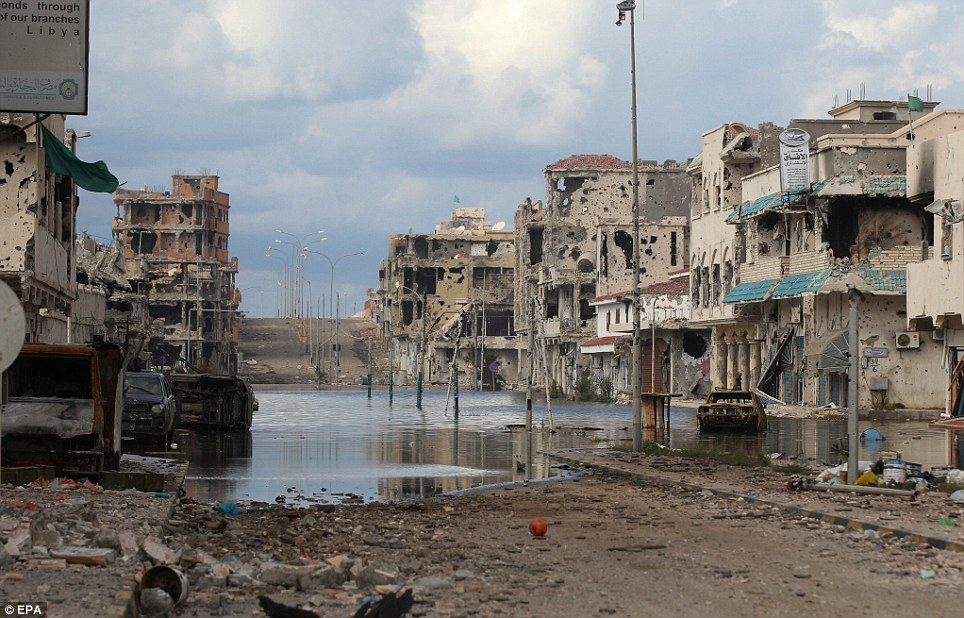
Sirte-destroyed-1

It would appear that the failed Western interventions predicated on packs of lies that have resulted in widespread chaos and hundreds of thousands of deaths in Iraq, Afghanistan and Libya with many more displaced and turning up on the shores of Europe, is not enough for harbingers of democracy and freedom and their media echo chambers’.

Since Nato’s illegal “humanitarian intervention” which resulted in the overthrow of Muammar Gaddaffi, thousands of prisoners have been held without trial in government jails, and torture and brutality have become rife. In fact, torture, bombings and assassinations are now par for the course in Libya, as described here.

Similarly, In Iraq, where prior to the allied invasion and occupation, Al Qaeda had no presence, the country is currently awash with the medieval savages known as ISIS and where sectarian violence is commonplace. In a single day in 2013, thirteen bombs were detonated in Baghdad killing at least 47 people. This is the context in which thousands of academics have been forced to leave the country.

Despite all of this carnage and human misery, the Pew Research Journalism Project finds that ‘the No. 1 message’ on CNN, MSNBC and Fox News, and Al Jazeera, was “that the U S government should get involved in the conflict” in Syria. No surprise, then, that much of UK journalism had decided that the current Official Enemy was responsible for the chemical attacks in the Damascus suburb of Ghouta almost two years to the day.

This was long before the UN published the evidence in its report on “the alleged use of chemical weapons in the Ghouta area” on September 16 of that year. The UN did not blame the Syrian president, Assad, for the attack, but in truth expressed “grave doubts”, despite pre-emptied media claims to the contrary.

Just one day after the attacks, for example, a Guardian leader claimed there was not “much doubt” who was to blame, as it simultaneously assailed its readers with commentary on the West’s “responsibility to protect”. The media’s response to the May 2012 massacre in Houla, similarly blamed it on Assad.

By not sticking to the script, Reuters was one of the few outlets who actually relayed the truth. On September 7, 2013 it reported:

“No direct link to President Bashar al-Assad or his inner circle has been publicly demonstrated, and some U.S. sources say intelligence experts are not sure whether the Syrian leader knew of the attack before it was launched or was only informed about it afterward.

“While U.S. officials say Assad is responsible for the chemical weapons strike even if he did not directly order it, they have not been able to fully describe a chain of command for the August 21 attack in the Ghouta area east of the Syrian capital.”

The lack of evidence of Assad’s culpability didn’t prevent US president Obama from regurgitating the media line by unequivocally pinning the blame on Assad for the chemical attack. Following Obama’s earlier warnings that any use of chemical weapons would cross a “red line”, he then declared on September 10, 2013:

“Assad’s government gassed to death over a thousand people …We know the Assad regime was responsible … And that is why, after careful deliberation, I determined that it is in the national security interests of the United States to respond to the Assad regime’s use of chemical weapons through a targeted military strike.”

Pulitzer Prize-winning journalist, Seymour Hersh saw through the lies and accused Obama of deceiving the world in making a cynical case for war. In response to pressure from an informed public who also saw through the deceptions, British MPs voted in parliament against war and Obama subsequently backed down.

Award-winning investigative journalist Gareth Porter shows that:

[T]he Syria chemical warfare intelligence summary released by the Barack Obama administration August 30 did not represent an intelligence community assessment, [but appears to be] more politicised than the flawed 2002 Iraq WMD estimate that the George W Bush administration cited as part of the justification for the invasion of Iraq.

Two years down the line and the unsubstantiated media claims keep coming. A Channel 4 News report (August 26) by foreign affairs correspondent, Jonathan Rugman, showed what appeared to be the aftermath of what he described as “air attacks by the Assad government….that have killed scores of people” allegedly committed on August 23, once again, in Ghouta. Amid scenes of widespread destruction and panic, civilians were filmed carrying blood soaked dead or injured bodies from the rubble.

It’s my view that the public are once again being softened up for yet more military intervention in another sovereign nation, this time, Syria which UN Secretary General Ban Ki-Moon pointed out, would clearly be illegal. What people appear to be questioning in ever increasing numbers, since the Iraq debacle, is the nature of war and the role the imperialist powers like Britain and America play in these wars.

These debates have taken on a new sense of rigorous critique since Iraq resulting, for example, in the rejection by the British parliament of Obama’s red line. In America, congressional voting has unleashed a swarm of debates such as why should the US be the world’s policeman and what exactly are “US interests” in another country’s sectarian civil war?

People are increasingly beginning to understand that foreign military interventions in places like Syria and Iraq exacerbate ethnic and tribal sectarian based conflicts and that the only feasible option in resolving what has in effect become an international conflict, is discussion and diplomacy. People are less likely to believe their governments’ and their media echo chambers’ when they make unsubstantiated claims about reasons for a war.

Duncan Smith, Duplicity And The Deficit

Regular bloggers who have followed the career of the government minister for work and pensions, Iain Duncan Smith, will be familiar with his propensity for sophistry, obfuscation and obtrusiveness. If by chance you are not familiar with the man, you might be forgiven, having seen the recent interview he gave with Dermot Murnaghan regarding the ‘fake letters’ row, that his portrayal by critical bloggers and others has been unfair.

I was astonished just how much of an easy ride he was given by the Sky News anchor. Thankfully, a small minority within the mainstream media are actually prepared to undertake the job that they are paid to do by bringing power to account, as opposed to acquiescing to it. One journalist worthy of the name is LBC Radio’s James O’Brien.

Up until a few days ago, I wasn’t aware of the 2013 interview Duncan Smith gave with O’Brien following the court of appeal Poundland scandal. In the interview Duncan Smith is exposed for the compulsive liar he is.

What follows is an edited transcript of the interview which is illuminating, not least because it would tend to support the assertion by blogger Mike Sivier that Duncan Smith is incompetent in his role as work and pensions secretary. After reading the 2013 interview transcript below you might actually be inclined to question his sanity:

JOB: ” Current figures suggest that 2.5 million people in the UK are claiming Job Seekers Allowance (JSA) while job vacancies stand at around half a million.Today eight available jobs at Costa Coffee in Nottingham attracted 1,700 applications. There appears to be something of a disconnect between these two states’ of affairs.”

IDS: “The figures show that 83% of those seeking full time work are in full time work. 17% of those who are looking for full time work can’t find it and are taking part time work.”

JOB: “No Mr Duncan Smith. There could be 2.5 million people looking for full time work. You are confining yourself to people who have found it.”

IDS: “No, I’m talking about those looking for work. The reality is, those who seek full time work are finding full time work.”

JOB: “But 2.5 million people haven’t found work.”

IDS: “But those are the people who are seeking work. That’s what I’m saying.”

JOB: “The people who are finding jobs are finding full time work, but there are still millions of people who are not finding jobs….The woman who was stacking shelves [at Poundland] wanted to be paid for it.”

IDS: “But she was paid for it. The tax payer was paying her for Gods sake.”

JOB: “Let me read you the official Department for Work and Pensions (DWP) response to an official petition to abolish workfare. ‘We do not have work for your benefit or workfare schemes in this country’. This is a further response to a freedom of information (FOI) request from your department. ‘Benefit is not paid to the claimant as remuneration for the activity’. So explain to me how she [the Poundland shelf stacker] can ‘earn’ her Job Seeker’s Allowance (JSA) in a country where benefit is not paid as remuneration’?”

IDS: “Because the work experience programme is one you volunteer to do. We do not have a workfare programme…We changed the rules so that young people can do work experience for up to two months and still receive their JSA benefit.”

JOB: “But the court of appeal has ruled that they are forced into these programmes.”

IDS: “What the court of appeal found is that it’s not against their human rights to do it.”

JOB: “I haven’t mentioned human rights.”

IDS: “This is a voluntary scheme. Most people want it, enjoy it, and get something out of it.”

JOB: “I need to clarify this point. You used the word ‘earn’ to describe the payment of JSA to somebody working for a highly profitable company like Poundland. That’s your phrase. But then we learned from your department that benefit is not paid to the claimant as remuneration. Those two positions are completely irreconcilable”.

IDS: “No they are not. Listen, they volunteered to do this. We’ve allowed them to continue to receive JSA at the same time they are doing their work experience.”

JOB: “What she was saying is she wasn’t paid.”

IDS: “But she was. The taxpayer paid her JSA. We have allowed people to do work experience and not lose their JSA.”

JOB: “So it’s remuneration for working?”

IDS: “In the past she would have lost her JSA.”

JOB: “So the benefit is payment for the work.?”

IDS: “I don’t understand what you are concerned about.”

JOB: “She is getting paid for doing the work at Poundland with her JSA. It is a pay packet.”

IDS: “It is work experience. She has volunteered to go on the work experience programme.”

JOB: “Because she had been lied to about what it would involve, as the court of appeal found last week.”

IDS: “They did not find that she was lied to.”

JOB: “They said they needed to clarify what the regulations were.”

IDS: “The regulations were around the withdrawal of benefit if she failed to comply with what she agreed to do.”

JOB: “Which only works if the benefit is a reward for doing the work experience.”

IDS: “You clearly haven’t read what the judgement said.”

JOB: “I’ve read every word of it.”

IDS: “With respect, you need to understand it.”

JOB: “With respect to you, I do. Insulting me, doesn’t advance the argument in any way.”

IDS: “This debate is going nowhere….Are you saying these kids shouldn’t be doing work experience.”?

JOB: “I’m saying, if they are working, they should be paid for it. It’s quite straightforward. You are, why shouldn’t they”?

IDS: “They are on JSA. The taxpayer is paying them.”

JOB: “So What’s the minimum wage legislation for”?

IDS: “This is work experience for up to two months….”

JOB: “The bottom line is, you are using benefits to pay an incredibly cheap workforce to subsidize incredibly profitable companies at the tax payers expense, and passing it off as some kind of assault on a feckless generation.”

IDS: “I don’t agree with that.”

JOB: “Of course you don’t. 17,000 people in Nottingham applied for eight jobs.”

IDS: “Look, there are more people in work today than at anytime since records began.”

JOB: “What a strange observation. There are many more people alive today. What would you say to the 1,692 people who failed.”

IDS: “The reality is that in that area there are 15,000 vacancies and the claimant count their is still falling.”

JOB: “Is that really what you would say to them”?

IDS: “I would say that you have to keep looking for jobs. We are moving in the right direction and that’s a positive.”

JOB: “Sorry, you’ve lost me. To the 1,692 people who have failed to get a job in a coffee shop, you say it’s a positive”?

IDS: “I didn’t say that.”

JOB: “Yes you did.”

IDS: “The positive figures today are a good indication that the private sector is creating jobs, there are more people in work, more vacancies and the claimant count is falling. These are positives…There are half a million vacancies on a daily basis in the UK.”

JOB: “For two and a half million job seekers. The astonishing thing is you think that a benefit is a payment for work done.”

IDS: “I think that the work experience programme is a great success and I’m very proud of it.”

JOB: “Apart from the little wobble in the court of appeal last week.”

IDS: “We’ve changed the regulations going forward.”

JOB: “So the thing you are proud of has now been changed”?

IDS: “No, the programmes are the same.”

JOB: “But the regulations have changed”?

IDS: “The court of appeal has said that the regulations need tightening up and we’ve tightened them up.”

JOB: “Iain Duncan Smith, many thanks for your time.”

Perhaps Duncan Smith believes that subsidizing multinational companies to take on cheap labour will help reduce the deficit the Tories are constantly pontificating needs reducing.

10 reasons NOT to vote for Jeremy Corbyn to be leader of the Labour party

Jeremy Corbyn

Jeremy Corbyn (Pic: Garry Knight)

Newspaper columnist Cyril Waugh-Monger has warned repeatedly about the ‘dangers’ of Jeremy Corbyn becoming Labour leader.

THE BIG political story in the UK this summer is undoubtedly ‘Corbynmania’. How a 66-year-old antiwar activist and socialist has gone from being the rank 200-1 outsider in the Labour leadership contest election to be the red-hot favorite.

Jeremy Corbyn, a modest, unassuming man who wears an open necked shirt and slacks instead of the usual politician’s suit and tie, has really proved a big hit with the public, who have grown tired of slick politicians who are always ‘on message’, and who don’t seem at all sincere in what they’re saying. Large crowds have turned out to hear Corbyn speak: last week he had to give his speech from the top of a fire engine as an election rally spilled out into the street.

Not everyone though has welcomed Corbyn’s advance. One man who has made repeated warnings about the ‘dangers’ of Jeremy Corbyn is Cyril Waugh-Monger, a ‘Very Important’ newspaper columnist for the NeoCon Daily, a patron of the Senator Joe McCarthy Appreciation Society and the author of ‘Why the Iraq War was a Brilliant Idea’, as well as ‘The Humanitarian Case for Bombing Syria’.

Below are Mr Waugh-Monger’s ten commandments to Labour members to not, under any circumstances, vote for Jeremy Corbyn. Remember, we need to take what he has to say very seriously – as, after all, he did reveal to us that Iraq possessed WMDs [Weapons of Mass Destruction] in 2003.

1. Jeremy Corbyn wants to ‘stop the war’.

Jeremy Corbyn opposed the bombing of Yugoslavia. He opposed the invasion of Afghanistan. He was against the invasion of Iraq. He was against bombing Libya and also voted against military action in Syria.

I ask you – is this the sort of man who is fit to be in charge of one of Britain’s leading parties?

If Corbyn – heaven forbid – had been British Prime Minister in 2003 he would not have committed British troops to the invasion of Iraq. Just imagine what would have happened if we hadn’t invaded Iraq! Well, I’ll tell you what would have happened – the Middle East would now be a haven for terrorist groups which would be targeting British tourists on beaches when they go on their summer holidays. The whole Middle East would now be in turmoil. We’d be facing a refugee crisis with people fleeing all the countries that we hadn’t destabilized.

2. Jeremy Corbyn is a dangerous leftist.

Just look at the sort of policies this man supports. He wants to re-nationalize the railways which have the highest fares in Europe.

He wants to scrap university tuition fees which consign students to a lifetime of debt. He would like to make housing affordable for ordinary people.

He wants an economy to suit the needs of the majority and not the 1%.

He wants to keep the Sunday trading laws as they are and not introduce 24/7 shopping. He is opposed to illegal wars which kill hundreds of thousands of people and he does not want to bring back fox-hunting. Quite clearly the man is some kind of left-wing nutcase.

3. Jeremy Corbyn has been critical of the US and Israel.

Outrageously, Corbyn has criticized US foreign policy and Israel’s treatment of the Palestinians. He seems to think that the US and Israel have to abide by international law – and should be held accountable for their actions. The man is quite obviously a communist and as such should be barred not only from standing for Labour leader, but banned from the Labour Party too.

Jeremy Corbyn: Why He’s Got Britain’s Anti-Democratic Democrats Worried

4. Jeremy Corbyn has extremist links.

Not only is Corbyn a dangerous radical himself, he also associates with dangerous extremists. He once spoke at a meeting where one of the other speakers had once shared a platform with a speaker who had once shared a platform with a speaker who had once shared a platform with a speaker who had once praised Joseph Stalin – proving undeniably that Corbyn is a Stalinist.

Also on Twitter, Corbyn once retweeted a person who had once retweeted another person who had once retweeted another person who had retweeted a tweet from someone who I don’t approve of – proving once again Corby’s extremism.

5. Jeremy Corbyn is unelectable.

Jeremy Corbyn wants to do things which the majority of the British public wants, such as re-nationalize the railways and keep Britain out of Middle East wars. This makes him unelectable because politicians are only electable if they want to do things the public doesn’t want.

At the last election, Labour lost heavily to the anti-austerity SNP in Scotland and also lost lots of votes to the anti-austerity Greens. So it’s obvious that to get these votes back, Labour needs a leader who supports austerity, and not someone who opposes it, like Corbyn.

I’m a very wealthy right-wing, pro-austerity warmonger, but believe me, I only want the best for Labour – which is to be a right-wing pro-austerity, pro-war party – barely distinguishable from the Tories.

Having two main parties who have identical views on the main issues is what democracy is all about. If Corbyn wins then Labour would be very different from the Conservatives, which would obviously be very bad for democracy as it would give the electorate a real choice.

6. Jeremy Corbyn wants to take us back to the 1970s.

In the 1970s the gap between the rich and poor was at its lowest in the UK’s history. Living standards for ordinary people were rising all the time and large sections of the economy were in public ownership. The banks did not run the country and the taxation system was steeply progressive.

Corbyn wants to take us back to these times! Think how disastrous that would be for rich people like me who would have to pay much higher rates of tax which would be redistributed to horrible working class-type people and people on middle incomes. The 1% would really suffer and the most talented people – like myself – and my neocon friends, would leave the country. That’s what lies in store for us if Corbyn succeeds!

7. Jeremy Corbyn would leave Britain defenseless and open to invasion.

Corbyn has promised to scrap Trident.

If Trident was scrapped there’s no doubt that the Russians, Iranians, Syrians and Hezbollah would launch a full scale invasion of Britain within 45 minutes.

Britain would be carved up between the ‘Axis of Evil’, with the Russians taking England, the Iranians Scotland and the Syrians, Wales (and Hezbollah in charge of Northern Ireland).

Just imagine, Aberystywyth under the control of the evil dictator Bashar al-Assad. Russian troops patroling the streets of Godalming. Iran’s Revolutionary Guard marching in Sauchiehall Street. A nightmare scenario indeed, but all this would be the reality if Corbyn gets his way. The very future of our country is at stake.

8. Jeremy Corbyn once welcomed an article by John Pilger.

In 2004, Jeremy Corbyn was one of 25 MPs who signed an Early Day Motion which welcomed a Pilger article on Kosovo.

How outrageous! To think, a man is standing for the leadership of one of Britain’s major parties who once welcomed an article by John Pilger!

No one who has ever cited John Pilger with approval – let alone signed a motion supporting him – should be allowed to stand for high public office in Britain. The freedom to hold and express views and opinions in a democracy should only apply to opinions and views that myself and fellow elite neocons approve of! And we most certainly do not approve of John Pilger!

9. Jeremy Corbyn opposes austerity.

Austerity is working brilliantly at the moment.

It’s provided a great excuse for the government to flog off remaining state assets at below their true market value to ‘the right people’ in the City. The welfare payments of lower-class people who have far too many children are being cut. Libraries and local authority services are being closed. Yet, guess what? The bearded one opposes all of this. He says that “austerity is a political choice, not an economic necessity.”

He wants to protect public services and libraries from cuts – and instead wants to crackdown on tax evasion and increase taxes on the very wealthy! I ask you – is this the sort of man we want leading Labour – or worse still, the country?

And finally, but most importantly, the tenth commandment:

10. Jeremy Corbyn is very popular.

…And if he succeeds – which seems very likely – it’s game over for me and my little clique of elite warmongers. We won’t get our wars and we’ll have to pay more taxes and it’ll be all perfectly horrible! So, don’t vote for Jeremy Corbyn, because although he’ll be very good news for you – his success will be terrible for us!

Source: Sott.net

Why is Tory economic dogma seen as mainstream, but Corbynism extreme?

Sixty-six years after the foundation of the welfare state, under the current Conservative government, every aspect of it is under attack. The 2012 Health and Social Care Act, for example, will remove the duty on the Secretary of State for Health to provide a comprehensive health service, while the requirement in the act that up to 49 percent of services can be tendered out to “any qualified provider” will rapidly lead to the privatisation of the NHS in England and Wales. Already between a quarter and a half of all community services are now run by Virgin Care [1].

In social care, a combination of cuts of around 30 percent to local authority budgets since 2010, increasingly restrictive eligibility criteria for services, and inadequate personal budgets will leave millions without the support they need and increasingly dependent on the family, and in particular women family members [2].

And in place of what was once called social security, unprecedented cuts across all areas of benefits, especially disability benefits, the introduction of sanctions regimes which have contributed to 500,000 people being forced to use food banks, and a bedroom tax affecting around 600,000 people will increase the number of children living in poverty by 200,000 [3].

All of this has been underpinned by a brutal ideological offensive against people on benefits which explains the reason for the growing rates of sickness benefit claims are for those who suffer from depression and anxiety [4], as well as the increase in the rate of suicide among those on benefits [5].

The ideological attack on the poor is predicated on the governments’ insistence that those able to defend themselves least, pay the costs for a global economic crisis which began in 2008 but was not of their making [6].

Over the last forty years, successive Labour and Tory governments’ have been committed to rolling back the post-war welfare settlement under the guise of debt reduction premised on neoliberalism which involves a change to the function of the state as less ‘welfare provider’ to more ‘pro-business facilitator’.

Many people believe that the neoliberal assault that embody these changes began with the 1979 Thatcher governments’ limited (by today’s standards) publicly-owned asset stripping. But this is a myth. It was actually under the Callaghan administration that preceded Thatcher that the initial structural changes happened  As Colin Leys (p.41) notes:

From 1976 onwards Labour…. became “monetarist”. It’s leaders accepted that full employment could no longer be achieved by government spending but must be sought through private sector growth. For the necessary private investment to take place, prices must reflect real values, and this in turn required “squeezing” inflation out of the system and permitting the free movement of capital. In 1978 Treasury officials began preparing to abolish capital controls

But it is the assault by the trio of Cameron, Duncan Smith and Osborne on, not just the welfare state, but the entire ethos of the public sector in general, that has taken things to a new level. This is demonstrated, in part, by Osborne’s intention to sell off £31bn of public assets in 2015-16. It is clear that the Tories are using austerity and the neoliberal ideology that underpins it, as an excuse to expand the pro-business facilitator model to areas within the public sector that Thatcher could only in her wildest of dreams imagined.

That said, this approach has limits in terms of maximizing utility to capitalists within a modern state. It is precisely this kind of rationale that explains why the former governor of the Bank of England announced that the current situation is “the worst crisis at least since the 1930s” [7].   

As this writer has pointed out previously, even venture capitalists realize that proper welfare provision for those not working as well as a substantial increase in the the minimum wage for those in work, is necessary to prevent the capitalist system that they benefit from collapsing in on itself [8].

In 1943, the Tory MP Quintin Hogg warned that “If you don’t give the people social reform, they will give you social revolution” [9]. This is as relevant today as it was then.

It’s therefore in nobody’s interest that wages are kept depressed and the unemployed and sick are continually made to suffer. The fact they continue to suffer unnecessarily is the reason why a political space has opened up for the likes of Jeremy Corbyn to move into.

Although much of the mainstream media are characterizing Corbyn’s policies as unworkable, misguided and extreme – and seemingly doing everything in their power to undermine and discredit him -, these are nevertheless policies that are, in truth, mainstream and pragmatic. This explains why an increasing number of economists have publicly come out in support of the kinds of economic policies Corbyn articulates [10].

These policies are economically credible, popular with the public and, for most of the world, regarded as mainstream:

In 2009, most of the world was following mainstream economics of the kind that Corbyn is proposing today in undertaking a fiscal stimulus to combat the impact of the financial crisis. But in the UK a certain politician decided to ignore ‘economic credibility’, and instead proposed doing the opposite: what has subsequently become known as austerity [11].

The imposition of 40 years of neoliberal economic dogma pursued by successive Labour and Tory governments’ has failed the people of Britain who rightly, in my view, see Corbyn as the catalyst for change. As time goes on there will be increasing pressure not just from below, but from the top, for the Tories to change course.

As the open letter to the Guardian by over 40 leading economists illustrates, this is already starting to happen. If the government refuse to acknowledge that austerity and neoliberalism have failed, and thus continue to stick rigidly to their failed ideology of cuts and austerity, the British people will eventually elect a figure like Corbyn into power on a mandate to do something about it. That time is coming closer with every passing day.

That joke isn’t funny anymore: from Tories4Corbyn to a Very British Coup

corbyn2

One day, someone like the Glasgow Media Group, will do an analysis of this leadership election and how the attitude of the right-wing press has changed towards Jeremy Corbyn. It will be fascinating. 

Stage 1: Laughter

It seems like an age ago when it was all jolly larks and #Tories4Corbyn. Smugly and patronisingly, they laughed into their sleeves, safe in the knowledge that Corbyn even being on the ballot would show that the loony left (guffaw) was very much alive and kicking and the Labour Party at large hadn’t changed. By not having changed, of course, they mean not accepting all the tenets of the disgustingly unequal and brutal society that their chums in the city had created. That self-satisfied superiority complex, which seemingly couldn’t be shifted, had been aided and abetted by the Labour Party in Parliament, filled with New Labourites who did just that – who had “changed” and had accepted the rules of the club.

Stage 2: Confusion

Then came the period of incredulity, as the madness of “Corbynmania” seemed to be sweeping the country. What on earth was going on, they wondered? Hadn’t this stuff – like collective values, solidarity, compassion – been left behind in the 80s where it belonged? Andy Burnham, Yvette Cooper and Liz Kendall they understood: they too played by the rules. The deal was, they would let us keep the fundamentals of the Thatcherite settlement in place as long as they could play with the ball occasionally. The “fun” being had at the Labour Party’s expense became a little less sure footed. #Tories4Corbyn faded and turned into “Shock! Horror! Look what the oiks are up to!” They actually believe this crap? Rent controls? Public ownership? Democracy in our education system? Whatever next? Fake indignation and incredulity ruled, but now with a frown.

Stage 3: Anger

Latterly, the terms of reference have turned around completely. As arrogant bullies do, no public acknowledgement of this volte face was to be allowed. But to anyone who has been paying attention, it’s obvious that things have shifted dramatically as the election campaign has gone on and Jeremy Corbyn’s campaign has gathered real momentum, not just in the Labour heartlands, but in the Tories’ own backyards. The chuckles have been swallowed back and been replaced with anger. What the hell? As the movement around Jeremy Corbyn has become a “thing”, evidenced by the enormous crowds turning up all over the country and the rapturous welcome that Corbynite policies were receiving, things have taken a nasty turn. Quietly at first, but then gathering momentum, the word was put out that “this has to be stopped”. As that lad from Manchester once said:

“That joke isn’t funny anymore. It’s too close to home and it’s too near the bone.”

At the time of writing, this latest phenomenon has morphed into an almost a pathological obsession for many in the right wing press. Whereas previously, the writings on Corbyn positively oozed condescension, now you can smell the fear and a strange lack of confidence. It’s starting to resemble something out of a Very British Coup, but every smear story, every outright lie and every petty, personalised attack on Corbyn, his family, or his army of supporters betrays how petrified they are at the thought that, for the first time in three decades, they might actually face a real opposition to their project – not just to this detail, or that policy, but to their whole individualist, consumer-orientated, callous ideology.

Thanks to Ben Sellers

Former Tory Donor Gave Yvette Cooper £75,000 Donation

The largest single donation to Yvette Cooper’s Labour leadership campaign comes from a former donor to the Conservative party.

Businessman Peter Hearn gave Cooper £75,000 to support her campaign for the Labour leadership. According to the latest listing Cooper made in the register of MPs’ interests, Hearn’s donation makes up over a quarter of the £260,000 she has raised to fund the “Yvette for Labour Leader” campaign.

However, figures given to the Electoral Commission show that Hearn also gave £10,000 to the Conservative party in the run-up to the 2010 election.

Hearn is a multi-millionaire accountant behind PSD Group, an executive recruitment firm specialising in high-level jobs in banking, finance, and other sectors. His donation was registered this month, although the actual donation was made in July.

Since donating to the Conservatives in 2009-10, Hearn has become a major Labour donor: He gave the Labour head office donations worth £279,000 over 2014-15.

Hearn has switched his donations between parties more than once. Before his Conservative donations, back in 2007 he gave Labour £5,000.

Labour headquarters is currently working to make sure the leadership election “is not for those who support other parties and is only for those who support the Labour party”, with many would-be voters complaining they have been wrongly excluded from taking part in the vote.

BuzzFeed News asked the Cooper campaign if they had any concerns about taking money from a man who has switched support between different parties.

A spokesperson for the campaign said that Hearn was a longstanding Labour supporter:

We are very grateful to Peter Hearn and all those who have donated to the Yvette For Labour campaign. To characterise Peter as a Tory switcher is plain wrong. He has been a major donor to the Labour party for several years and a Labour voter all his life.

In 2010 he was so keen to stop the divisive and unpleasant politics of George Galloway that he supported both the local Labour and Conservative candidates fighting to prevent George Galloway’s Respect party gaining his local seat. He is unequivocally a Labour supporter.

Electoral Commission records do show Hearn giving £5,000 to the Tower Hamlets Labour party in 2007. However, they also show that he gave more money, and more often, to the Conservative party in 2009-10.

He helped fund the Conservative election campaign in Poplar, where George Galloway was standing against Labour’s Jim Fitzpatrick and Tim Archer for the Conservatives. Fitzpatrick won the seat, with Archer coming second and Galloway third.

Solomon Hughes / Electoral Commission

Hearn’s political donations are registered at the Electoral Commission under a variety of spellings – Peter Hearn, Peter J Hearn, and even a misspelled Peter Hearne. The Electoral Commission confirmed to BuzzFeed News that all these donations are registered to the same address and that they are all from the same man.

Thanks to Solomon Hughes who wrote the above article originally published on the Buzz Feed News blog on August 21.

Cathy Newman’s Hatchet Job

An indication of how desperate the mainstream media have become over Jeremy Corbyn’s runaway lead in the opinion polls was no better illustrated by Cathy Newman, the Channel 4 journalist who went into a panic on social media for implying in February that the mosque she visited displayed (falsely) a culture of intolerance and sexism [1]. Newman has been criticised on Twitter by attempted to dig up dirt in her smearing of Corbyn in relation to reports he had links with Holocaust deniers and people with anti-Semitic views.  The Independent reported that:

“The Channel 4 journalist interviewed the Labour leadership hopeful in an alleyway about his connections with Deir Yassin Remembered, a group founded by self-declared Holocaust denier Paul Eisen, and the cleric Raed Salah, who was convicted for inciting violence and racism after accusing Jews of using children’s blood to bake bread.

Corbyn denied her repeated suggestion that he had made “misjudgements” by attending events by Deir Yassin Remembered and describing Salah as an “honoured citizen” some years ago, accusing Newman of putting words in his mouth.

He insisted that Eisen was not a Holocaust denier when he met him 15 years ago, telling Newman: “Had he been a Holocaust denier, I would have had absolutely nothing to do with him. I was moved by the plight of people who had lost their village in Deir Yassin.

Corbyn said he was unaware Salah had been convicted of racial incitement when he met him. The interview, which was broadcast on Monday evening, quickly sparked a backlash against Newman, with many accusing her of trying to smear him.” [2].

TrutherTom in the Independent comments section commented:

“Now Jeremy Corbyn has dozens of Jewish academics writing a open letter to the Jerusalem Chronicle stating that he is not anti-semitic and so another expose backfires against anti Corbyn media. I did not see him getting angry but I was certainly feeling it myself as she kept repeating “Was it a misjudgement Mr Corbyn” ad nauseum.

Totally pathetic attempt to try and stitch him up while hoping to make a name for herself but all she has done is make herself look foolish and unprincipled and extremely arrogant. Full marks to Jeremy Corbyn for keeping his cool when others may have reacted hastily but his constant denial and refusal to be baited, made her look very superficial and rather stupid.”